Many buyers see 40V on a spec sheet and expect strong airflow. Then the sample arrives, and the blower feels flat, noisy, and disappointing. I have seen this mistake cost new brands time, margin, and confidence.
Higher voltage alone does not make a cordless leaf blower feel stronger. Real blower performance depends on battery discharge, controller tuning, motor efficiency, fan design, and airflow path. A well-matched 20V platform can feel stronger than a poorly designed 40V blower.
I have worked with buyers in Italy, Spain, and Germany who came to me with the same concern. They thought voltage would make product selection simple. It never does. In cordless blowers, the user feels air movement, not voltage. That is why I always tell new brands to test the full system, not just the label on the battery pack.
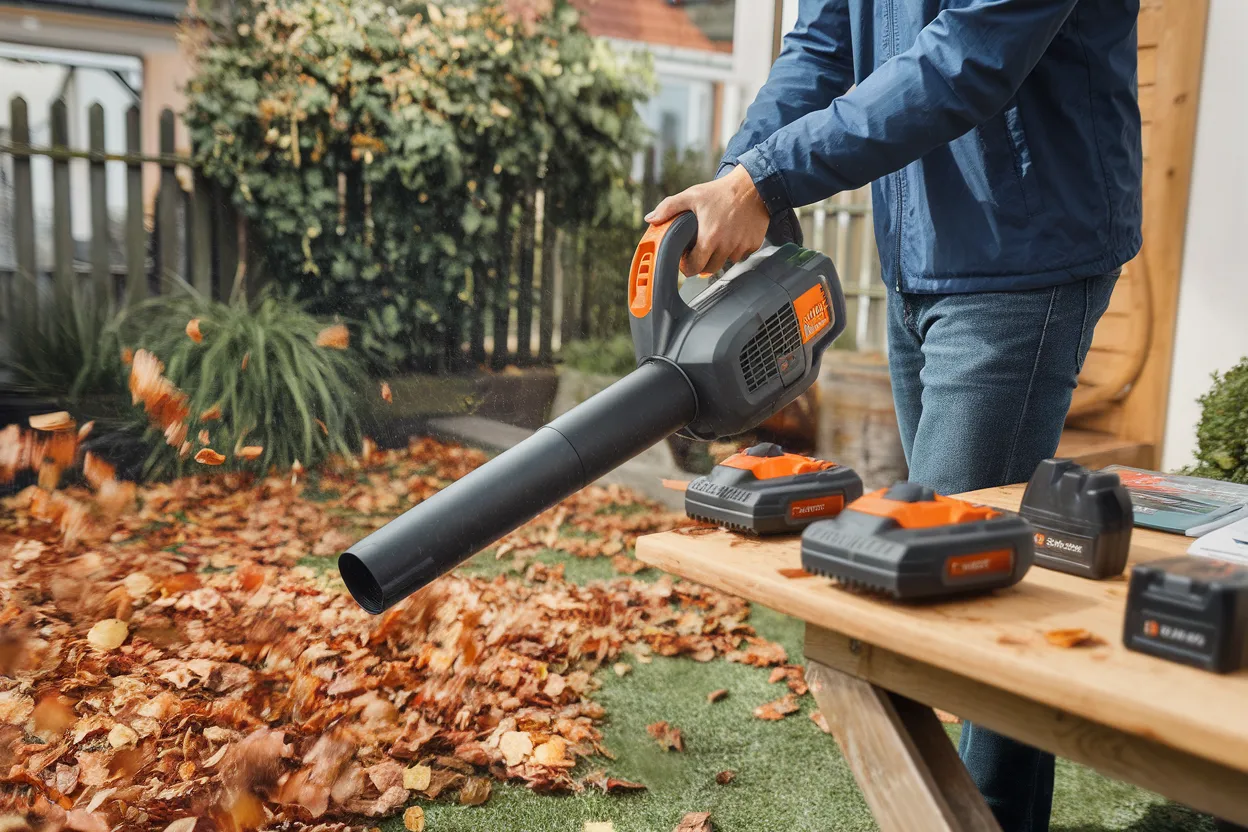
Why does higher voltage not automatically make a blower feel stronger?
Many importers assume higher voltage means stronger output. I understand why. Voltage is easy to compare. But blower strength is not created by one number.
A higher voltage battery can support stronger blower performance, but it does not guarantee it. If the motor, controller, fan, and battery discharge are not matched well, the blower can still feel weak in real use.
Voltage is only one part of the power system
When I review blower samples, I never judge them by voltage first. I look at the whole power path. Voltage tells me the electrical platform. It does not tell me how much current the battery can safely deliver under load. It does not tell me how the controller handles peak demand. It does not tell me whether the fan is efficient.
A blower can have a 40V label and still feel weak if the battery cells have poor discharge ability, the controller limits output too early, or the fan wastes energy. I have seen this happen in OEM comparisons where one factory pushed voltage as the main selling point, but the actual user test showed poor debris movement1.
Why users feel airflow, not battery numbers
End users do not feel volts. They feel how fast leaves move, how well wet debris lifts, and how stable the output stays after 30 seconds. A blower that starts strong and then fades feels weak. A blower with loud noise but poor air concentration also feels weak.
That is why many buyers get confused. They compare battery platform numbers, but the customer in the garden judges usable airflow at the nozzle.
Why this matters for private label brands
If you are building a private label line, the wrong assumption creates the wrong product brief. You may ask your supplier for "40V because stronger" and skip the real questions. Then you end up with a product that is harder to sell in Europe because field performance does not match the expectation.
| What buyers often compare | What actually matters more |
|---|---|
| 20V vs 40V label | Real airflow at nozzle |
| Battery voltage | Battery discharge under load |
| No-load RPM claim | Loaded RPM stability |
| Big motor watt claim | Motor plus controller plus fan match |
| Marketing CFM | Effective blowing force in real debris |
What I tell new buyers before sample approval
I usually tell new buyers one simple thing: do not let voltage choose the blower for you. Let the use case choose the blower. If your target is light patio cleanup in Spain, a well-designed compact 20V blower may be the smarter first product. If your target is heavier seasonal yard cleanup in Germany, then a stronger 40V platform may make sense, but only if the system is built correctly.
In my own product reviews, I use voltage as a category clue, not a performance verdict. That mindset saves a lot of bad sampling decisions.
What actually determines how powerful a cordless leaf blower feels?
Many buyers ask me why two blowers with similar specs feel very different in hand. The answer is simple. Feeling comes from usable air movement, not brochure numbers.
A cordless leaf blower feels powerful when it delivers stable air volume, good air speed, strong nozzle concentration, and enough runtime under real load. The user judges debris movement, response, and consistency, not just rated voltage or peak claims.
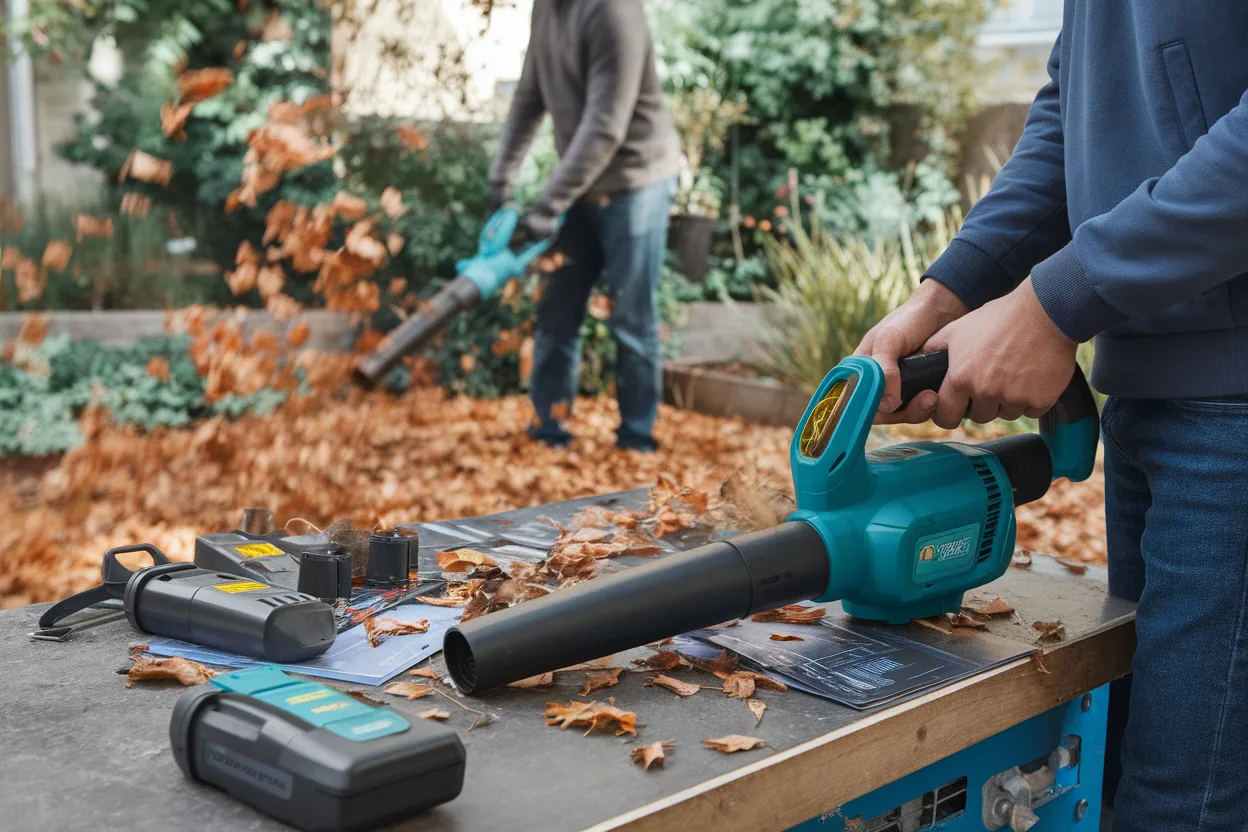
Air volume and air speed must work together
A blower needs both CFM2 and MPH3, but I never look at them alone. High CFM with weak air concentration can feel soft. High MPH with low air volume can feel sharp but not productive. Good blower feel comes from the balance.
If I want a blower to move dry leaves on hard surfaces, I can accept a lighter setup. If I want it to push damp leaves from grass edges, I need stronger usable force at the nozzle. That is where many cheap designs fail. They chase a headline spec but lose real control of the air stream.
Throttle response changes user perception fast
A blower that responds instantly feels stronger. A blower that ramps slowly feels weaker, even if its peak output is similar. Controller tuning plays a big role here. I have tested samples where the delayed throttle made the product feel underpowered in the first five seconds, which is exactly when buyers form their first impression.
Weight and balance also affect perceived strength
This is something many factories ignore. If the blower is front-heavy, the user gets tired fast. When fatigue comes early, the blower feels less capable. A balanced blower can feel stronger because the user can aim it better and keep the nozzle closer to the debris.
This matters a lot for e-commerce brands. End users write reviews about comfort just as much as performance.
| Factor | Why it changes perceived power | What I check in samples |
|---|---|---|
| CFM | Determines air volume | Real output with tube installed |
| MPH | Determines air speed | Nozzle speed under load |
| Nozzle design | Controls air concentration | Debris movement at 1-2 meters |
| Trigger response | Affects first impression | Ramp-up time from trigger pull |
| Weight balance | Affects control and fatigue | One-hand use for 3-5 minutes |
| Runtime stability | Prevents fading feeling | Output after 30-60 seconds |
The real test is debris movement, not only lab data
I always tell buyers to test with real leaves, not only bench numbers. Use dry leaves, wet leaves, dust near edges, and mixed debris near walls. Some blowers look fine on paper but lose focus when the air hits real obstacles. The product may show acceptable CFM, but the user still says, "It feels weak."
That is the moment where the buying decision becomes clear. If the blower cannot create confidence in a 2-minute real test, it will struggle in the market.
How do battery discharge and voltage sag affect real blower performance?
A blower can start strong and then feel weaker within seconds. This is one of the most common complaints I hear from new buyers. The battery is often the hidden reason.
Battery discharge rate and voltage sag directly affect real blower output. If the cells cannot deliver enough current under load, the blower loses RPM, airflow drops, and the tool feels weak even when the nominal voltage looks high.
Nominal voltage is not loaded voltage
This is a very important point. A 20V Max pack and a 40V class pack both drop under load. The label is not the real operating voltage during heavy blowing. When current demand rises, weaker cells drop faster. That drop reduces motor speed. Then the fan moves less air. The user feels that immediately.
This is why I always ask about cell type, discharge rate, and pack configuration. A bad battery pack can make a good motor look bad.
High current demand exposes weak battery design
Leaf blowers are not like light-duty screwdrivers. They can draw heavy current quickly, especially at startup and turbo mode. If the BMS is conservative or the cells are not designed for strong discharge, the system protects itself by limiting output. That may be safe, but it hurts performance feel.
Some factories use cells that are acceptable for drills but not ideal for blowers. That creates a mismatch. The tool may run, but it does not perform with confidence.
Voltage sag is a big reason samples feel good for 5 seconds only
I have seen many samples that impress buyers on first trigger pull. Then after 10 to 20 seconds, the output fades. That is often voltage sag4. The system cannot hold power under continuous load.
For European importers, this becomes a return risk. The customer uses turbo mode, expects stable output, and notices the fade quickly.
| Battery issue | What happens in use | Market risk |
|---|---|---|
| Low discharge cells | Weak peak power | "Feels underpowered" reviews |
| High voltage sag | Output fades after startup | Poor demo performance |
| Conservative BMS limit | Turbo cuts back early | Frustration in heavier jobs |
| Small Ah pack only | Short stable runtime | Weak value perception |
| Poor pack cooling | Heat triggers protection | Inconsistent performance |
What I ask my factory team before approving a blower battery pack
I do not only ask for voltage and Ah. I ask what cells are used, what the continuous discharge target is, how the pack behaves in turbo mode, and what the output looks like after 30 seconds and 60 seconds. I also ask whether the same pack is shared with other tools in the platform.
This is especially important for OEM/ODM brands. If you want a unified battery platform, that is smart. But the platform must still support the blower load. A battery that works well in a drill may still be the wrong choice for a blower if discharge performance is not enough.
Why do motor and controller tuning matter more than many buyers think?
Many buyers focus on brushless vs brushed5 and stop there. That is not enough. Two brushless blowers can feel very different because tuning changes everything.
Motor type matters, but controller tuning matters just as much. The ESC or controller decides startup response, current delivery, thermal protection, and sustained RPM. Poor tuning can make a brushless blower feel weaker than expected.
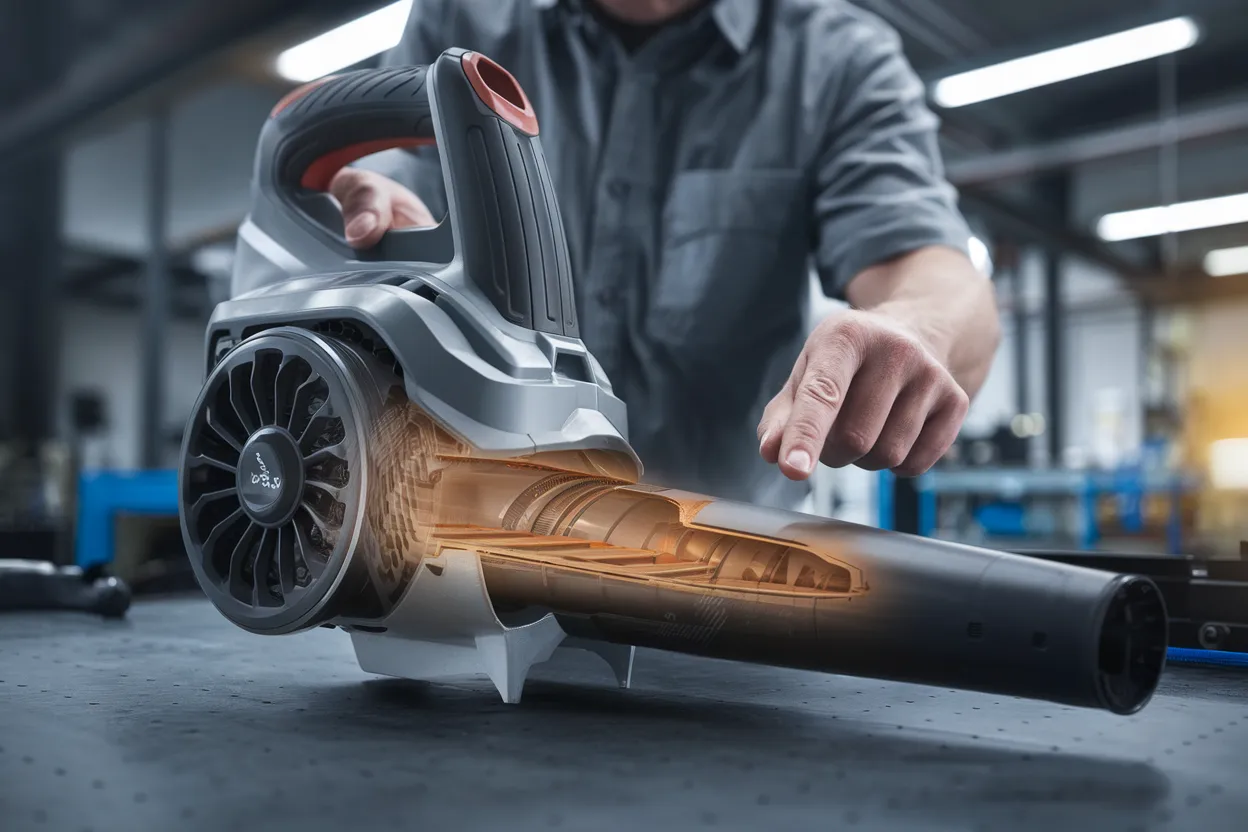
Brushless alone is not the full answer
I prefer brushless for most blower projects because efficiency and durability are better. But I never tell buyers that brushless automatically means strong. If the motor KV, controller logic, and fan load are not matched, the blower can still feel soft or unstable.
A brushless system is a package. The motor, controller, and firmware must be tuned together.
Controller logic shapes the user experience
The controller decides how aggressively the blower pulls current, how fast it ramps, how it protects the battery, and when it reduces output under heat. These choices affect real-world feel more than many buyers realize.
I have seen one blower feel exciting and another feel lazy with similar battery and motor class, simply because the controller was tuned differently. One prioritized quick response and short turbo bursts. The other prioritized conservative protection.
Thermal protection can make or break market perception
Thermal protection is necessary. But if it activates too early, the blower feels weak in actual work. If it activates too late, reliability suffers. Good factories know how to balance this.
For brands selling into Italy and Spain, warm climate testing matters. A blower that feels fine in a short indoor demo can lose performance outside in real summer use.
| Tuning area | Good result | Bad result |
|---|---|---|
| Trigger mapping | Fast, smooth response | Delay or jumpy output |
| Current limit | Strong usable turbo | Weak startup or early cutback |
| Thermal control | Stable safe performance | Sudden fade or overheating |
| RPM control | Consistent airflow | Output drift under load |
| Battery protection | Safe but usable | Too much restriction |
What I look for in OEM blower tuning reviews
When I review a blower sample, I listen to the sound profile, watch the RPM drop under load, and test whether the turbo mode is a short marketing burst or a real working mode. I also ask how the controller is tuned for different battery packs.
If a supplier cannot explain that clearly, I get cautious. For new brands, that is a red flag. You do not just need a factory that assembles tools. You need a factory that understands how the system behaves under real use.
How can fan design and airflow path waste power?
A blower can consume a lot of battery power and still move air poorly. This happens more often than many buyers expect. The fan and tube design decide whether electrical power becomes useful airflow.
Fan shape, housing design, tube diameter, nozzle shape, and internal airflow losses all affect real blower output. A poor airflow path wastes energy, creates noise, and makes the blower feel weak even if the motor is working hard.
Not all fan wheels convert power efficiently
The impeller is critical. Blade angle, diameter, blade count, and material stiffness all change how the blower performs. Some designs chase high RPM but do not convert that speed into effective airflow. The result is noise without real pushing force.
I have seen factories reuse generic fan sets across multiple models to save cost. That can be fine for entry-level products. But for a serious private label project, it often limits performance.
The housing can create turbulence and waste output
If the housing shape is rough, the air path becomes messy. Turbulence increases. Efficiency drops. Noise rises. The user hears a loud blower and expects power, but the nozzle output is disappointing.
This is why I care about the full air channel. I look at the inlet, the scroll housing, the tube connection, and the final nozzle.
Tube and nozzle choices change how the blower feels
A wide tube can improve volume but reduce focused force. A narrow nozzle can increase speed but may restrict volume too much. The best choice depends on the target use. Some brands need a light household blower. Some need a more aggressive yard cleanup tool.
For new brands, I often suggest testing two nozzle options6 during sampling. That small change can improve the user impression7 a lot without redesigning the full tool.
| Airflow design part | Common mistake | Real user effect |
|---|---|---|
| Impeller | Generic low-efficiency blade | Loud but weak blowing |
| Housing | Poor internal shape | Turbulence and energy loss |
| Inlet | Restricted air intake | Motor works harder, less output |
| Tube diameter | Wrong size for target use | Soft or unstable air feel |
| Nozzle | Poor concentration | Weak debris movement |
Why I care about noise quality, not just decibels
I do not only ask for noise level. I care about noise character. A harsh high-pitched blower often signals airflow inefficiency8 or fan imbalance. A cleaner sound often comes from a better airflow path.
For retail and e-commerce markets, this matters more than many people think. End users often describe a product as weak when it sounds stressed or rough, even before they compare exact performance. That is why good fan design helps both performance and product reviews.
Why do some 40V blowers feel weaker than well-designed 20V models?
This is one of the most important lessons for new brands. A bad 40V blower can absolutely lose to a smart 20V blower in real user feel9.
A well-designed 20V blower can feel stronger than a weak 40V model when it has better battery discharge, better controller tuning, better fan efficiency, and better airflow concentration. System design matters more than platform label.
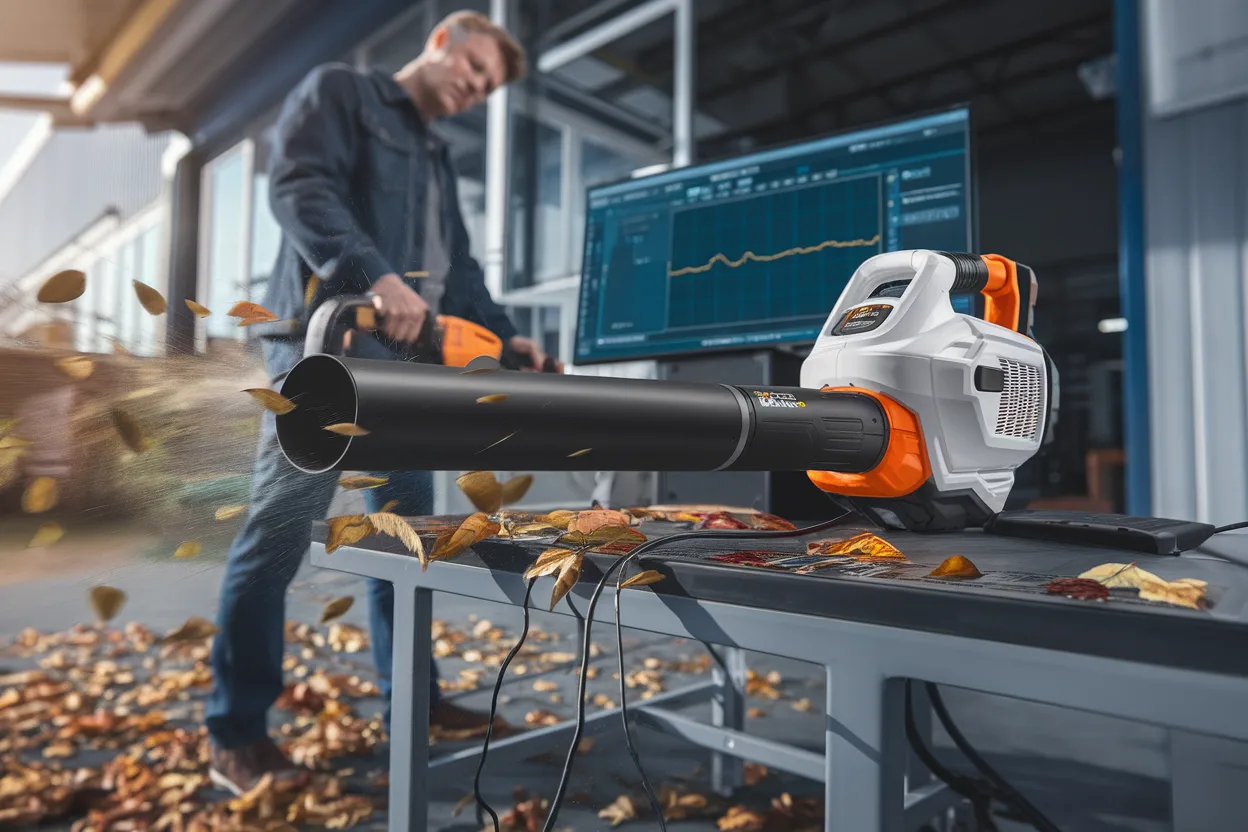
A 40V label can hide weak system matching
I have seen 40V products built around weak cells, conservative BMS limits, and average airflow design. On paper, they look premium. In the hand, they feel ordinary. Some even feel worse than a well-built 20V brushless blower with a smart fan and stable pack.
That is why I never let the platform class become the final decision alone.
A good 20V blower can be more honest and more efficient
A good 20V blower often has a simpler target. It may focus on light to medium cleanup. If the design is honest and well-matched, it feels lively and reliable. It may not claim extreme power, but it delivers exactly what the user expects.
That creates trust. Trust creates better reviews and fewer returns.
Market positioning matters as much as raw output
For many new brands entering cordless tools, I often recommend starting with a strong 20V blower instead of rushing into a weak 40V platform. If your customer base is testing the category, a lighter, better-balanced, lower-risk product can be the smarter launch.
This is especially true when MOQ, certification, battery transport rules, and price pressure are all in play.
| Scenario | Better first choice | Why |
|---|---|---|
| New e-commerce brand | Strong 20V brushless | Lower risk, easier price point |
| Existing garden distributor | 20V or 40V based on channel | Depends on customer use case |
| Retail chain testing category | Well-defined 20V platform | Easier line expansion |
| Premium yard care brand | Well-engineered 40V | Only if system is truly strong |
What I tell buyers who want 40V because competitors have it
I usually ask one question: do you want a better product, or a bigger number on the carton? That changes the conversation fast.
If the real goal is market entry with low uncertainty, a mature 20V platform can be the better commercial decision. If the goal is a full outdoor power line with higher average ticket value, then 40V can make sense, but only when the battery, motor, controller, and airflow system are ready.
What should new brands compare instead of voltage alone?
When a new brand enters cordless blowers, voltage is often the first filter. I think that is fine. But it should never be the final filter.
New brands should compare usable airflow, runtime under load, battery platform strategy, controller behavior, certification readiness, MOQ, lead time, and real debris performance instead of looking at voltage alone.
Compare the full launch risk, not only the product spec
I work with many buyers who are crossing into cordless tools from hardware, garden, or industrial channels. They already know business. They do not always know battery tools yet. For them, the best decision is not the most powerful spec. It is the most manageable launch.
That means I compare the product and the project together.
Look at platform strategy early
A blower should not be judged as a single SKU only. I always ask whether the battery platform can support future products like chainsaws, hedge trimmers, or grass trimmers. If the answer is yes, the blower becomes part of a smarter brand story.
For private label buyers in Germany, Italy, and Spain, platform expansion is often more important than one headline spec.
Certification and battery rules are part of product selection
This is a common blind spot. The battery system affects transport, documentation, and market entry. UN38.3, MSDS, packaging details, CE/EMC, and local channel expectations all matter. If the product looks good but the paperwork is weak, your launch slows down.
That is why I always say performance and compliance must be reviewed together.
| What to compare | Why it matters before launch |
|---|---|
| Real nozzle force | Better predictor of user satisfaction |
| Runtime at high mode | Reduces complaints and returns |
| Battery platform compatibility | Supports future SKU expansion |
| Cell type and discharge | Protects real performance |
| CE/EMC documentation | Smooth EU import process |
| UN38.3 and battery files | Safer shipping and customs clearance |
| MOQ | Controls entry risk |
| Lead time | Affects seasonal launch timing |
| Spare parts plan | Supports after-sales confidence |
Why I care about MOQ and lead time in blower selection
A technically strong blower can still be the wrong first product if MOQ is too high or lead time misses the season. I have seen buyers push for the "best" sample and then lose the launch window because tooling or supply chain was not ready.
For many new brands, a stable mature model with faster sample turnaround and reliable 30 to 45 day bulk lead time is often the better commercial move.
How should you evaluate blower performance the right way before launch?
Many brands approve a blower too early. They compare catalog specs, test for five minutes, and move forward. That is risky. I prefer a simple but disciplined test process.
The right way to evaluate a cordless blower before launch is to test real debris movement, sustained output, battery sag, comfort, noise, heat, compliance readiness, and platform fit under realistic use conditions, not just brochure specs.
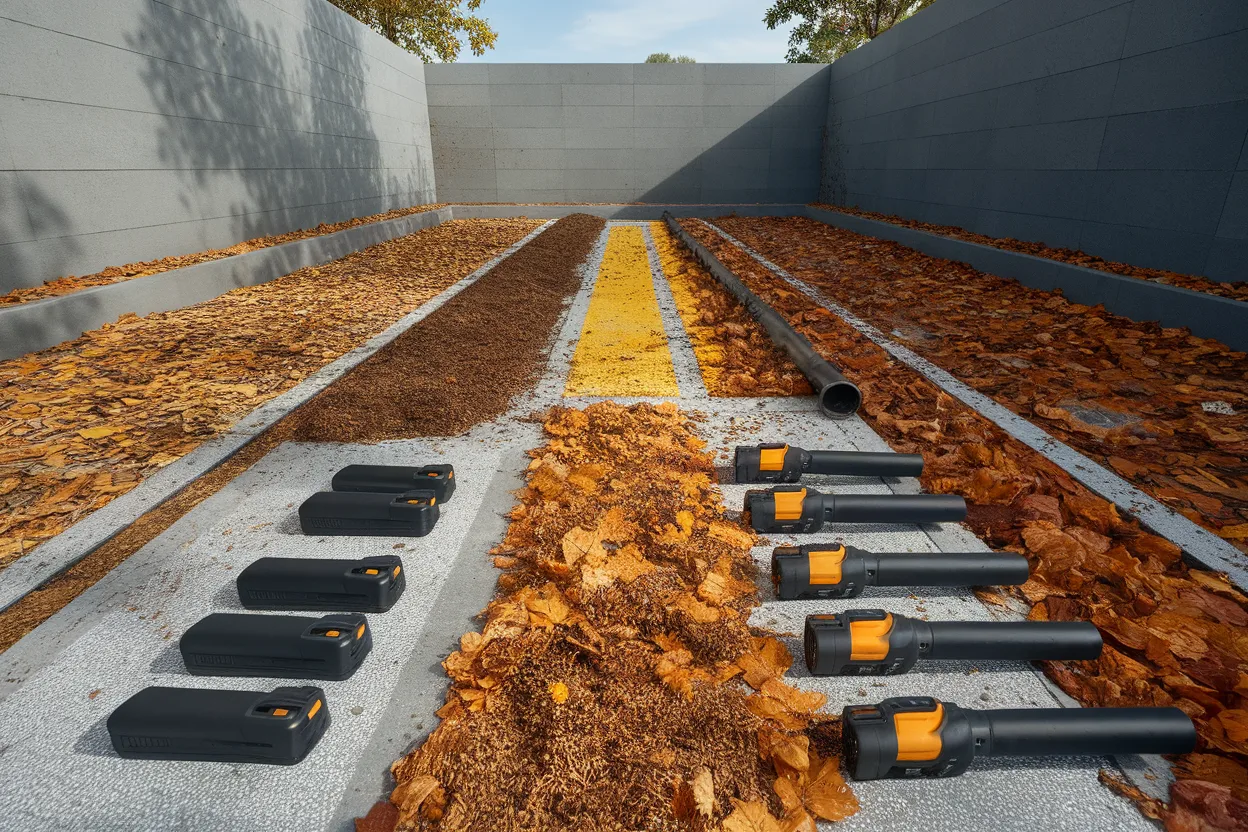
Use a repeatable real-world test method
I like to create the same test for each sample. I test dry leaves on concrete, mixed debris near walls, and slightly damp leaves on grass edges. I use the same battery state, same tube setup, and same test distance. This makes comparison more honest.
A quick bench test is not enough. A blower that wins on paper can lose badly in a realistic 2-minute field test.
Check sustained output, not just startup impact
I always pay attention to the first 5 seconds, then 30 seconds, then 60 seconds. If the blower fades, I note it. If the housing gets hot too fast, I note it. If turbo mode is more marketing than usable function, I note it.
This is where battery discharge10, controller limits, and thermal tuning show their real character.
Review the commercial package with the technical test
I do not separate performance from launch readiness. I check sample speed, packaging quality11, certification files, battery shipping documents, spare parts support, and how easily the blower can join a broader platform.
That is how a serious OEM/ODM decision should be made.
| Pre-launch test area | What I test | Why it matters |
|---|---|---|
| Real debris movement | Dry and damp leaves | True user experience |
| Output stability | 5s, 30s, 60s | Finds voltage sag and cutback |
| Ergonomics | One-hand control, fatigue | Better reviews and lower returns |
| Noise character | Harsh vs smooth sound | Signals airflow quality |
| Heat behavior | Housing and pack warmth | Reliability and safety |
| Compliance files | CE, EMC, battery docs | EU import readiness |
| Packaging readiness | Box, manual, labeling | Faster launch execution |
| Platform fit | Shared battery strategy | Future line expansion |
My simple approval rule for new brands
If I were launching a new private label blower, I would ask one final question: does this product reduce uncertainty for my first season? That is the right question for a buyer who is entering cordless tools from another category.
If the blower performs honestly, the battery platform is stable, the paperwork is ready, and the supplier can explain the system clearly, then I feel comfortable moving forward. If the factory only talks about voltage and peak claims, I slow down. In my experience, that caution saves money.
Conclusion
After years of building cordless garden tools, I have learned that voltage is useful, but it is never enough. A blower feels strong when the whole system is matched well. That means battery discharge, controller tuning, motor efficiency, fan design, airflow path, ergonomics, and honest market positioning all work together. I have seen buyers in Europe lose time because they chased 40V labels and ignored real field performance. I have also seen simple, well-designed 20V blowers win because they delivered stable airflow, better balance, cleaner product positioning, and fewer surprises after launch.
If I were entering cordless blowers as a new brand today, I would not start with the biggest number on the carton. I would start with the clearest use case, the most reliable battery platform, and the supplier who can explain the technical details in plain language. That is how I reduce risk. That is how I protect my first season. If you are comparing blower platforms for Italy, Spain, Germany, or other EU markets and want a practical OEM/ODM view, I am always open to a real product discussion.
-
Discover how effective debris movement is a key indicator of blower performance. ↩
-
Understand the significance of CFM ratings in evaluating the performance of leaf blowers. ↩
-
Find out how MPH measurements influence the effectiveness of leaf blowers in various tasks. ↩
-
Learn about voltage sag and its effects on tool performance, especially in high-demand situations. ↩
-
Learn about the benefits of brushless motors over brushed ones in power tools. ↩
-
Exploring various nozzle options can significantly enhance blower performance and user satisfaction. ↩
-
Understanding user impression can guide brands in creating products that resonate better with consumers. ↩
-
Identifying causes of airflow inefficiency can help improve blower performance and user experience. ↩
-
Exploring these factors can help brands design products that meet user expectations effectively. ↩
-
Understanding battery discharge can lead to better performance and user satisfaction in blowers. ↩
-
High packaging quality can enhance first impressions and contribute to overall product success. ↩