Many buyers see two brushless drill1s that look similar, then feel stuck when one costs almost double. I see this all the time. The risk starts when people assume the cheaper one must be the smarter buy.
A brushless drill can cost twice as much because the real cost is not only the motor. The big differences usually come from electronics, battery quality, gearbox parts, QC stability, certifications, and the sourcing risk behind the product.
I have spoken with many importers in Italy, Spain, Germany, and other markets who ask me the same question. They already understand business. They know margins matter. But they also know one bad cordless tool can create returns, warranty claims, and damage to a new private label launch. That is why I always tell them to look past the word "brushless" and study what is actually inside the tool.
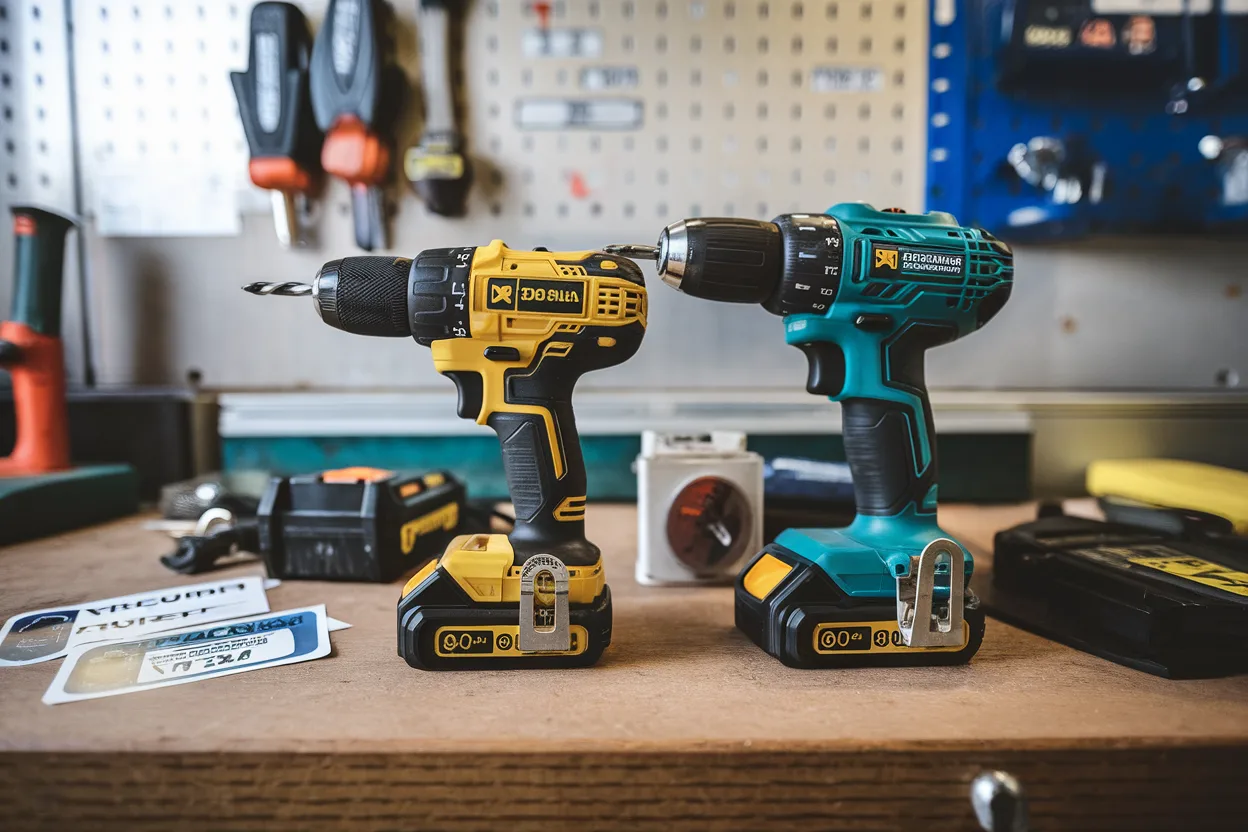
Many buyers hear "brushless" and think "high-end." I understand why. The market uses that word too often. But I have seen many low-cost brushless drills that only use the label as a selling point.
Brushless only describes one motor type. It does not guarantee better materials, better electronics, better battery cells, or better long-term durability.
Brushless is a category, not a full quality standard
I always explain this to new buyers. A brushless motor removes carbon brushes. That is true. It usually improves efficiency, reduces wear, and helps runtime. But that is only one part of the drill. A cordless drill is a system. The motor is only one section inside that system.
A low-cost factory can use a brushless motor and still cut cost in the controller board2, the gearbox gears, the chuck, the bearings, the battery pack, the housing plastic, and the assembly process. The tool still becomes "brushless" on paper. But it may not behave like a premium product in real work.
Many buyers confuse feature labels with real product grade
This is common in Europe. A distributor in Spain may compare two 21V brushless drills from China and see almost the same headline specs. One supplier says "brushless, 45Nm, 2 batteries." Another says "brushless, 50Nm, 2 batteries." The cheaper one looks like a clear win.
But in my experience, that is often where the risk starts. The feature list can be similar. The build quality can be very different.
| What buyers see first | What it actually tells you | What it does NOT tell you |
|---|---|---|
| Brushless label | Motor type only | Full drill quality |
| Torque number | Claimed peak output | Real sustained power |
| Battery voltage | Platform label | Cell quality and BMS quality |
| 2-speed gearbox | Basic function | Gear hardness and lifespan |
| Plastic box set | Packaging value | Internal component reliability |
I treat brushless as the start of the conversation
When I build product plans for OEM and ODM clients, I never let the word "brushless" decide the sourcing choice by itself. I treat it as a baseline question. Then I ask what brushless system the drill uses, how stable the controller is, what battery cells3 are inside, how the gearbox performs under load, and how consistent the factory is over repeated orders.
A brushless label can help sell online. But it cannot protect your brand if the drill fails after a few months. That is why I always tell buyers: brushless is important, but brushless alone means very little.
Why two brushless drills with similar specs can have very different prices?
This is one of the most common sourcing questions I get. Two drills can look nearly identical in photos and spec sheets, but the quotation can be far apart. Many buyers think one supplier is just charging more.
Two brushless drills with similar listed specs can have very different prices because hidden cost sits in parts, testing, battery cells, controller quality, and production consistency.
Spec sheets hide many real cost layers
A spec sheet is useful, but it is not enough. It usually shows voltage, torque, no-load speed, chuck size, and battery capacity. It does not show MOSFET quality, copper fill rate in the motor, gear machining tolerance4, chuck clamping precision, or whether the battery uses grade A cells.
I have seen many cases where the cheaper supplier copies the same outer housing style and copies the same torque claim. The product looks competitive. But the internal structure is built for short-term price advantage5, not stable long-term supply.
The bill of materials can change a lot even when appearance stays similar
This is why I always ask buyers not to trust appearance alone. Two drills can share the same color layout and accessory count, but the BOM can be very different.
| Hidden cost area | Lower-cost version | Higher-cost version |
|---|---|---|
| Motor copper and magnet grade | Basic | Better efficiency and heat control |
| Controller board | Minimal protection | Multi-layer protection and stable output |
| Gearbox gears | Softer metal or looser tolerance | Hardened gears and tighter machining |
| Chuck | Standard light-duty | Better grip and lower wobble |
| Bearings | Fewer or lower grade | More stable and longer life |
| Battery cells | Mixed or economy cells | Stable branded or grade A cells |
| QC process | Random sampling only | Multi-stage inspection |
Price also reflects how much risk the factory removes for you
This part matters a lot for importers in Germany and Italy. The drill itself is only one cost. The sourcing risk6 is another cost. If a factory has stronger QC, better packaging control, more stable battery assembly, and proper CE/EMC documentation, the quote may be higher. But your total business risk may be much lower.
I always remind buyers that a cheap ex-factory price can become very expensive after returns, bad reviews, spare part problems, or delayed repeat orders. That is why similar specs never mean equal value.
Motor quality is only part of the story?
Some buyers focus heavily on the brushless motor itself. That makes sense. But I always tell them that the motor can only perform as well as the system around it.
A better motor helps, but a drill becomes a reliable product only when the controller, gearbox, battery, cooling, and assembly quality all work together.
A good motor cannot fix a weak system
I have tested drills that used decent brushless motors but still felt unstable in real work. Some had power drop under load. Some overheated too fast. Some made noise after a short time. In most cases, the problem was not the motor alone.
A drill needs the right balance between motor output, controller response, gear ratio, and battery current delivery. If one part is weak, the user feels it immediately.
Real performance depends on how power is delivered
Many buyers look at no-load RPM and max torque. But real drilling and screw driving happen under load. That is when the full system matters. A stronger motor with poor control may feel rough. A slightly smaller motor with better control can feel smoother and more useful.
| Performance factor | Why it matters in real use |
|---|---|
| Motor copper quality | Affects heat, efficiency, and sustained power |
| Magnet quality | Affects response and output stability |
| Cooling design | Helps keep performance under repeated use |
| Controller tuning | Changes trigger feel and power delivery |
| Gear ratio match | Decides whether torque feels usable |
| Assembly alignment | Reduces noise and internal wear |
I always judge the motor inside the full platform
When I review a drill for a private label buyer, I never isolate the motor from the battery platform. I ask how the tool behaves with 1.5Ah, 2.0Ah, and 4.0Ah packs. I ask how it performs after repeated screw driving. I ask how much heat builds near the controller and battery terminals. I ask how it sounds after endurance testing.
A motor can look good on a component list. But a cordless drill is not sold as a motor. It is sold as a working tool system. That is why motor quality7 matters, but only as one part of the full story.
Why control electronics and protection systems matter?
This is one of the most ignored areas in low-cost brushless drills. Many buyers do not ask about the controller board or protection logic. I think this is a mistake.
In a brushless drill, the control electronics decide how the tool starts, responds, protects itself, and survives. Weak electronics can ruin a good motor.
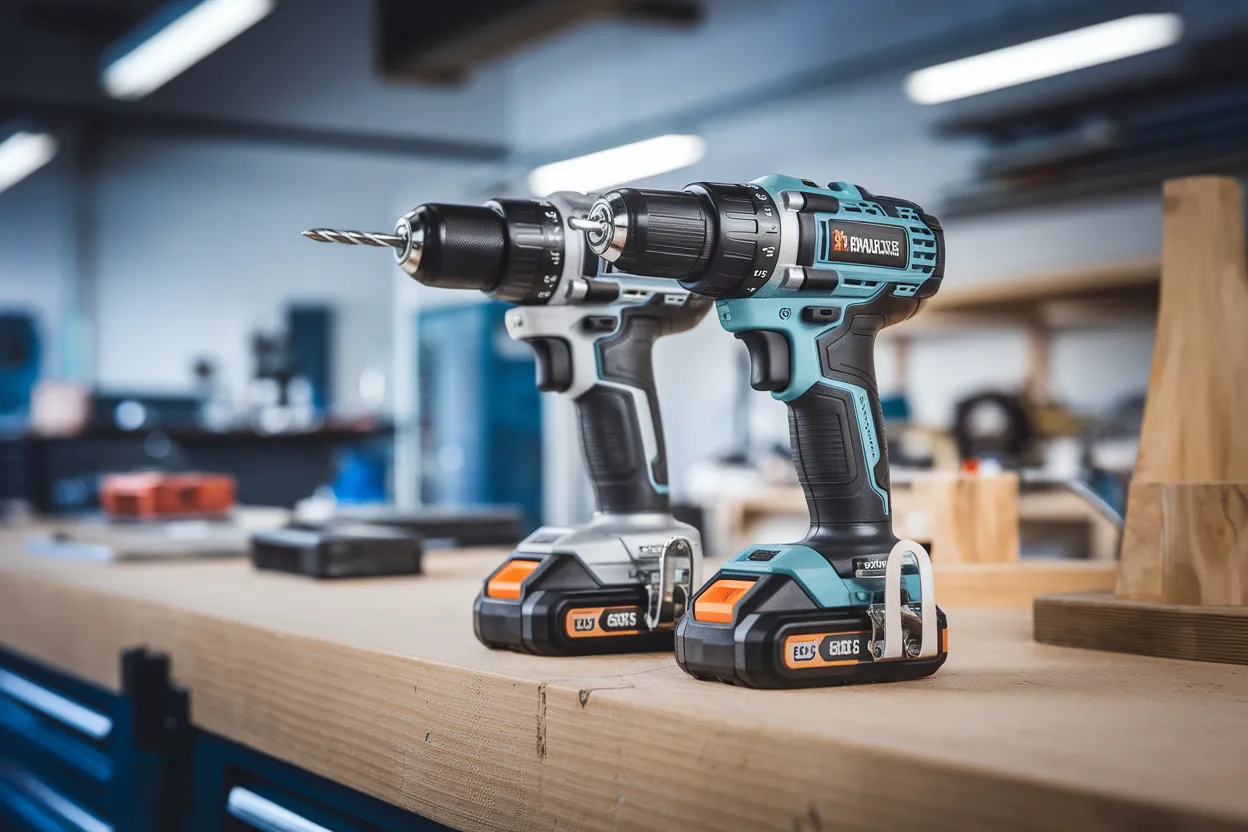
Brushless motors need smart control, not just power
A brushed drill is simpler. A brushless drill needs electronic commutation. That means the controller board becomes critical. It manages how the motor starts, how it changes speed, how it reacts to load, and how it protects the tool from overcurrent or overheating.
If the board is cheap or poorly tuned, the drill may feel jumpy, weak under load, or unstable at low speed.
Protection systems reduce warranty risk
For importers and private label brands, this is not just a technical detail. It directly affects returns.
I always check whether the drill includes proper protection logic:
- Overcurrent protection
- Overheat protection
- Over-discharge protection
- Stall protection
- Short-circuit protection
- Battery pack communication stability
These functions protect the tool and the battery. They also protect your after-sales budget.
| Protection item | Why buyers should care |
|---|---|
| Overcurrent protection | Prevents board or motor damage during heavy load |
| Thermal protection | Reduces overheating failures |
| Stall protection | Helps protect gears and electronics |
| Low-voltage cutoff | Protects battery lifespan |
| Short-circuit protection | Improves safety during faults |
| Trigger response tuning | Improves user control and perceived quality |
European markets care more than many new buyers expect
In Germany and other mature markets, users notice tool behavior quickly. If the trigger feels rough, if the tool cuts out strangely, or if the battery becomes too hot, they lose trust. Even if the drill technically works, it feels cheap.
I have seen buyers focus too much on headline price and ignore this area. Later, they face complaints like "power is unstable," "battery gets hot," or "tool stops under load." Many of these problems come from weak electronics, not from the brushless motor itself.
That is why I tell buyers that in a brushless drill, the controller is not a small detail. It is one of the most important cost drivers in the whole product.
How gearbox, chuck, and bearings affect real cost?
Some buyers think the motor and battery decide everything. But when I inspect failed drills, I often find the real problem in the mechanical parts.
Gearbox quality, chuck precision, and bearing grade directly affect drill life, user feel, noise level, and long-term warranty cost.
The gearbox carries the real stress
In actual use, the gearbox takes repeated load. If the gears are soft, poorly machined, or loosely assembled, the drill may still work at first. But after enough screw driving or drilling, it becomes noisy, loses smoothness, or fails under load.
This is why I do not judge a drill only from first-use feel. I care about endurance.
The chuck changes user trust very quickly
A weak chuck is a silent brand killer. Users may not know the exact technical reason, but they feel it. The bit slips. The runout is higher. The grip feels weak. Drilling accuracy suffers.
For e-commerce sellers and retail buyers, this matters a lot. One small complaint like "bit keeps loosening" can create bad reviews fast.
Bearings affect smoothness, heat, and lifespan
Good bearings help alignment, reduce friction, and improve long-term stability. Cheap bearings may create vibration, extra heat, and faster wear. This is not always visible on day one. But it becomes obvious after repeated use.
| Mechanical part | Lower-cost risk | Better-cost benefit |
|---|---|---|
| Planetary gears | Faster wear, more noise | Better load durability |
| Gear carrier | Cracks under stress | Stronger long-term structure |
| Chuck | Slippage and wobble | Better bit holding and accuracy |
| Bearings | Vibration and heat | Smoother operation |
| Spindle alignment | Runout and noise | Better drilling feel |
| Grease quality | Dry wear | Better durability over time |
This is where low-price drills often save money
I have opened many drills that looked strong from the outside. The housing was fine. The brushless label was there. The torque number8 looked attractive. But inside, the mechanical stack was built to hit a target price, not a target lifespan.
That is why I always tell buyers: if you only compare specs, you miss the parts that fail first. The gearbox, chuck, and bearings are not exciting on a sales sheet. But they are often the reason one drill costs more and lasts longer.
Why battery quality changes both price and performance?
In cordless tools, battery quality9 is one of the biggest hidden differences. Many buyers still focus more on the drill body than the battery pack. I think that is backwards.
The battery pack affects runtime, output stability, heat, cycle life, safety, and warranty cost. A weak battery can make a good drill feel weak.
Voltage labels do not tell the full truth
I see this all the time. A supplier says 21V 2.0Ah. Another supplier also says 21V 2.0Ah. Buyers assume the batteries are equal. They are not.
The label tells only the basic platform. It does not tell cell grade10, actual capacity consistency, internal resistance, BMS quality11, weld quality, or pack protection performance.
Cell quality changes real drilling experience
A lower-grade cell may show the same rated capacity on paper, but under heavy load it may sag more. That means weaker real power, more heat, and shorter useful runtime. The user feels this as a drill that "loses strength" under work.
This is especially important for brushless drills because brushless systems can demand current more aggressively.
| Battery factor | Low-cost risk | Better-cost benefit |
|---|---|---|
| Cell grade | Voltage sag, short life | Stable output and longer cycle life |
| BMS board | Weak protection | Better safety and pack control |
| Spot welding quality | Heat and contact issues | Stable current path |
| Terminal design | Poor connection | Lower resistance |
| Pack casing | Weak impact protection | Better durability |
| Charger matching | Inconsistent charging | Better battery health |
Battery rules and certification also matter in Europe
For buyers in Germany, Italy, Spain, and other EU markets, battery compliance12 is not just a technical issue. It is also a market-entry issue13. Documentation, transport handling, labeling, and battery safety expectations14 are higher than many new importers expect.
I always tell buyers to ask for more than the tool certificate. They should review battery-related compliance documents, transport readiness, charger compatibility15, and labeling support. A factory that can guide these points removes real risk.
That is why a drill kit with better batteries may cost much more than a similar-looking low-cost kit. In many cases, the battery is not just an accessory. It is the heart of the whole product line.
Why torque numbers alone can be misleading?
Torque is one of the most abused numbers in cordless drill marketing. Buyers love it because it looks simple. But I always warn clients not to trust torque claims16 too quickly.
Torque numbers can be misleading because many suppliers use different test methods, peak values, or marketing claims that do not reflect real drilling and screw driving performance.
Not all torque claims are measured the same way
Some suppliers use peak stall torque. Some use soft torque. Some use a marketing estimate. Some do not explain the test method at all.
That is why two drills listed at 45Nm and 55Nm may not feel very different in real work. In some cases, the lower listed drill performs better because the controller, battery, and gearbox are more balanced.
Usable torque matters more than headline torque
I care more about how the drill behaves in common jobs:
- Repeated screw driving into wood
- Step drilling in thin steel
- Hole saw work in light-duty tasks
- Low-speed control for cabinet installation
- Continuous work with moderate load
A drill with smoother delivery and less heat often creates a better user experience than a drill with a higher but less stable torque claim.
| Torque comparison point | Why it matters |
|---|---|
| Peak vs sustained torque | Peak can look impressive but fade quickly |
| Test method clarity | Without it, numbers are hard to trust |
| Battery used during test | Bigger pack can inflate results |
| Gear ratio tuning | Changes how torque feels in use |
| Controller current limit | Limits real output under load |
| Heat buildup | Reduces performance over time |
I ask buyers to test tasks, not just numbers
When I support OEM buyers, I prefer side-by-side task testing over spec-sheet comparison. I want to see the drill drive the same screws, use the same bit, run with the same battery size, and repeat the same cycle.
That is when the truth shows up. Sometimes the "lower torque" drill feels stronger and more controlled. Sometimes the "high torque" drill overheats, cuts out, or drains the battery too fast.
Torque is useful. But torque alone is not a safe buying decision. It is only one clue, and often not the best one.
How QC consistency and after-sales risk affect sourcing decisions?
This is where experienced buyers think differently from new buyers. New buyers often compare only product cost. Experienced buyers compare what happens after the container arrives.
QC consistency and after-sales risk often matter more than a small price gap because one unstable batch can cost more than the savings from a cheap quotation.
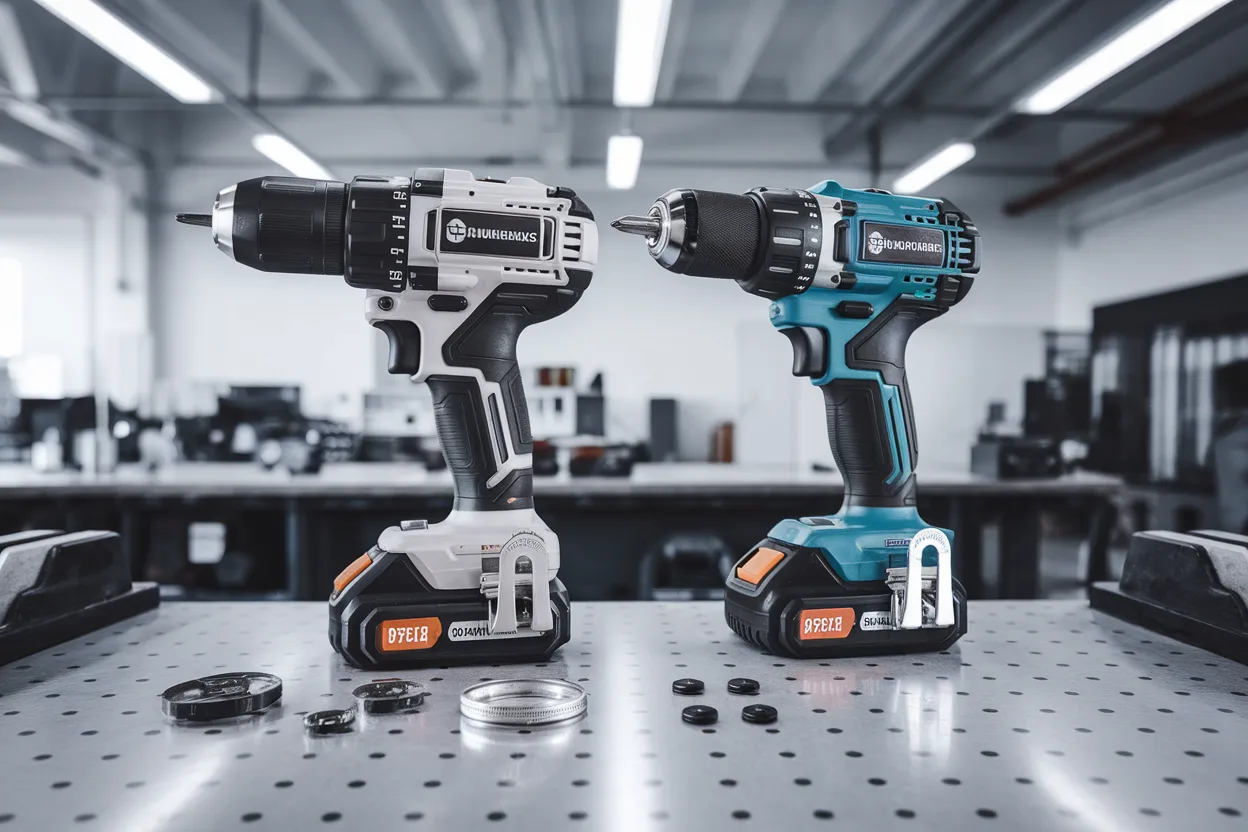
A good sample does not guarantee a good bulk order
This is one of the biggest mistakes I see. A buyer receives a sample. It feels good. The price is attractive. Then they place a container order. After that, problems start.
Some factories can make a good sample but cannot hold the same standard in mass production. That is why I always look at process control, not only sample quality.
QC is not one inspection at the end
Real QC should run through the full process:
- Incoming material inspection
- Battery cell and pack checks
- PCB function verification
- Assembly torque and alignment checks
- Load testing
- Packaging verification
- Final random and batch inspection
This matters a lot for private label buyers17. If your logo is on the product, the market blames you, not the factory.
| QC stage | Why it reduces business risk |
|---|---|
| IQC | Stops bad parts before assembly |
| In-process checks | Catches mistakes early |
| Functional testing | Confirms actual drill behavior |
| Endurance spot checks | Reveals weak hidden issues |
| Packaging QC | Prevents transit and retail damage |
| Documentation control | Helps compliance and customs handling |
After-sales cost can erase the savings fast
I always ask buyers to think in total cost18, not only purchase price. A cheaper drill may save $2 to $5 per unit. That looks good at first. But if failure rate is higher, the savings disappear quickly.
For Amazon sellers, one return can be very expensive. For importers, one distributor complaint can damage a relationship. For retail chains, a product issue can stop repeat orders completely.
This is why I tell buyers that a stable factory is not only a supplier. It is part of your risk control system. In many cases, the higher quote includes lower after-sales pain.
What buyers should compare before choosing a lower-cost brushless drill?
I always tell buyers to build a comparison sheet before they decide. If they compare only price, voltage, and torque, they are almost guaranteed to miss the real differences.
Before choosing a lower-cost brushless drill, buyers should compare the full tool system, battery platform, certifications, QC process, and the supplier’s ability to support repeat orders.
Build a sourcing checklist, not a spec-only comparison
A serious buyer should compare more than the sales page. I usually recommend a structured checklist. This helps reduce emotion and avoid price-only decisions.
| Comparison area | What I ask suppliers |
|---|---|
| Motor system | What is the motor class, copper quality, and controller match? |
| Electronics | What protections are included? How is low-speed control? |
| Gearbox | Are gears hardened? What is the endurance test standard? |
| Chuck | What is the chuck supplier or grade? How is runout controlled? |
| Battery | What cells are used? What BMS protections are included? |
| Charger | Is it matched correctly for pack life and safety? |
| Certification | What CE, EMC, GS, RoHS, or battery documents are available? |
| QC | What tests are done in IQC, IPQC, and OQC? |
| MOQ | Can the supplier support low-risk launch quantities? |
| Lead time | Can they repeat stable delivery in peak season? |
| Spare parts | Can they support switches, chargers, batteries, chucks? |
| Packaging | Can they support OEM branding and retail-ready packaging? |
Ask for proof, not only promises
I always suggest asking for:
- Internal photos or teardown details
- Battery cell information
- Test videos under load
- Certification files
- Packaging samples
- Bulk QC photos
- Warranty handling terms
- Repeat order lead time history
This is especially important for buyers entering cordless tools from other categories. They know business, but they may not know what hidden failure points19 exist in lithium tool systems.
The right supplier should reduce uncertainty
A strong OEM or ODM factory should help you compare options clearly. They should not only say "ours is better." They should explain why the price is different, where the risk is, and how to match the product to your target market.
That is how I like to work with buyers. I want them to understand what they are buying, not just what they are paying.
Why the cheapest brushless drill is not always the best value?
This is the final lesson I repeat again and again. Many buyers think low price creates safety. In reality, low price can create hidden risk.
The cheapest brushless drill is not always the best value because true value includes product reliability, battery stability, compliance support, brand reputation, and repeat-order confidence.
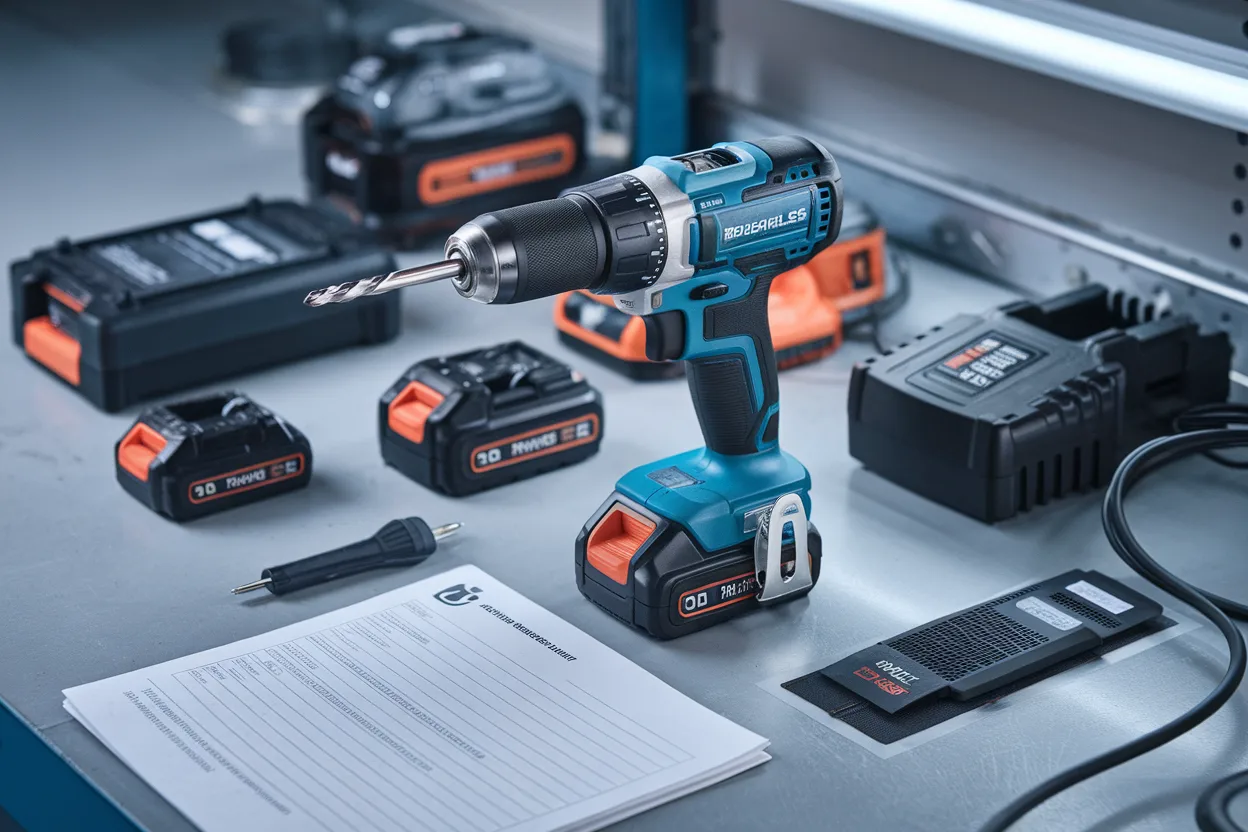
Cheap price and low risk are not the same thing
A cheap drill can help you test the market. That is true. But if the product is too weak, your test gives the wrong result. You may think the market does not want the product. In reality, the market rejected the wrong version of the product.
I have seen this happen with new private label brands. They try the cheapest option first. The sell-through is weak. Returns come in. Reviews are poor. Then they say the category is difficult. But the real issue was product choice, not market demand.
Good value means fit for your channel and customer
The best value drill depends on where you sell:
- Amazon and e-commerce need lower complaint risk
- Retail chains need consistency and packaging quality
- Distributors need repeat supply and battery platform depth
- Professional users need stronger performance and longer life
That is why there is no universal "best" drill. There is only the right match for your channel, price band, and brand promise.
| Buying goal | Best value focus |
|---|---|
| Market entry test | Controlled MOQ with stable quality |
| E-commerce launch | Lower return risk and better user feel |
| Retail chain offer | Packaging, consistency, compliance |
| Distributor line build | Battery platform and repeat availability |
| Premium private label | Better mechanics, battery, and controller |
I believe smart buyers buy confidence, not just units
When I help a buyer choose between two brushless drills, I do not ask only which one is cheaper. I ask which one gives a cleaner launch, safer after-sales, stronger repeat orders, and more room to build a cordless platform later.
A drill is never just one SKU. For serious buyers, it is often the first step into a full battery ecosystem. That is why the cheapest option is often not the cheapest decision.
Conclusion
When I compare brushless drills, I never stop at the motor label or the torque number. I look at the full system, the battery platform, the QC process, and the supplier’s ability to support real business, not just one order. In my experience, the price gap between two brushless drills usually reflects hidden decisions inside the product and behind the factory. Some of those decisions improve user trust. Some only reduce the quotation. If I am building a serious private label line for Europe, I would rather ask deeper questions first and pay for the right risk level than chase the lowest number on the first spreadsheet. If you are comparing brushless drill options for your own brand, I think the smartest move is simple. Compare the full tool system, not just the sales sheet, and talk with a manufacturer who can explain what is really inside.
-
Explore the benefits of brushless drills, including efficiency and durability, to make informed purchasing decisions. ↩
-
Learn how the controller board affects drill performance and user experience. ↩
-
Explore the different types of battery cells to understand their impact on drill performance. ↩
-
Learn about gear machining tolerance to ensure your drill operates smoothly and efficiently. ↩
-
Learn how price advantages can impact the quality and performance of power tools. ↩
-
Understanding sourcing risk can help you make better decisions when selecting suppliers. ↩
-
Understanding motor quality can help you choose a drill that performs reliably and lasts longer. ↩
-
Learn how torque numbers can help you assess the power capabilities of a drill. ↩
-
Learn about battery quality to ensure your drill has the best performance and longevity. ↩
-
Explore how cell grade affects the performance and longevity of your drill's battery. ↩
-
Understanding BMS quality can help you choose safer and more reliable battery packs. ↩
-
Understanding battery compliance is crucial for market entry in Europe, ensuring your products meet legal standards. ↩
-
Explore the complexities of market-entry issues to better navigate the EU market and avoid costly mistakes. ↩
-
Learn about battery safety expectations to ensure your products are safe and compliant for European consumers. ↩
-
Charger compatibility is vital for user satisfaction and product performance; discover best practices. ↩
-
Understanding the nuances of torque claims can help you make informed purchasing decisions. ↩
-
Private label buyers face unique challenges; learn what to consider for successful sourcing. ↩
-
Calculating total cost helps you understand the long-term value of your purchases beyond initial price. ↩
-
Identifying hidden failure points can prevent costly issues; learn what to watch out for. ↩