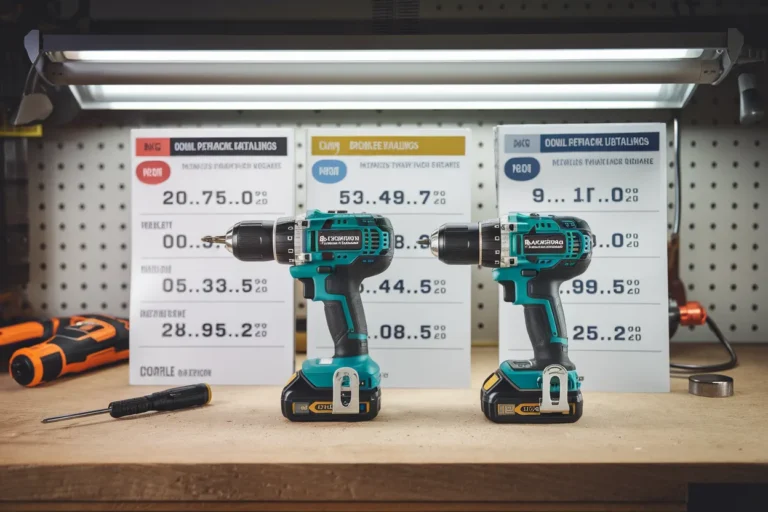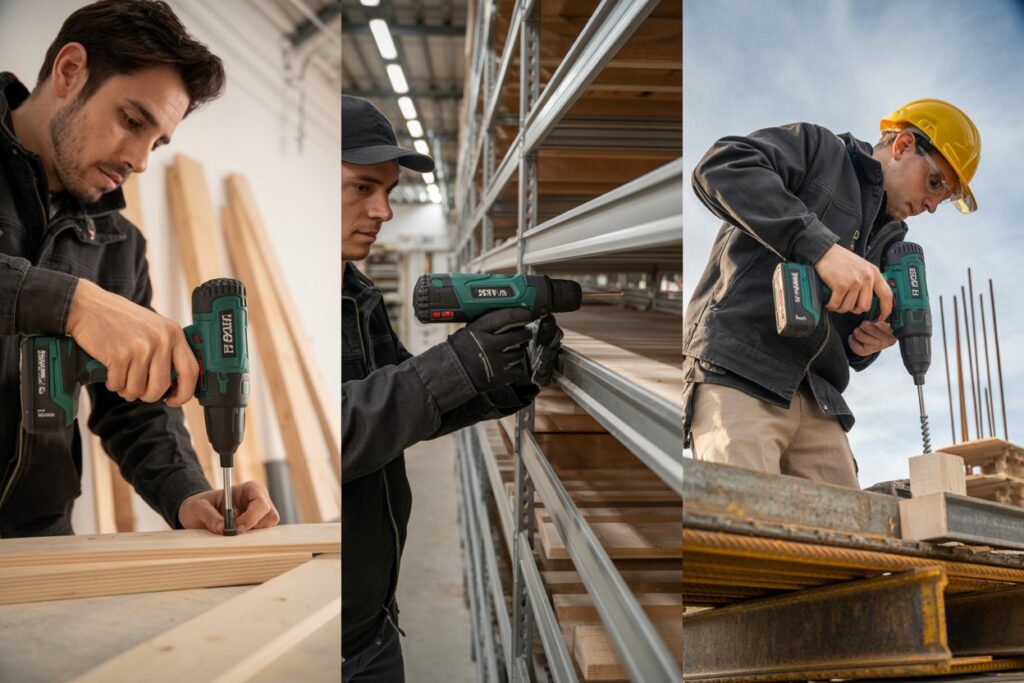
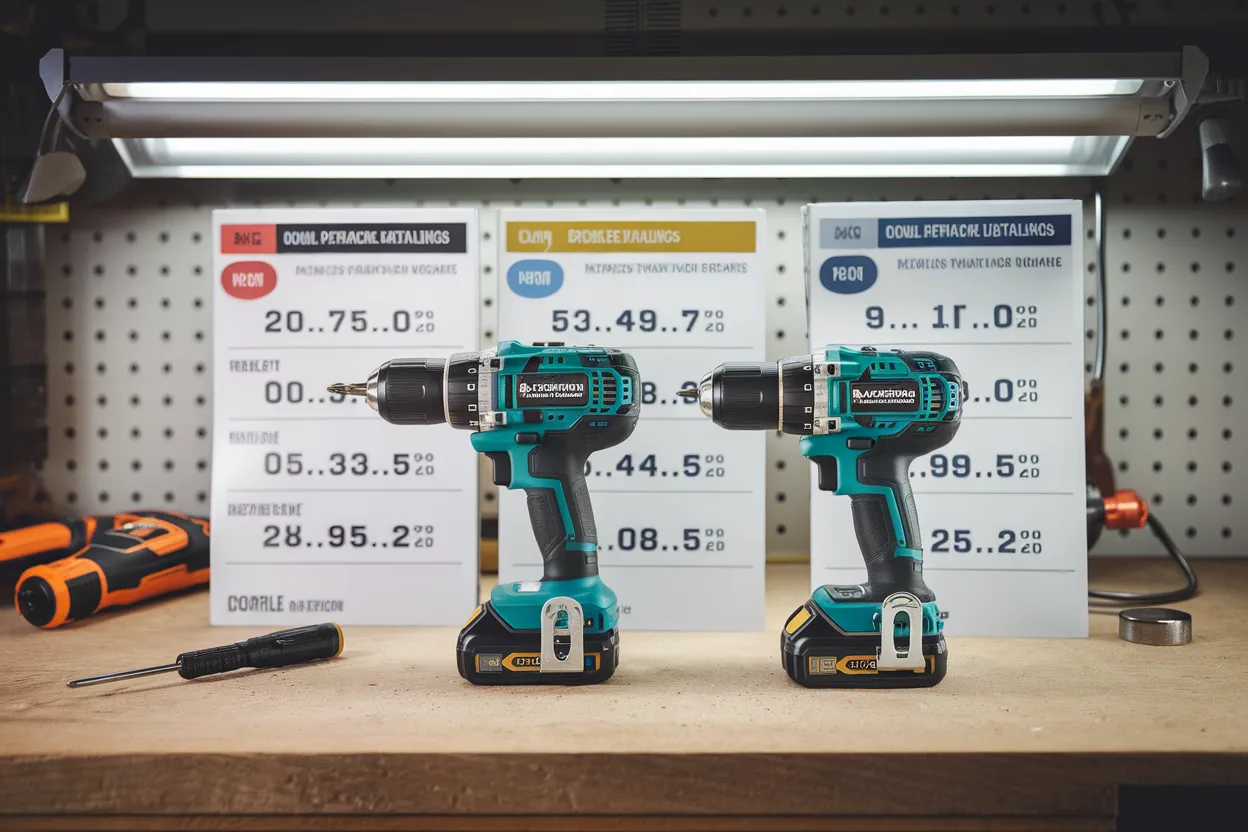
Many buyers assume a brushless drill1 should feel stronger the moment they see the word "brushless." I see this mistake often. It creates bad samples, wrong sourcing decisions, and weak product launches for new brands.
Some brushless drills still underperform because the motor is only one part of the system. Battery output, controller tuning, gearbox loss, chuck quality, heat control, and test method all decide how strong the drill really feels in real work.
I have seen this problem many times with importers in Italy, Spain, and Germany. They compare two brushless drills on paper, and both look similar. Then one sample feels sharp and stable, while the other feels weak, hot, noisy, and disappointing. That gap is exactly where many new cordless tool brands make costly mistakes.
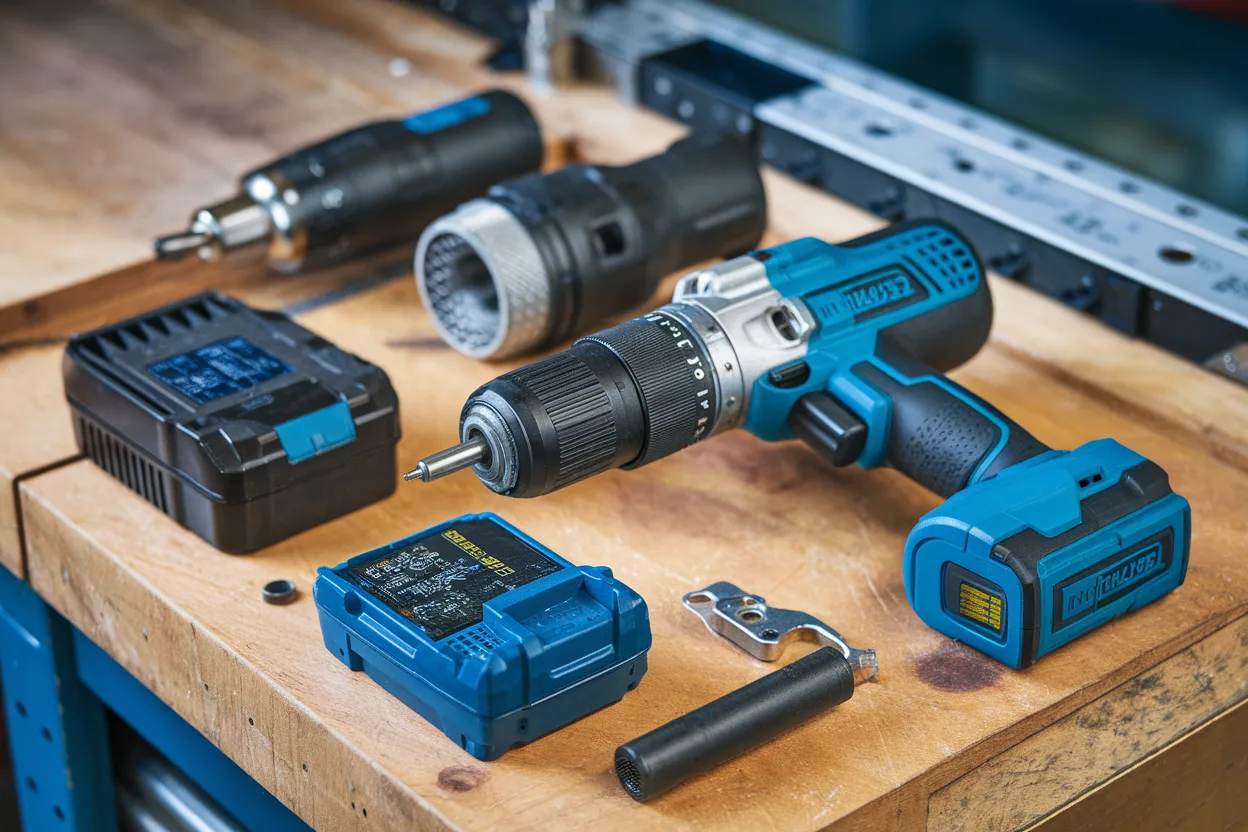
Why brushless does not automatically mean better performance?
Many buyers treat "brushless" like a quality guarantee. I do not. I always tell new buyers that brushless is a technology type, not a full performance result.
Brushless does not automatically mean better performance because the full tool system matters more than the motor label. A weak battery, poor PCB, bad gearbox, or low-grade chuck can make a brushless drill feel worse than a good brushed model.
A brushless motor is only one part of the power chain
I often explain this to buyers who are entering cordless tools from other categories. They already understand business, but they do not always understand lithium tool structure yet. A brushless motor can improve efficiency. It can reduce wear. It can support better electronic control. But none of that matters if the rest of the platform is weak.
A drill is a full system. It includes the battery cells, BMS, controller board, motor winding, magnet quality, gearbox ratio, gear hardness, spindle, chuck, and cooling layout. If one of these parts is poor, the user will feel it.
I have tested samples where the supplier advertised "brushless" as the main selling point. The drill looked modern. The spec sheet looked clean. But the trigger response was delayed. The torque dropped fast under load. The housing got hot. The sound was rough. In real use, it did not feel premium.
Why many new brands get misled by the brushless label
New brands often want a safe first product. They think brushless sounds more advanced, so it should be the better choice. In many markets like Italy and Germany, that logic is understandable because end users now expect brushless in mid to upper segments. But the risk is simple: buyers may skip real testing because the label feels reassuring.
That is why I always say the correct question is not "Is it brushless?" The correct question is "Does this brushless platform stay strong under real load?"
| What buyers assume | What I check instead |
|---|---|
| Brushless means stronger | Load holding power in wood and metal |
| Brushless means premium | Trigger feel, heat, balance, vibration |
| Brushless means durable | Controller stability and gearbox wear |
| Brushless means higher margin | Return risk, warranty risk, repeat order risk |
What this means for OEM and ODM buyers
For OEM and ODM projects, this matters even more. A weak brushless drill can damage your new brand faster than a good brushed drill. If your customer buys because of the brushless claim but gets weak drilling force, you create a trust problem. In Europe, especially with more informed buyers, that trust is expensive to rebuild.
That is why at YOUWE, when I discuss a brushless drill platform with a buyer, I never start with the motor label2 alone. I start with the whole system, the battery platform, the controller behavior, the gearbox efficiency3, and the real use test method4.
How weak battery output can limit a brushless drill?
Many buyers focus on motor specs first. I usually look at the battery before I judge the drill. A strong brushless motor cannot perform well if the battery cannot feed it.
Weak battery output can limit a brushless drill because brushless systems need stable current delivery under load. If the cells sag too much, the drill loses torque, slows down, and feels weak even when the motor itself is capable.
Voltage on the label is not enough
I see this mistake every month. A buyer compares two 20V class or 21V max class drills. Both use a similar battery label. Both say brushless. They assume performance should be close. But that is not how it works.
The label only tells you the platform class. It does not tell you discharge capability. A 5-cell lithium pack can be built with low-cost cells that look fine in a catalog but collapse under heavy drilling. When that happens, the controller sees voltage drop5. Then output is reduced. Then the user says, "This brushless drill feels soft."
For drilling in wood, sheet metal, masonry with a hammer function, or self-drilling screws, current delivery6 matters a lot. Peak power in a short demo is easy. Stable output during 8 to 15 seconds of real load is harder.
Cell quality changes real torque feel
The battery pack is not just voltage. It is cell chemistry, cell grade, internal resistance7, weld quality, nickel strip layout, BMS design, and thermal behavior8. Two packs with the same Ah label can behave very differently.
I have seen 2.0Ah packs with better high-drain cells outperform cheap 4.0Ah packs in short heavy drilling. This surprises many new importers. But it makes sense. If the pack cannot release current fast enough, the bigger label does not help much.
| Battery factor | What happens in real use | Buyer risk |
|---|---|---|
| High internal resistance | RPM drops under load | Drill feels weak |
| Low-grade cells | Heat rises quickly | More complaints and short life |
| Poor BMS current limit | Sudden power cut or soft output | Bad user trust |
| Weak spot welds or layout | Voltage loss under peak load | Unstable performance |
| Inflated Ah rating | Poor runtime vs expectation | Return risk |
Why this matters for Europe buyers
In Europe, many buyers now care about battery platform logic, not just single-tool pricing. They want cross-compatible platforms. They ask about replacement battery cost, pack safety, and long-term support. In Italy and Spain, I often hear the same concern: "If I build a drill line, can I later expand to impact driver, angle grinder, and garden tools on the same battery system?"
This is exactly why battery quality matters more than a low sample price. A cheap battery can reduce your entry cost, but it can destroy platform confidence. For OEM projects9, I always tell buyers to test the drill with the actual battery they plan to sell, not a special factory sample pack.
Why poor controller tuning makes a drill feel underpowered?
Many people talk about brushless motors, but fewer talk about the controller. I think the controller is one of the most misunderstood parts in a brushless drill.
Poor controller tuning makes a drill feel underpowered because the controller decides how power is delivered. If the software and hardware are not tuned well, the drill can hesitate, cut power too early, or waste motor potential under real load.
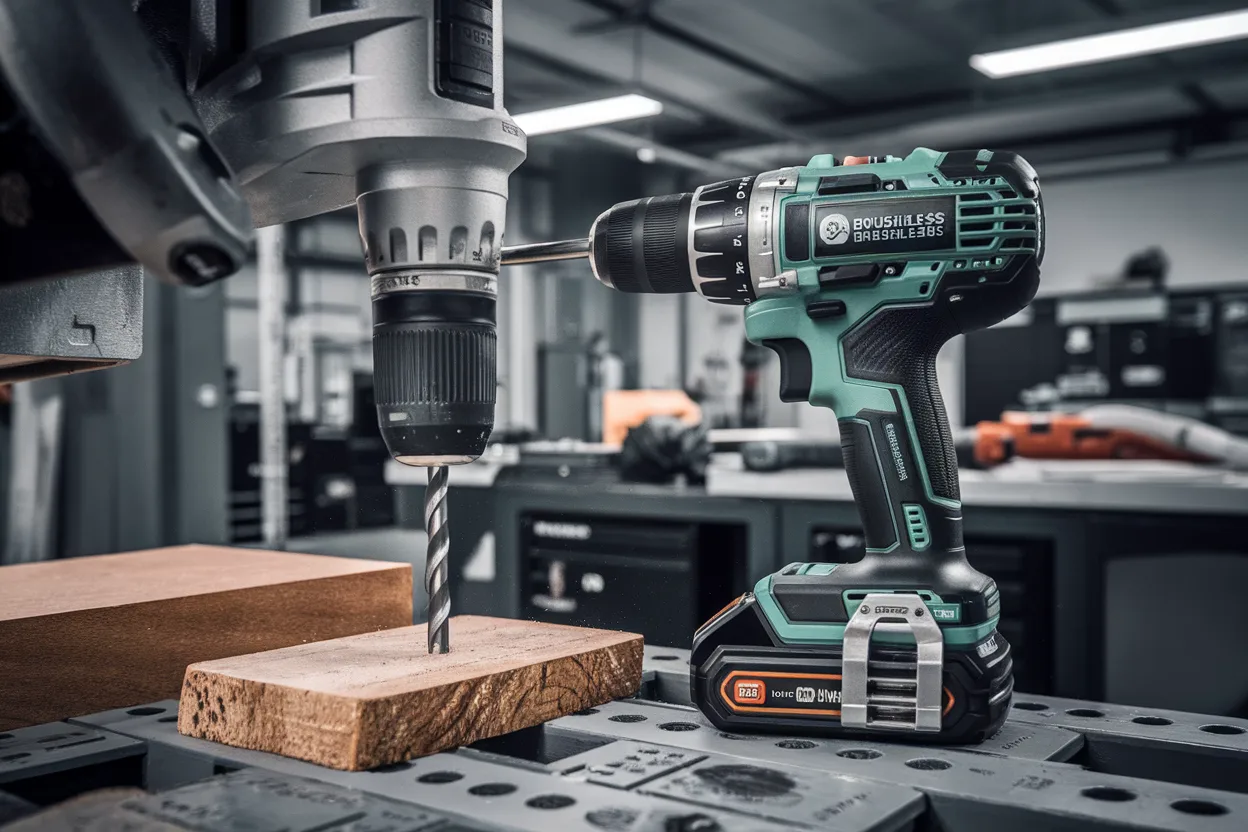
The controller is the brain of the brushless system
A brushless drill depends on electronic commutation. That means the controller decides timing, current flow, trigger response, startup behavior, overload logic, and protection thresholds. If this part is weak, the drill can feel worse than a simple brushed model.
I have tested brushless drills that looked strong in no-load RPM tests. But when I drove long screws into hardwood, the tool hesitated at startup. Then it surged. Then it cut back. That type of power delivery10 feels cheap, even if the spec sheet looks good.
End users do not describe this as "controller tuning11." They simply say, "This drill has no confidence."
Common tuning problems I see in factory samples
When a factory tries to reduce cost or speed up development, controller tuning is often simplified. This can create many hidden problems.
Common issues include:
- Slow torque ramp at startup
- Overcurrent protection that cuts in too early
- Trigger curve that feels dead in the first half
- Sudden power jump at mid trigger
- Aggressive thermal rollback
- Poor low-speed control for screwdriving
- Weak stall recovery logic
These issues matter because users feel them immediately. A buyer in Germany may not know the exact electronic reason, but he will know the drill feels less refined than a competitor.
| Controller issue | User feeling | Market impact |
|---|---|---|
| Soft startup mapping | Feels weak off the line | Poor first impression |
| Early current limiting | Loses force under load | Lower drilling confidence |
| Bad trigger curve | Hard to control screws | More complaints from DIY users |
| Poor stall response | Stops too easily | Looks weak vs competitors |
| Aggressive thermal rollback | Strong for 5 seconds only | Bad review risk |
Why this matters in OEM and ODM development
This is one reason I always tell new brands not to judge a brushless drill by one short demo. A factory can show a fast no-load spin and a quick screw drive. That does not tell you if the controller is truly tuned for retail use.
In OEM and ODM work, controller tuning is one of the areas where a real manufacturer can create value. A supplier who only assembles standard parts may give you a generic controller setup. A manufacturer with in-house testing can adjust feel, response, and protection logic for your target segment.
If your target market is Italy or Spain DIY retail, you may want smoother trigger feel and stable screwdriving. If your target market is a more professional distribution channel, you may want a firmer torque ramp and higher load tolerance. That is not just engineering. That is product positioning.
How gearbox efficiency affects real drilling force?
Many buyers compare torque numbers, but they forget that the gearbox decides how much of that motor power actually reaches the bit. I care about gearbox quality more than most catalogs do.
Gearbox efficiency affects real drilling force because every gear stage can lose power. Poor gear design, loose tolerances, bad lubrication, or weak materials reduce the torque that reaches the chuck, even if the motor itself is strong.
The motor can be strong while the output still feels weak
This is a very common trap. A drill may use a decent brushless motor, but the user still feels weak drilling force. In many cases, the gearbox is the hidden reason.
A planetary gearbox has real losses. That is normal. But the loss level changes a lot depending on design and manufacturing. Gear material, tooth profile, hardness treatment, machining quality, bearing support, concentricity, lubrication, and assembly control all matter.
If the gear mesh is rough, friction rises. If the tolerances are loose, impact and vibration increase. If the grease is poor, heat rises and wear increases. If the carrier is weak, torque transfer becomes less stable.
Why gearbox quality changes user confidence
A good gearbox gives a drill a very specific feeling. It feels direct. It feels planted. When the user pushes into wood or metal, the power feels connected. A poor gearbox feels noisy, loose, or delayed. Sometimes the drill sounds powerful, but the bit does not bite the way it should.
I once compared two similar 21V class brushless drills with a buyer who wanted a private label program. On paper, both looked close. In a steel drilling test, one tool felt calm and consistent. The other screamed louder, vibrated more, and slowed sooner. That difference was not the motor alone. The gearbox loss12 and mechanical stability were clearly different.
| Gearbox factor | Good result | Poor result |
|---|---|---|
| Gear hardness | Better wear life | Early wear and noise |
| Machining tolerance | Smooth transfer | Friction and vibration |
| Bearing support | Stable spindle load | Shaft movement under pressure |
| Lubrication quality | Lower heat | Fast heat rise |
| Carrier strength | Better torque transfer | Flex and loss |
What importers should ask before approving a platform
Many buyers ask about motor wattage, but fewer ask about gearbox details. I think that is a mistake, especially for brands that want to sell in Germany or more demanding retail channels.
I usually recommend asking:
- Is the gearbox all metal or mixed material?
- What is the gear hardness process?
- How is noise tested?
- Is there endurance testing under continuous load?
- What is the failure pattern after 500 or 1,000 cycles?
- Is the gearbox shared across other proven models?
A stable gearbox is not just about power. It also affects warranty rate, long-term reputation, and how your product feels in the user’s hand.
Why torque numbers on paper can be misleading?
Torque is one of the most abused numbers in cordless drills. I see many catalogs using torque like a marketing shortcut. That is why I never trust torque alone.
Torque numbers on paper can be misleading because factories may use different test methods, peak values, or ideal conditions. A high published torque does not always mean stronger drilling, better screwdriving, or better real-world control.
Not all torque figures mean the same thing
When a buyer sees 45Nm, 60Nm, or 80Nm, it looks easy to compare. But I know that many factories do not test the same way. Some use peak stall torque. Some use a short pulse reading. Some use a soft joint test. Some do not explain the method at all.
That means two drills with the same torque claim can feel very different. One may have better sustained torque. One may hold RPM better. One may have better screwdriving control13. One may simply spike a high number for a moment.
This is why I tell new brands: torque is useful, but only if the test method is clear.
What matters more than the headline torque number
For real users, these factors often matter more:
- Torque delivery curve
- RPM retention under load
- Trigger control at low speed
- Screw seating consistency
- Stall behavior
- Heat rise during repeated drilling
- Stability in larger hole saw or spade bit use
A drill that claims 65Nm but keeps its speed under load may feel stronger than a drill that claims 80Nm but collapses quickly.
| Catalog number | Why it can mislead | Better check |
|---|---|---|
| Max torque | May be peak only | Sustained load test |
| No-load RPM | No cutting resistance | Loaded RPM retention |
| Impact rate in hammer mode | Not drilling efficiency alone | Concrete or masonry real test |
| Ah rating | Does not show current ability | Voltage sag under load |
| Brushless label | Not a performance guarantee | Full platform comparison |
How I recommend buyers compare drills
If I am helping a buyer build a new drill line, I prefer side-by-side tests:
- Drill the same hole size in the same material
- Use the same battery charge level
- Use the same bit quality
- Time the task
- Measure heat after repeated cycles
- Observe user feel and trigger control
- Repeat with low battery state
This matters a lot for commercial investigation buyers. These buyers are not only asking, "Which drill is stronger?" They are asking, "Which drill will create fewer problems after I launch?"
That is the real pre-transactional question.
How chuck quality and runout affect real-world drilling?
Many buyers ignore the chuck because it looks like a small part. I do not. A poor chuck can make a decent drill feel cheap very fast.
Chuck quality and runout affect real-world drilling because they control bit grip, alignment, and drilling accuracy. If the chuck slips, wobbles, or runs out too much, the drill feels unstable, drills less cleanly, and creates user complaints.
Why chuck quality changes user trust immediately
The chuck is the part the user touches every time. It also controls the bit. So even if the motor is strong, a poor chuck can ruin the whole experience.
If the jaws do not center well, the bit wobbles. If the grip force is weak, the bit slips. If the ratchet feel is poor, users lose confidence when tightening. If spindle runout is too high, hole quality drops and vibration increases.
In metal drilling, this matters even more. In precision work, even a small wobble makes the tool feel low quality. In some retail markets, especially where buyers compare products side by side, this can hurt conversion fast.
Runout is often ignored until returns start
Runout means the bit does not rotate perfectly centered. Some runout is normal. But too much creates visible wobble. Buyers often miss this during quick sourcing because the drill still "works." The problem appears later when users complain about crooked holes, broken small bits, or bad control.
I have seen brands spend time discussing brushless motors and battery rules for Europe, but skip chuck inspection. Then later they face quality claims14 that could have been avoided in sampling.
| Chuck issue | What the user notices | Business result |
|---|---|---|
| Weak jaw grip | Bit slips in hard load | Frustration and returns |
| Poor concentricity | Wobble at the bit | Cheap product feel |
| Rough sleeve action | Hard to tighten | Bad first impression |
| Low spindle precision | Inaccurate drilling | Poor reviews |
| High runout | Vibration and bit break risk | Warranty complaints |
What I tell new brands to test
For new private label buyers, I recommend simple but strict checks:
- Visual wobble check at multiple speeds
- Small metal bit drilling test
- Repeated tightening and loosening cycles
- Slip test with larger diameter bit
- Runout comparison across 3 to 5 random samples, not just one
This is one of those areas where a better supplier makes a big difference. A factory that understands real tool quality will not treat the chuck as a decorative part. It will treat it as a user trust15 part.
Why heat management matters more than short demo power?
A drill can look powerful in the first few seconds. That does not mean it is a good platform. I always care more about how the tool behaves after repeated real use.
Heat management matters more than short demo power because many drills can show strong peak output briefly. The real difference appears when repeated load builds heat and the drill starts losing power, cutting current, or aging faster.
Peak power is easy to show. Stable power is harder.
Factories love short demos. A quick screw into wood. A short burst with a spade bit. A fast spin on camera. These are useful, but they do not tell the full story.
Heat changes everything in a brushless drill:
- Battery voltage sags more
- Controller protection may reduce output
- Motor efficiency drops
- Grease behavior changes
- Plastic housing can feel worse
- Long-term durability risk increases
A drill that feels strong for one task may feel much weaker by the tenth task. That matters in real use, especially for users doing installation work, repeated assembly, or store demo comparisons.
Heat is not only a comfort issue
Some buyers think heat is only about hand comfort. I do not agree. Heat is a system health signal. It tells me if the battery is stressed, if the controller is too aggressive, if the motor is overloaded, or if the gearbox is wasting power.
In Europe, this also connects to compliance thinking. Buyers often ask about CE, EMC, and safe transport. But beyond paperwork, they also need product behavior that supports lower failure rates and safer real use. A hot-running platform may pass documents but still create bad field results.
| Heat source | What it may indicate | Why it matters |
|---|---|---|
| Battery gets hot fast | High current stress or weak cells | Shorter pack life |
| Handle area heats quickly | Controller or internal layout issue | Bad user comfort |
| Gear head heats too much | Gearbox friction or overload | Durability risk |
| Output fades after cycles | Thermal rollback | Poor professional use feel |
| Smell or noise changes | Stress buildup | High return risk |
How I prefer to test heat behavior
I do not trust one short test. I prefer repeated cycle tests:
- Same bit
- Same material
- Same battery platform
- Multiple back-to-back holes or screws
- Temperature check after each cycle block
- Performance check when battery is not full
- Cooldown recovery observation
This tells me if the drill is truly stable or only "camera strong." For a new brand, this matters more than a nice first impression because heat-related weakness often becomes warranty cost later.
What new tool brands should test before trusting a brushless drill platform?
If you are building a new cordless tool line, you should never trust a brushless drill platform from a catalog alone. I always tell buyers to test like a future brand owner, not like a sample collector.
New tool brands should test full-system performance before trusting a brushless drill platform. They should verify battery output, controller behavior, gearbox efficiency, chuck accuracy, heat control, consistency, certifications, lead time, and platform expansion potential before launch.
My basic pre-launch test checklist for new brands
When I work with buyers who are entering cordless tools from outside the category, I try to simplify the process. I do not want them to feel they need to master everything at once. I want them to avoid the biggest mistakes first.
This is the test list I usually recommend before approving a brushless drill platform:
- Real drilling in wood, metal, and if relevant, masonry
- Long screw driving test
- Low battery state performance
- Repeated cycle heat test
- Chuck runout and slip check
- Trigger control at low speed
- Drop and handling feel
- Battery pack consistency across several samples
- Charger stability
- Spare parts logic
- Platform expansion potential into other tools
- Certification file review for target markets
- MOQ and lead time reality check
- Packaging and user manual review
- Warranty risk discussion with the factory
Do not test only the best sample
One of the biggest mistakes I see is this: the buyer tests one "golden sample." That sample may be specially prepared. It may use better cells. It may have extra attention during assembly. That is not enough.
I always suggest:
- Test at least 3 to 5 units
- Test with production-intent batteries
- Test after shipping if possible
- Test with retail packaging conditions
- Ask what changes at different MOQ levels
- Confirm if the same configuration is stable during mass production
This is very important for buyers in Italy, Spain, and Germany because retail and distributor channels care about consistency. One strong sample does not protect you from batch variation.
| What to test | Why it matters before launch | What to ask the factory |
|---|---|---|
| Battery under load | Confirms real current ability | Which cell grade is standard? |
| Controller feel | Confirms product positioning | Is tuning fixed or adjustable? |
| Gearbox endurance | Protects long-term reputation | What is the wear test method? |
| Chuck runout | Protects user trust | What is the QC limit? |
| Heat after repeated use | Shows real stability | When does thermal rollback start? |
| Certification documents | Supports import and compliance | Are CE/EMC files model-specific? |
| MOQ and lead time | Affects launch plan | What changes below standard MOQ? |
| Platform roadmap | Helps future sales | Can this battery support more SKUs? |
Why the right manufacturer reduces your risk
Many new brands do not need the cheapest drill. They need the most controllable entry point. That is a very different goal.
A good manufacturer should help you:
- Narrow down the right platform
- Explain battery platform logic
- Clarify certification scope
- Show realistic MOQ and lead time
- Compare brushed vs brushless honestly
- Suggest where to start small
- Help you avoid overbuilding the first SKU
- Support future OEM or ODM expansion
That is the role I believe a real cordless tools manufacturer should play. I do not think my job is only to quote a drill. I think my job is to help a buyer avoid a weak launch.
Conclusion
I have learned that brushless drills fail expectations when buyers trust labels more than systems. A strong drill is never just a motor choice. It is a battery choice, a controller choice, a gearbox choice, a quality control choice, and a sourcing choice. If I were launching a new cordless drill line today, I would spend less time comparing headline torque and more time testing how the platform behaves under pressure, heat, repeated use, and real market conditions. That is where weak products get exposed. That is also where smart brands make better first moves. If you are comparing brushless drill platforms for Europe or other export markets, I believe a practical conversation with the right factory can save you months of wrong sampling and a lot of avoidable risk.
-
Explore the benefits of brushless drills to understand their performance and efficiency compared to traditional models. ↩
-
Explore why the motor label alone does not determine the overall performance of a drill. ↩
-
Understand the role of gearbox efficiency in delivering power effectively to the drill bit. ↩
-
Explore effective testing methods to accurately assess drill performance before purchase. ↩
-
Explore the causes of voltage drop and its effects on the performance of cordless drills. ↩
-
Understand the importance of stable current delivery for optimal drill performance under load. ↩
-
Discover how internal resistance can impact the efficiency and effectiveness of your drill's battery. ↩
-
Learn about thermal behavior in batteries and its implications for drill performance and safety. ↩
-
Discover essential considerations for successful OEM projects in the drill manufacturing industry. ↩
-
Understand the key factors that affect how power is delivered in brushless drills. ↩
-
Discover the importance of controller tuning in maximizing drill performance and user experience. ↩
-
Learn about the factors contributing to gearbox loss and how they affect drilling efficiency. ↩
-
Find tips on enhancing screwdriving control for better results in your projects. ↩
-
Learn about the quality claims that can arise and how to avoid them. ↩
-
Understand the importance of user trust in driving sales and brand loyalty. ↩