
When I first picked up a cordless grease gun, I didn’t expect it to make such a difference. But the moment I used one, I realized it wasn’t just a tool—it was a time-saver, a wrist-saver, and honestly, a sanity-saver too.
A cordless grease gun is considered the best when it offers consistent pressure, adjustable flow, long battery life, and durable build quality. Look for models with automatic air bleeding, LED lights, and lithium batteries for reliable performance across industrial and workshop applications.
If you’ve ever struggled with manual grease guns that leak, jam, or demand superhuman hand strength, you’ll understand why cordless models are taking over. Let’s break down what really makes one “the best” and how to choose the right type for your work.
What are the main advantages of using a cordless grease gun over a manual one?
Using a cordless grease gun isn’t just about convenience—it’s about efficiency, control, and precision. Once you try it, going back to manual feels like returning to a flip phone after using a smartphone.
Cordless grease guns save time, reduce fatigue, and deliver consistent pressure for even lubrication. They can reach hard-to-access fittings and provide precise control, making them ideal for maintenance tasks in vehicles, machinery, and industrial equipment.
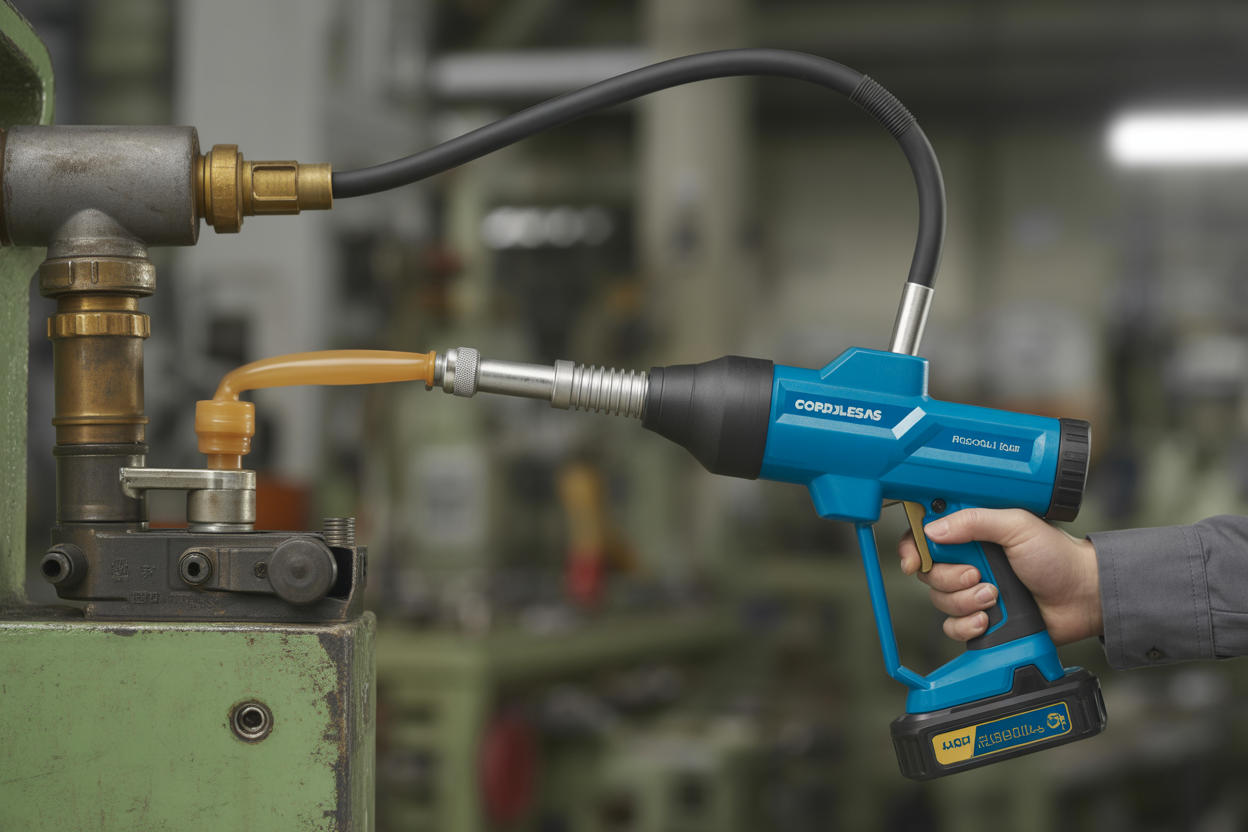
When I switched to cordless, I noticed two things immediately: my hands didn’t ache after long shifts, and the grease went exactly where it was supposed to. Manual guns often lose pressure mid-job, wasting grease and patience alike.
Here’s a quick comparison:
| Feature | Cordless Grease Gun | Manual Grease Gun |
|---|---|---|
| Pressure Output | Consistent, adjustable | Depends on user effort |
| Speed | Fast and efficient | Slow, time-consuming |
| Fatigue | Minimal | High |
| Reach | Excellent for tight spots | Limited |
| Ideal For | Professionals, frequent use | Light, occasional use |
Real-world insight
In my experience, cordless grease guns like the YOUWE 21V Lithium Grease Gun are perfect for workshop and farm use. They allow me to apply grease evenly in half the time, and the battery lasts long enough for an entire day’s maintenance run.
What should you not use lithium grease on?
This is one of those details people often miss—yes, lithium grease is great, but it’s not for everything.
Avoid using lithium grease on plastic, rubber, or electrical connections. It can cause rubber seals to swell, degrade plastic components, and affect conductivity in electrical systems. Always check material compatibility before applying.
I learned this the hard way. Once, I used lithium grease on a rubber gasket—big mistake. Within days, the rubber softened and started breaking down. Lesson learned: even good grease has its limits.
Let’s make it simple:
| Do Use On | Avoid Using On |
|---|---|
| Metal joints | Plastic components |
| Bearings | Rubber seals |
| Hinges | Electrical terminals |
| Machinery | Delicate electronics |
Pro Tip
If you’re working around rubber or electrical components, try silicone or dielectric grease instead. They stay stable, don’t react with materials, and are safer for sensitive parts. It’s one of those small details that saves you big repair costs later.
Is there a difference between lithium grease and white lithium grease?
I used to think “white lithium grease” was just regular lithium grease dyed white. Turns out, there’s a bit more to it.
Yes, white lithium grease is a refined version of regular lithium grease, formulated with zinc oxide for added protection and visibility. It’s cleaner, less messy, and ideal for household, automotive, and light mechanical applications.
Regular lithium grease is darker and better suited for high-load, industrial jobs—it’s tougher but messier.
White lithium, on the other hand, is smoother and easier to spot, especially when you’re maintaining tools or hinges where over-application could attract dust.
Here’s how they stack up:
| Property | Lithium Grease | White Lithium Grease |
|---|---|---|
| Color | Brown/Amber | White |
| Base | Lithium soap | Lithium soap + zinc oxide |
| Use | Heavy-duty machinery | Household, automotive |
| Visibility | Low | High |
| Cleanliness | Medium | High |
My Take
In my workshop, I use white lithium grease for tools and door hinges—it’s easy to wipe off and doesn’t stain. But when I’m maintaining a piece of heavy machinery, I go with regular lithium grease. It’s stronger, and the darker color doesn’t bother me when I’m elbow-deep in metal parts.
Conclusion
The best battery grease gun is the one that fits your workflow—powerful, efficient, and comfortable. For me, cordless means freedom. It turns a chore into a smooth, satisfying task—and once you feel that ease, you won’t look back.
Written by Lynn Rao for YOUWE – Power Tools Manufacturer
Empowering precision, one tool at a time.