When people ask me what a hammer drill1 is for, I always think back to the first time I tried drilling into a concrete wall with a normal drill2. The bit smoked, the wall won, and I learned my lesson fast.
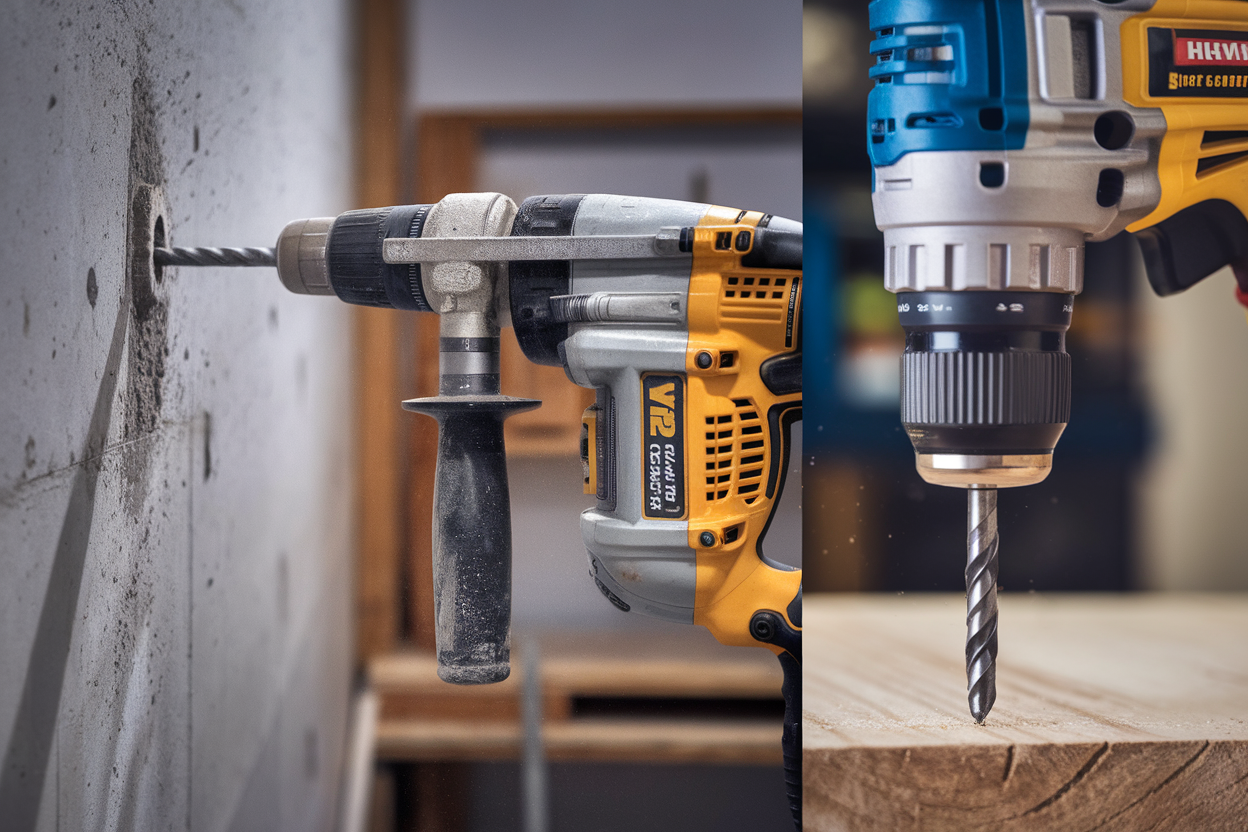
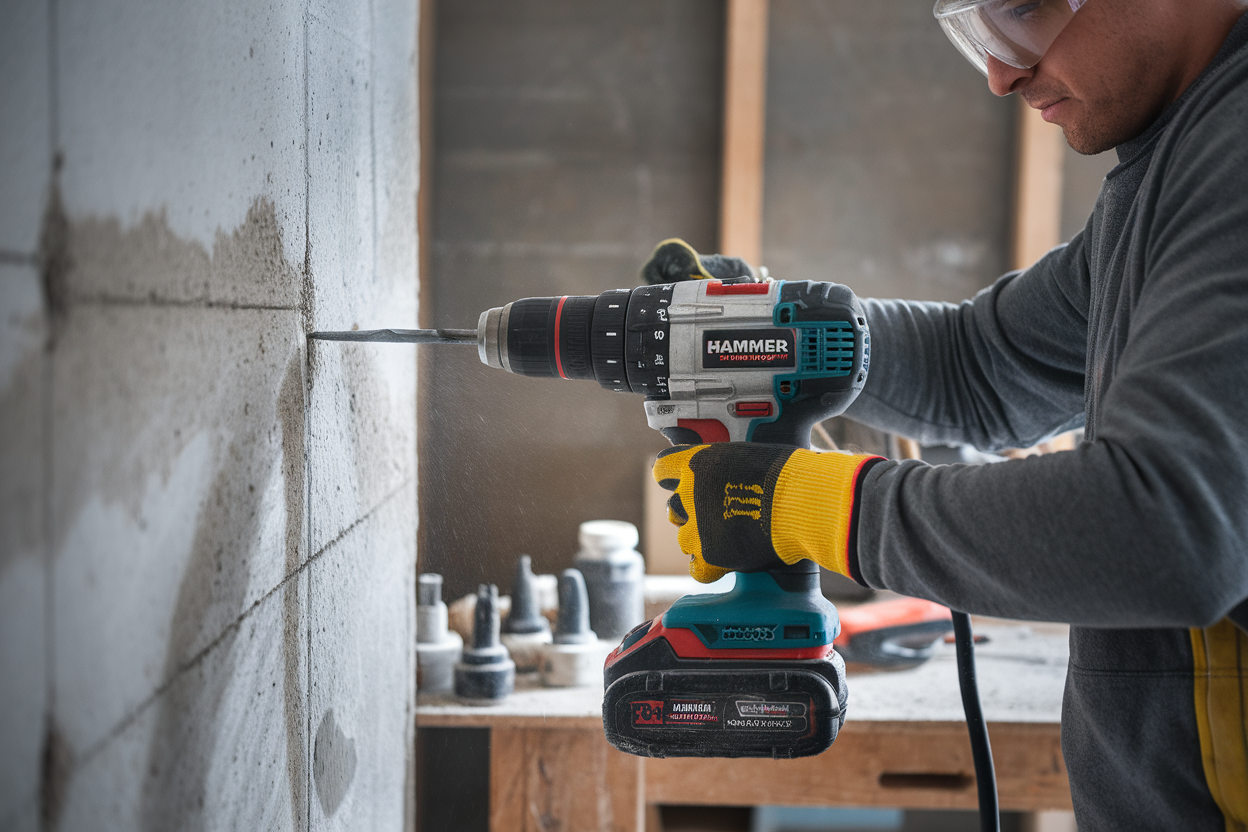
A hammer drill is mainly used for drilling into hard materials like concrete, brick, and stone. It combines rotation with rapid hammering action to break dense surfaces. This makes it suitable for masonry work, installing anchors, and creating holes in tough construction materials.
A hammer drill can feel like a small but determined beast in your hands. The moment you pull the trigger, you feel the difference—like someone tapping the wall thousands of times per minute while the drill spins through it. Let’s unpack this tool in a way that flows naturally, without the heavy jargon.
Is there a difference between a hammer drill and a normal drill?
Before I truly understood tools, I used to think a hammer drill was just a “louder drill.” I was wrong—but you don’t need to learn the hard way like I did.
The short answer: yes, the difference is big. A normal drill spins; a hammer drill spins and hits. That extra motion changes everything when the job gets tough.
A hammer drill differs from a normal drill because it adds a forward hammering motion while rotating. This helps the bit cut into dense surfaces like brick or concrete. A normal drill only rotates, making it better for wood, metal, and light tasks.
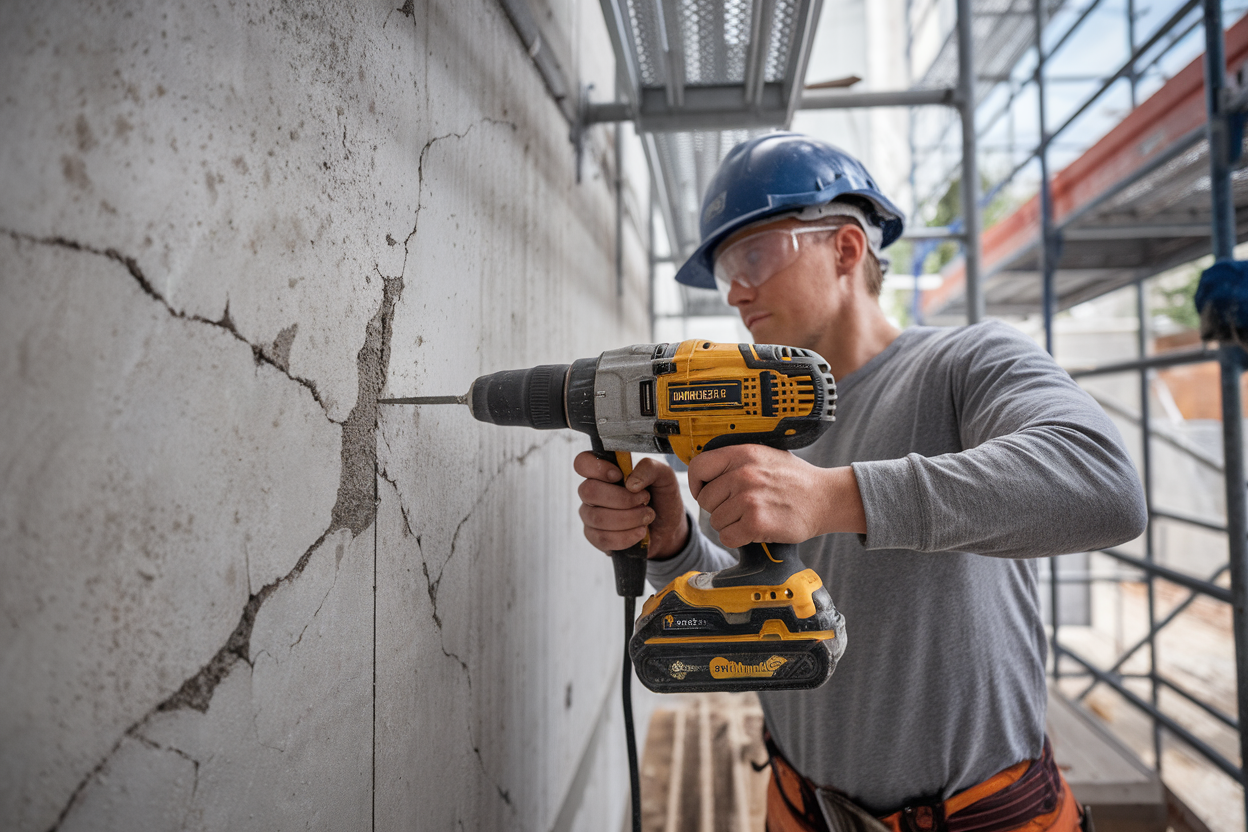
When I first held a hammer drill, I didn’t expect it to feel alive. The internal mechanism uses two ridged discs that slip and strike against each other as the chuck rotates. That impact travels straight through the bit, helping it chip away at tough surfaces.
Here’s a simple comparison:
| Drill Type | Motion | Best For |
|---|---|---|
| Normal Drill | Rotation only | Wood, metal, plastic |
| Hammer Drill | Rotation + hammering | Concrete, brick, stone |
The reason this matters is that masonry doesn’t respond well to simple rotation. A normal drill can skate, slip, or overheat. But with a hammer drill, the bit starts biting into the material right away. I remember installing a customer’s signboard years ago; without the hammer drill, I would probably still be standing in front of that building, sweating and swearing quietly.
If you’re doing home renovation, mounting heavy shelves, or working in construction, that hammering action saves hours.
Tools like the ones we make at YOUWE lean on this same principle—efficient, direct, and built for people who don’t have time to fight with their tools. When a buyer in Europe asks me why a hammer drill feels stronger, this is exactly what I explain: it’s not about force, it’s about how the force is delivered.
And if you’re curious to explore more, check out guides like masonry drilling basics or choosing the right drill bit for deeper context.
Can I use a hammer drill to screw in screws?
This is one of those questions people ask when they’re trying to save time or avoid switching tools. I’ve tried it myself—and regretted it.
You can, technically, but it’s usually not a good idea unless you enjoy stripped screws and damaged bits.
A hammer drill can drive screws only when the hammer mode is turned off. In hammer mode, it delivers impacts that can damage screws and bits. For controlled screwdriving, a regular drill or driver is more suitable.

Let me be honest: the first time I tried to drive screws with a hammer drill in hammer mode, the screw looked like it had been chewed by a small animal. The torque was fine, but the impacts made precision impossible.
Here’s what usually happens:
-
With hammer mode ON:
- The screw jumps
- The bit slips
- The head gets damaged
- Your patience disappears
-
With hammer mode OFF:
- It works, but feels too fast and too strong
- Hard to control for delicate tasks
- Easy to overdrive the screw
A hammer drill isn’t built for finesse. It’s built for toughness. That’s why I always tell buyers who rebrand or distribute tools: if your customers do a lot of woodwork or assembly, include a small cordless screwdriver or drill driver in your lineup. It feels safer, smoother, and far more predictable.
But if you're in a pinch—say, you’re fixing something on-site and only brought one tool—turn the hammer function off and set the clutch low. You’ll get the job done without destroying the hardware.
If you want to compare screwdriving tools, I recommend reading impact driver vs drill guide.
Can a hammer drill be used as a regular drill?
This is a common question for buyers looking to cut costs or simplify stock. I understand—it’s tempting to choose one tool for all tasks3.
And yes, you can use a hammer drill as a normal drill, as long as you switch the hammer function off.
A hammer drill works as a regular drill when the hammer mode is disabled. It can drill wood, metal, and plastic, but may feel heavier and louder than a standard drill. Switching off the hammer action ensures smooth rotation for general tasks.
One thing I’ve noticed over the years—especially working with buyers across Europe—is that many customers want fewer tools that can do more jobs. A hammer drill can indeed cover both roles, but it comes with trade-offs4.
When you use a hammer drill as a normal drill:
- It may feel heavier, making long sessions tiring.
- The motor is often stronger, which can be great—or too much—depending on the task.
- Some models are louder, even without hammering.
- Control at slow speeds can feel less smooth than a dedicated drill driver.
Yet the convenience is real. I’ve visited many tradespeople who carry only one drill for everything. They switch between modes instinctively—wood frame, then metal bracket, then concrete wall. One tool, endless chores.
Here’s a small comparison to visualize it:
| Role | Works Well? | Notes |
|---|---|---|
| Regular drilling | Yes | Hammer mode must be off |
| Masonry drilling | Excellent | Main purpose |
| Screwdriving | Possible | But not ideal |
If you import tools from China and rebrand them, this flexibility is a strong selling point for your customers. People love tools that “do it all,” even if one mode isn’t perfect.
If you'd like to explore compatible tasks, see [basic drilling guide](https://www.delicoil.com/blog/what-is-a-drill-guide-801559.html)5 or [surface preparation tips](https://www.dpdiamonddrilling.co.uk/drilling-down/how-to-properly-prepare-your-surfaces-during-commercial-drilling-sawing)6.
Conclusion
A hammer drill is your go-to tool when the job gets tough—especially with masonry. It can act like a normal drill when needed, but its true strength shines when you face concrete or brick. Keep the hammer mode off for delicate tasks, and it will serve you well.
-
Discover the essential uses of a hammer drill and how it can make your construction tasks easier. ↩
-
Understand the key differences between hammer drills and normal drills to choose the right tool. ↩
-
Learn about the practicality and limitations of using a single tool for multiple tasks. ↩
-
Understand the pros and cons of using a hammer drill for various tasks. ↩
-
Access a comprehensive guide to basic drilling techniques for various materials. ↩
-
Get expert tips on preparing surfaces for drilling to ensure successful outcomes. ↩