

Sometimes when I look at a battery pack, I wonder what’s really inside — those small, silver cylinders holding the heart of our cordless tools. Knowing the true internal capacity1 of a lithium-ion battery pack isn’t just curiosity; it’s smart business.
To identify a lithium-ion tool battery pack’s internal capacity, you need to check the cell configuration (like 3S1P or 3S2P), the rated voltage (like 12V, 16.8V, or 21V), and the capacity per cell (in mAh or Ah). Multiply the cell capacity by the number of parallel cells to find the total pack capacity.
Understanding this helps me choose suppliers more wisely, avoid misleading specs, and compare products on real performance — not just pretty labels.
How to check the capacity of a lithium-ion battery?
When I first started sourcing batteries, I thought the big numbers on the label told the whole story. But that’s not always true — sometimes the label says 5.0Ah, while inside, the real capacity is far less.
You can check a lithium-ion battery’s capacity by reading its label, using a battery tester, or calculating based on cell count and type. A standard 18650 cell usually holds 2000–3000mAh. The total capacity depends on how many cells are connected in parallel.
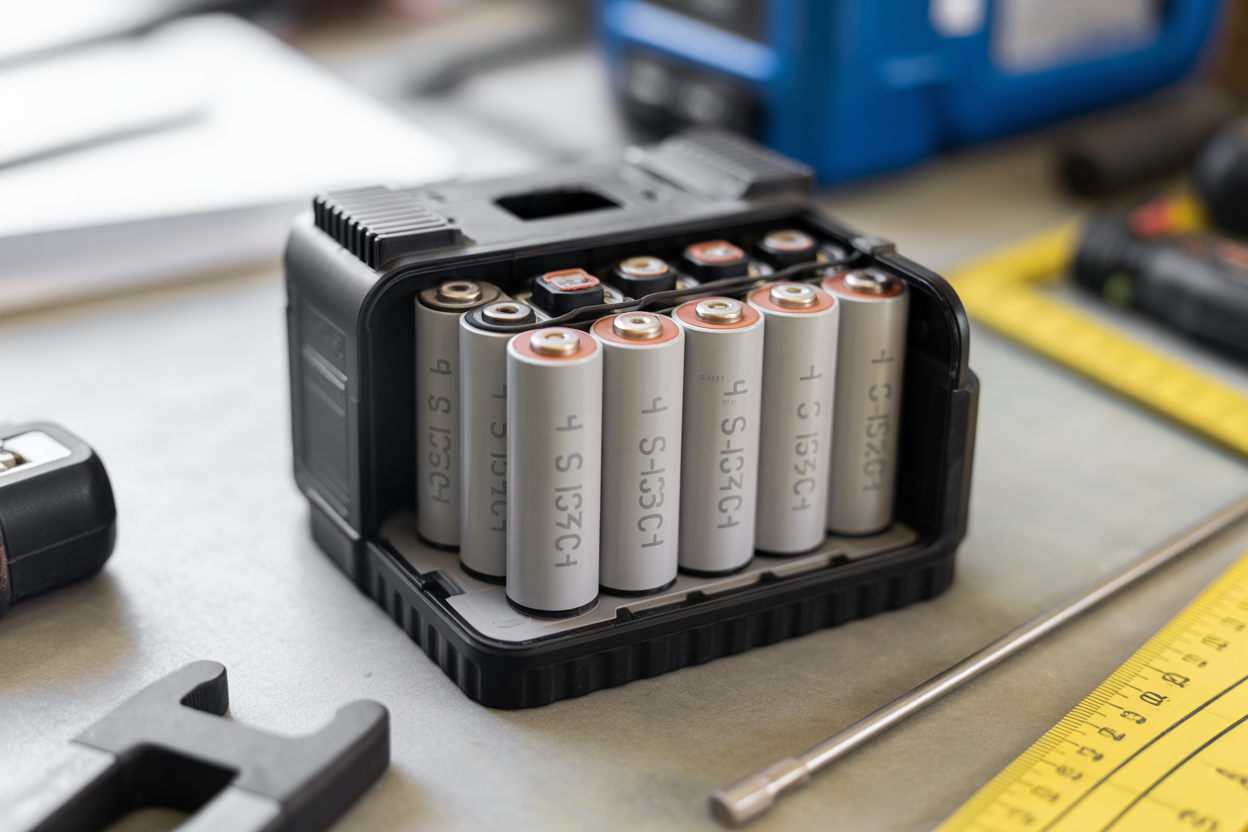
Digging Deeper: What’s really inside the pack?
Inside every battery pack lies a simple math puzzle — voltage from cells in series and capacity from cells in parallel.
For example, a 12V (3S) pack typically uses three cells in series. If each cell is 2500mAh:
- 3S1P → 3 cells in series, 2.5Ah total
- 3S2P → 6 cells (two rows in parallel), 5.0Ah total
| Configuration | Series (Voltage) | Parallel (Capacity) | Total Capacity |
|---|---|---|---|
| 3S1P | 12V | 1 row | 2.5Ah |
| 3S2P | 12V | 2 rows | 5.0Ah |
| 5S2P | 21V | 2 rows | 5.0Ah |
When I began inspecting supplier samples, I learned to open a few packs and verify the number of cells. It’s not about distrust — it’s about data. Real quality control means not just reading labels, but understanding the numbers behind them. That’s how I protect my brand’s reputation — and my customers’ trust.
How do you calculate the capacity of a battery pack?
It’s not as complicated as it sounds. Once you know the series-parallel layout, the math does the rest.
To calculate a lithium-ion battery pack’s capacity: multiply the single cell’s capacity (Ah) by the number of parallel cells. The voltage is the number of series cells multiplied by 3.6V (nominal voltage per cell).
Here’s an example I often use when explaining to my buyers:
If a pack has 3S2P configuration:
- 3 (series) × 3.6V = 10.8V
- 2 (parallel) × 2500mAh = 5000mAh (5.0Ah)
So the battery is 10.8V 5.0Ah, which equals 54Wh (10.8V × 5.0Ah).
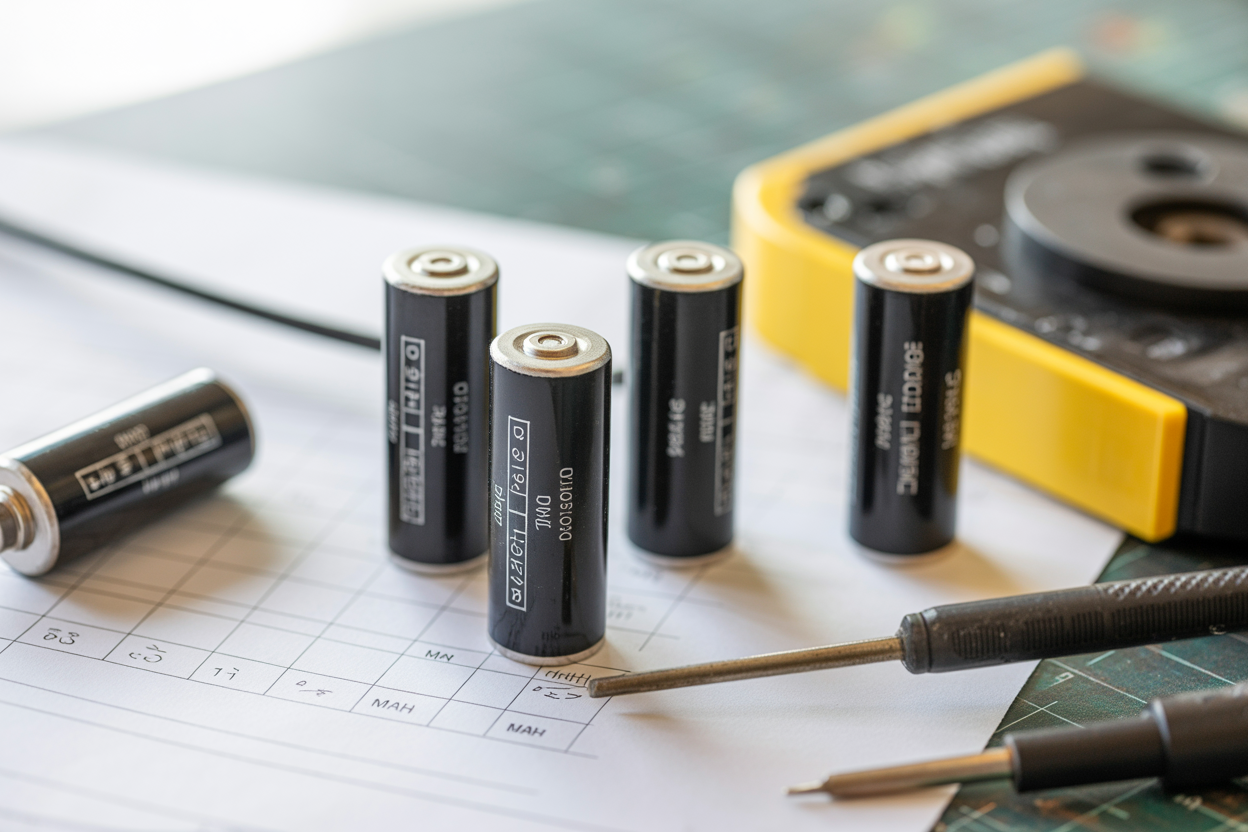
Going Deeper: Real vs. claimed capacity
When comparing suppliers, you might see the same model advertised as 4.0Ah or 6.0Ah. Always check the math. Some factories overstate capacity by listing cell rating × series count, which inflates the number.
Here’s how I test:
- I measure the pack’s weight — heavier packs often indicate more cells.
- I use a discharge tester2 to confirm real amp-hour output.
- I verify the cell brand (Samsung, LG, or local type).
That small difference in honesty can define long-term partnerships. After all, [battery reliability](https://www.grepow.com/blog/5-factors-that-affect-the-lithium-ion-battery-life.html)3 isn’t just about numbers — it’s about trust built cell by cell.
Should you charge a lithium-ion battery to 100%?
This question pops up all the time — especially from clients new to cordless tools. It’s tempting to charge to full capacity every time, but that’s not always ideal.
You can charge lithium-ion batteries to 100%, but frequent full charges may shorten their lifespan. For better durability, keep them between 20% and 80% whenever possible.
The science behind battery life
Every lithium-ion battery has a limited number of charge cycles — usually around 500 to 1000. Charging to full voltage (4.2V per cell) puts stress on the chemistry inside. Over time, it causes slow degradation.
Here’s what I do with my test samples:
- Charge them to 100% before first use.
- Then, for everyday use, recharge around 30–40%.
- Store batteries at around 50% when unused for long periods.
| Charging Range | Battery Health | Recommended Use |
|---|---|---|
| 20%–80% | Excellent | Daily use |
| 0%–100% | Moderate | Occasional full cycles |
| <10% or >95% for long | Poor | Avoid |
This habit extends tool life and helps me show my customers that quality isn’t only about the tool4 — it’s also about how they treat their batteries.
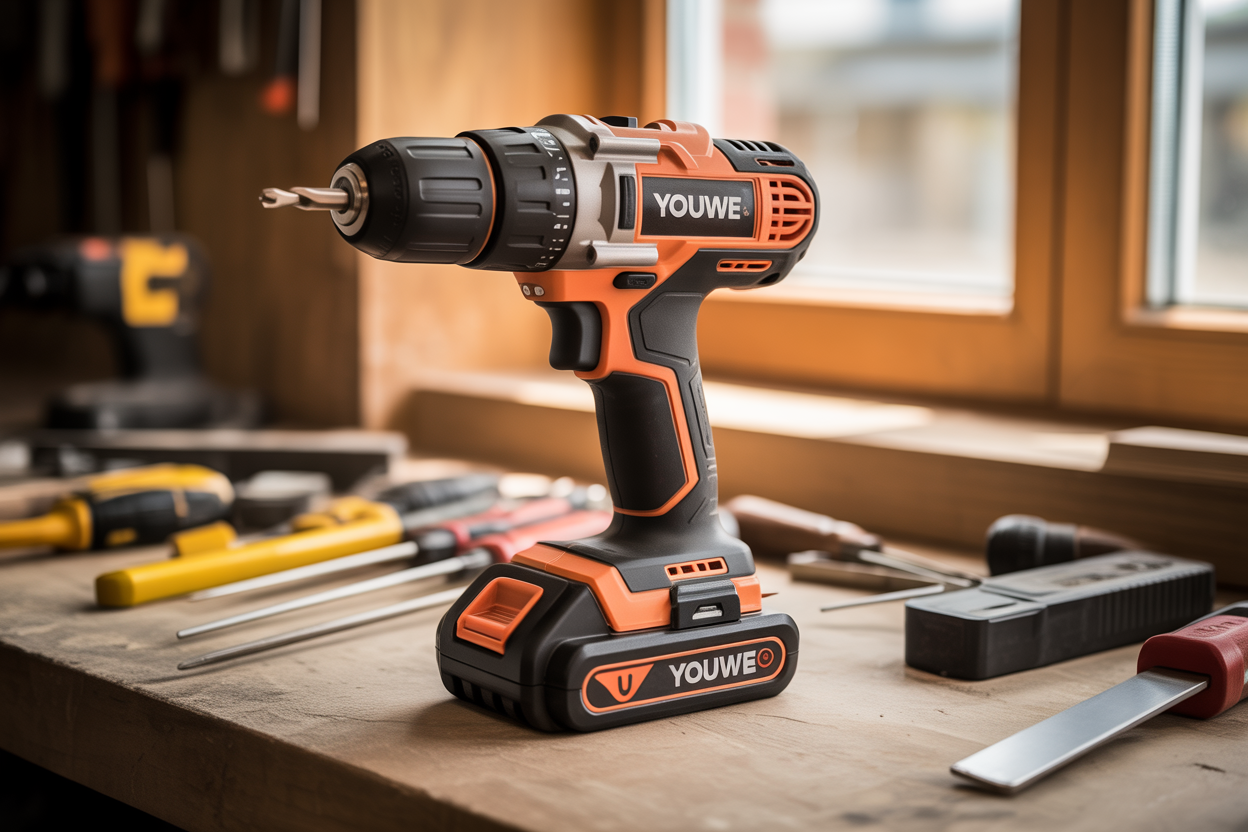
If they handle it right, a YOUWE drill’s battery can last years longer — and that’s the kind of reliability that builds repeat business.
Conclusion
Understanding lithium-ion battery capacity isn’t just technical—it’s strategic. When I know what’s inside, I buy smarter, negotiate better, and deliver more reliable tools under the YOUWE name.
YOUWE – Power Tools Manufacturer
www.youwesaw.com
-
Understanding the true internal capacity can help you make informed decisions when purchasing batteries. ↩
-
Learn how discharge testers can help verify the actual performance of your batteries. ↩
-
Explore the key factors that ensure the reliability and longevity of lithium-ion batteries. ↩
-
Learn how proper battery care can significantly impact the overall quality and performance of your tools. ↩