
I meet many buyers who feel lost when they try to choose a cordless tool supplier1 in China. I understand this pain well because I see the same problems repeat in Europe and Latin America. I write this guide based on what I see in real projects.
You can choose a reliable cordless tool supplier when you confirm their factory identity, check their certification system, test their samples, and review their production capability, stability, and communication quality.
I want to show how I judge a supplier when I stand on the buyer’s side. I also share what I see inside my own factory in Jinhua. Each point comes from real work with brands from Italy, Spain, Germany, and South America.
I work with many importers who struggle with the same question. Some get stuck with bad suppliers. Some pay high cost because they choose too fast. When I talk with them, I see that they miss a simple and clear method. I want to give you that method in this article.
What evidence shows a supplier is a real manufacturer, not just a trader or middleman?
Many buyers fear they will deal with a trader who has no factory. I understand this fear well. I meet clients from Germany and Italy who tell me they lost time because they worked with a middleman who controlled nothing.
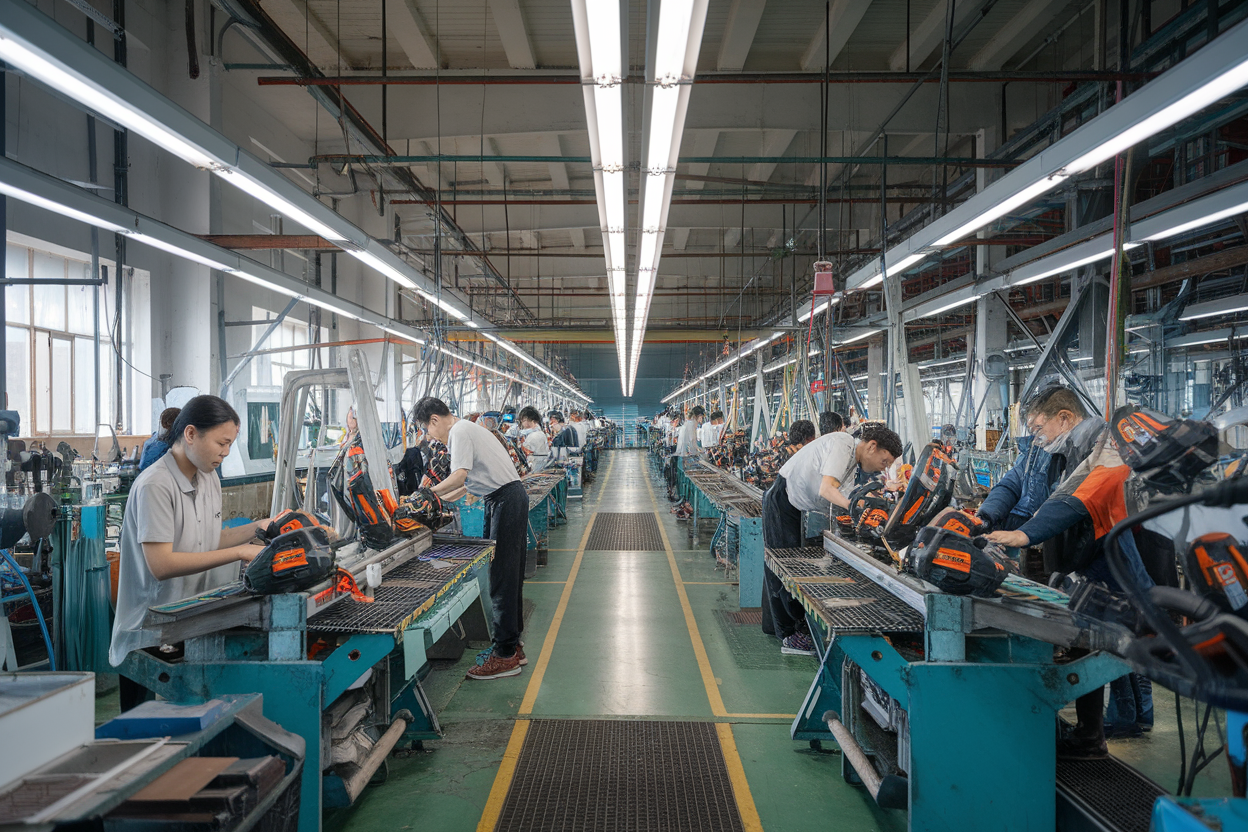
You can confirm if a supplier is a real factory by checking their licenses, facility setup, production lines, internal QC system, engineering team, and battery assembly capability.
How I verify factory identity
I always tell buyers to ask for three simple things. These items show if the supplier runs a real factory or only buys from others.
| Item | What to Check | Why It Matters |
|---|---|---|
| Business license | Factory address, business scope, registration history | Shows legal identity and operation time |
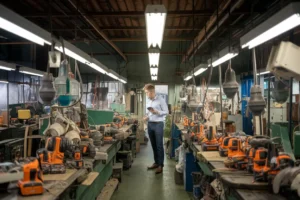
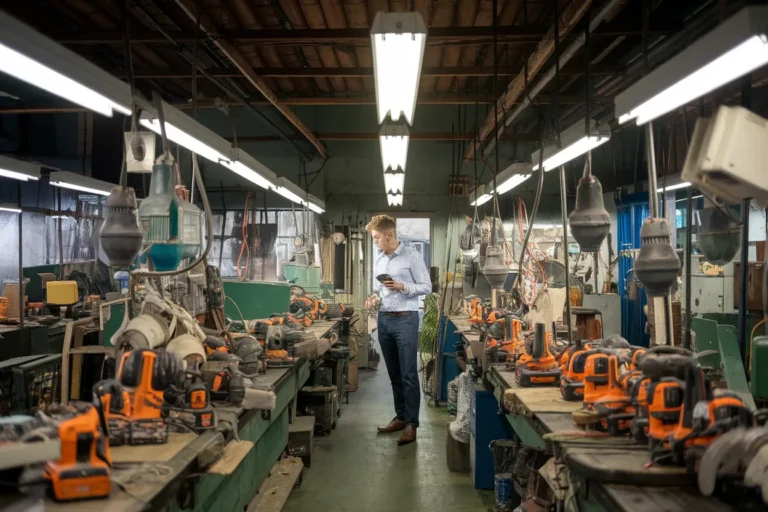
| Factory photos and videos | Injection lines, motor assembly, battery lines | Confirms real production activity |
| On-site audit | Team size, equipment, warehouse, IQC–IPQC–OQC flow | Shows true manufacturing capability |
Why battery assembly matters
A real cordless tool factory controls battery pack assembly. This is important because the battery is the core of every tool line. If a supplier cannot assemble 21V or 40V packs in-house, they depend on outside vendors. This creates higher cost, longer lead time, and unstable quality.
Why engineering and R&D prove real capability
You can ask for drawings, exploded views, test reports, and prototype history. A trader cannot provide this material. A real factory can show every step of the development.
I always show buyers our internal drawings and videos from R&D. This helps them trust the process because they see the work behind the product.
Does the supplier meet quality standards and certification required for exporting to your target markets?
When I talk with European buyers, their biggest concern is not only price. It is compliance. Italy, Germany, Spain, and France all check CE, EMC, noise testing, battery documentation, and packaging rules.
A reliable cordless tool supplier must reach CE, GS, EMC, and RoHS standards, follow strict QC steps, and provide certification files that match each model you plan to import.
Why CE and GS matter for Europe
For cordless tools, Europe focuses on safety and EMC. When a supplier cannot show full documents, you may face customs delays or even product returns.
| Certification | Meaning | Why Europe Requires It |
|---|---|---|
| CE | Safety and compliance | Needed for legal import |
| EMC | Electromagnetic control | Needed for electronics |
| RoHS | Chemical control | Needed for electronics |
| Noise test (if required) | Outdoor noise level | Needed for garden tools |
How to verify real reports
I always advise buyers to match model number, photos, and parameters. Many suppliers reuse other brands’ reports. This is risky. Ask for raw test data if needed.
Why QC system matters for certification
A report alone does not protect you. You need stable production. This comes from IQC, IPQC, and OQC. I show buyers our full QC flow during calls. This makes the system simple to understand.
Why ordering samples and conducting QC or third-party inspections is non-negotiable?
I meet many buyers who try to skip sampling because they want to save time. But I always tell them that samples protect money, not cost it. Samples reveal many hidden issues.
Samples and inspections confirm real product structure, motor power, battery quality, noise level, and finish. These steps prevent costly mistakes in bulk orders.

Why samples show true quality
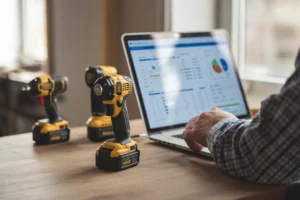
A sample shows assembly quality, power level, torque, endurance, and heat performance. This gives a clear picture before mass production.
| Test Item | What You Learn |
|---|---|
| Torque / Power | Real motor strength |
| Battery endurance | Cell quality and discharge rate |
| Heat test | Safety in long use |
| Noise | Market compliance |
| Finish | Tooling quality |
Why third-party inspection helps buyers in Europe
Importers in Italy, Spain, and Germany often use SGS or Intertek. This protects them from supplier mistakes during mass production.
How I guide buyers on inspection
I ask clients to check torque, current load, runtime, and noise. These items show you if the bulk meets the standard we agreed in samples.
How to evaluate factory capacity, production capability and supply stability?
Many European buyers ask me if the factory can deliver on time. They worry about Chinese New Year, battery shortages, and order peaks.
You can judge a factory’s stability by checking production lines, worker size, battery platform integration, stock plan, and annual delivery record.
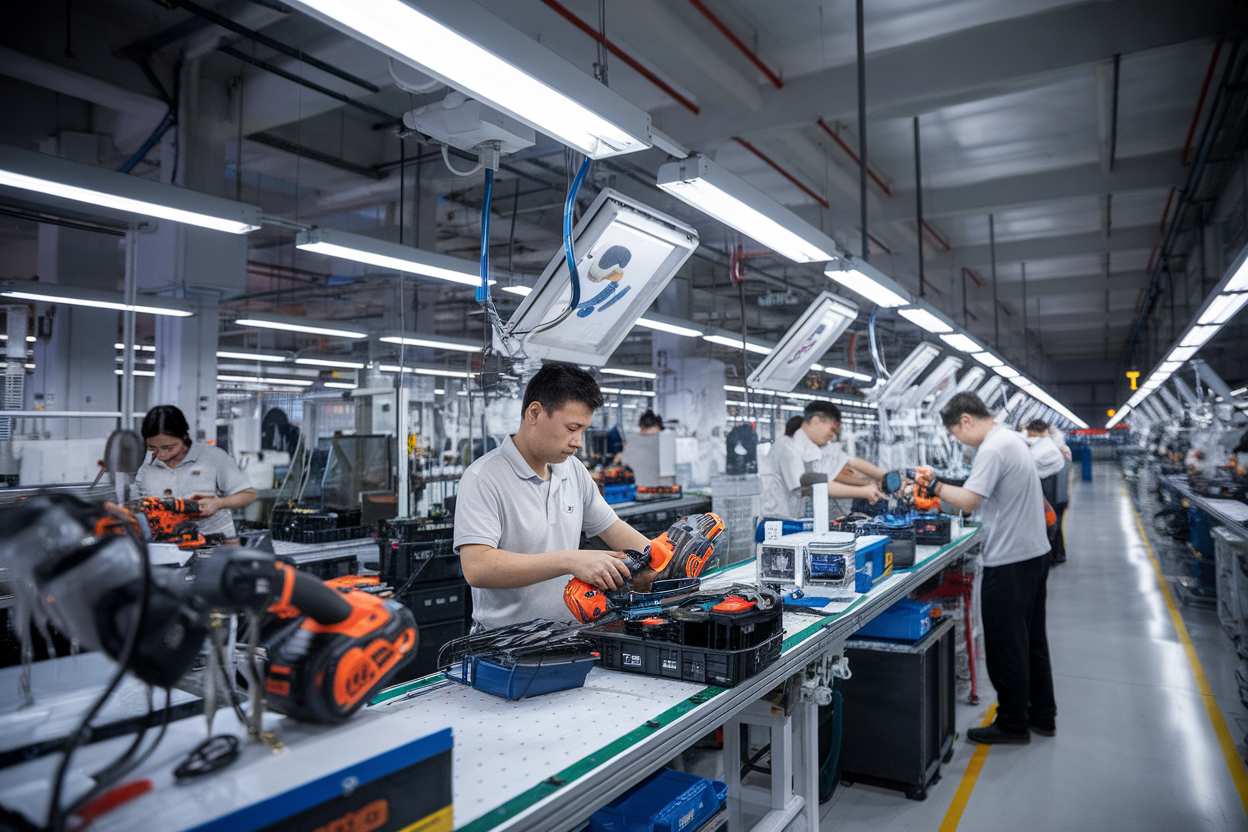
Why capacity matters more than price
A low price does not help you if the supplier cannot deliver. This is a common problem in Spain and Italy where brands plan seasonal sales.
| Factor | What to Check | Why It Matters |
|---|---|---|
| Production lines | Assembly setup | Shows speed and stability |
| Worker team | Size and skill | Shows volume capability |
| Battery platform | 21V or 40V platform | Shows stock and parts control |
| Lead time history | Past orders | Shows real reliability |
Why in-house battery production helps stability
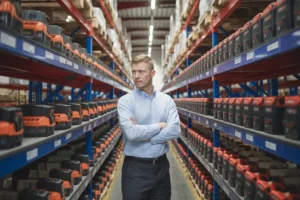
Battery shortage is the biggest risk in cordless tools. When a factory makes its own packs, it protects buyers from delays.
How I show capacity to buyers
I send videos of our peak season. I explain how we plan materials and cells. I also explain our lead time system for Europe, South America, and Korea.
Why communication, responsiveness, transparency and business ethics matter beyond just price?
Many buyers tell me that price is not their biggest problem. Their problem is that some suppliers do not reply, hide delays, or avoid responsibility.
Good suppliers answer fast, explain production steps clearly, give real timelines, and follow stable ethics in all orders.
Why communication is part of quality
Clear messages reduce mistakes. When a supplier explains every step, you avoid confusion in color, packaging, or certification.
| Item | Why It Matters |
|---|---|
| Response time | Shows respect and ability |
| Transparency | Shows real information |
| Clear timelines | Helps your planning |
| Honest feedback | Reduces risk |
Why ethics are important for long-term cooperation
A cordless tool line needs years to grow. You need a supplier who follows promises and supports after-sales needs.
How I keep transparency with clients
I share production videos, test records, and factory updates. This builds trust without marketing words.
What are the red flags or warning signs — the “don'ts” when selecting a cordless-tool supplier?
Some signals show that you should stop the process.
You must avoid suppliers who hide certification, avoid video calls, delay sample delivery, give unclear answers, or have no factory address.
Common red flags I see in the market
| Red Flag | Problem |
|---|---|
| Very low price | Low cell quality or unstable motor |
| No address or factory video | Likely trader |
| No QC reports | Weak system |
| Slow reply | Poor communication |
| No sample support | Weak confidence |
Why very low price is a danger
Low price often means low-level motors, recycled cells, and weak plastic. These tools cannot survive in Europe.
How to protect yourself
I tell buyers to follow a clear process: verify factory, check certification, test samples, confirm battery system, and use inspection for bulk.
Conclusion
I wrote this guide based on many real conversations with buyers from Europe and Latin America. You can use these steps to avoid risk, reduce cost, and choose a supplier who matches your long-term plan. If you need deeper evaluation, you can talk with me and I can guide you based on your market and product needs.
-
Understanding the key factors in selecting a cordless tool supplier can save you time and money. ↩