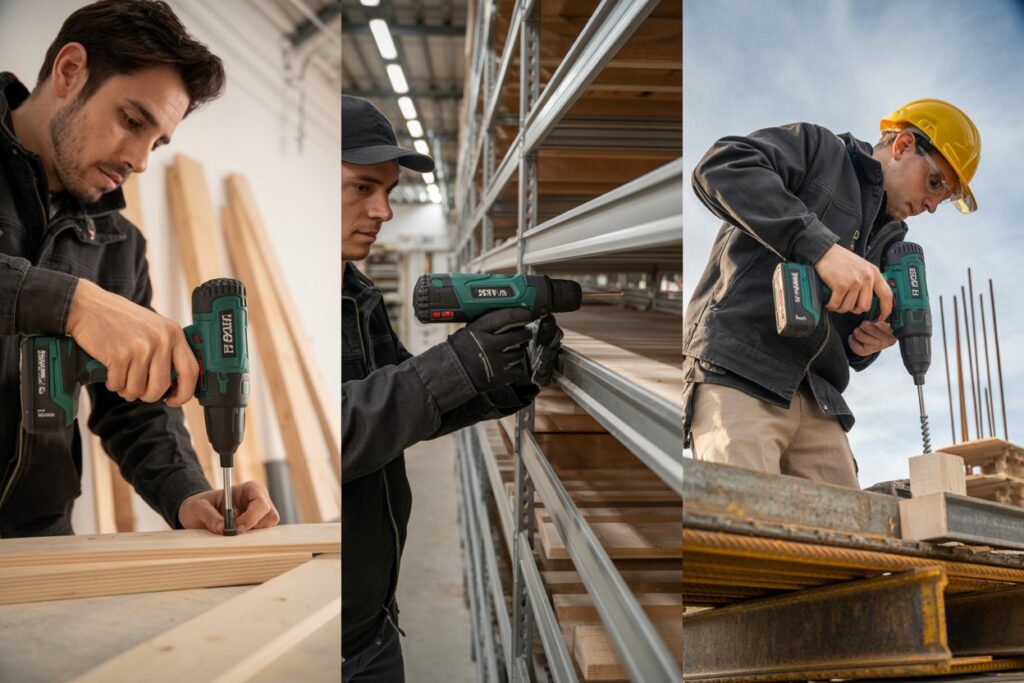
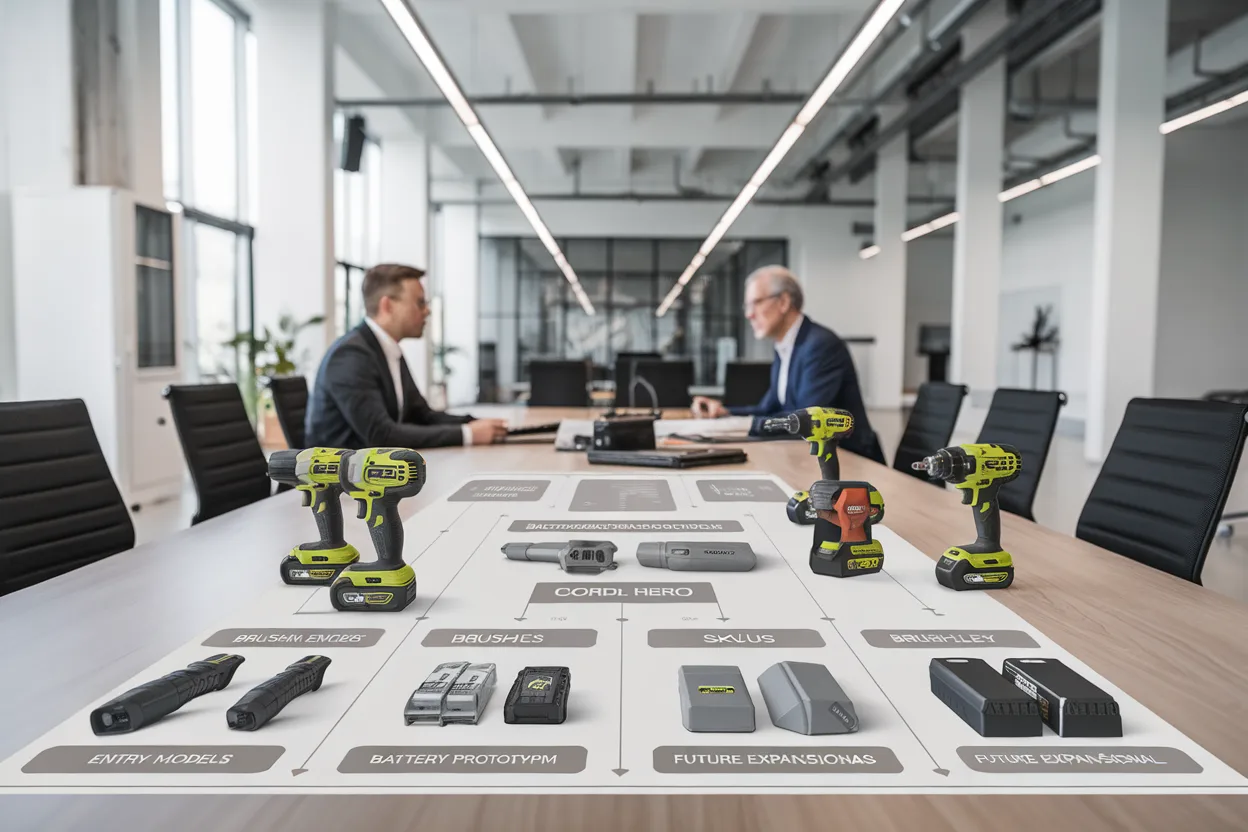
Many tool brands want to enter cordless tools1 fast. Many of them pick motor type2 too late. That one choice can change cost, battery life, user feedback3, and return rates.
Brushless and brushed power tools differ in motor design, efficiency, heat, control, and long-term value. For most cordless tool brands, brushless is now the better choice for performance and brand growth, but brushed still fits some entry-level and price-sensitive projects.
I have seen many importers from Italy, Spain, and Germany ask the same question in different ways. They do not ask about motors first. They ask about battery runtime4, warranty risk5, product positioning6, and price pressure7. In my experience, the motor choice often decides all of that before the first sample even ships.
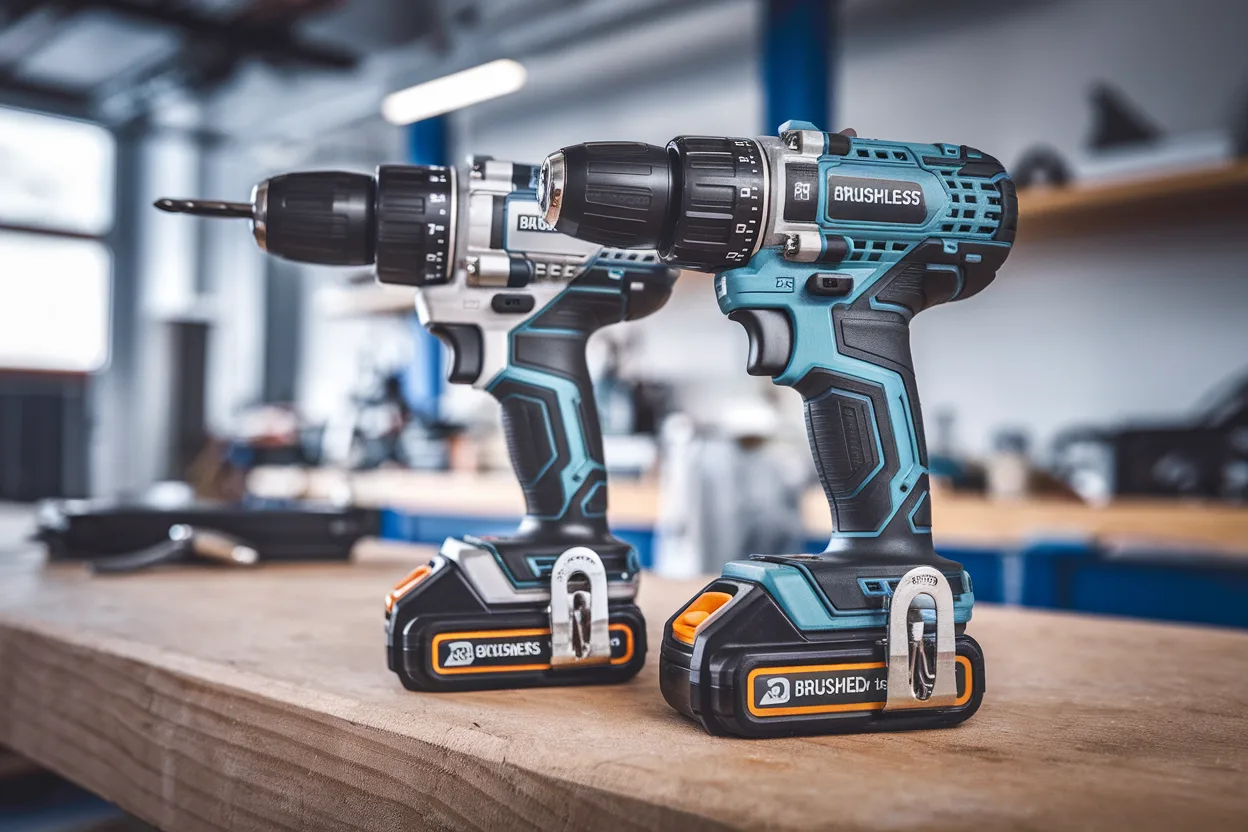
What is the real difference between brushless and brushed power tools?
Many buyers hear "brushless is better" and stop there. That is not enough for a real OEM decision. If you do not understand the actual difference, you can easily choose the wrong product line.
The real difference is not just power. Brushless motors use electronic control instead of carbon brushes, so they run cooler, waste less energy, and usually last longer. Brushed motors are simpler and cheaper, but they lose more energy through friction and heat.
I often tell new private label buyers this first: do not treat "brushless" as a marketing sticker. Treat it as a system choice. It affects battery platform8, controller design, pricing, warranty, and how your end user feels after 20 minutes of work.
How the motor structure changes tool behavior
A brushed motor uses carbon brushes to transfer electricity to the rotating part. That contact creates friction. Friction creates heat. Heat wastes battery power. Heat also increases wear. This is why brushed tools often feel hotter after longer use, especially in cordless drills, blowers, and angle grinders.
A brushless motor removes the brushes. It uses an electronic controller to manage power. That means less friction, less heat, and better power control. In real use, this usually gives smoother starts, stronger torque under load, and longer battery runtime.
When I explain this to a new buyer, I do not start with engineering terms. I ask a simple question: "Do you want your customer to feel stable power until the battery is empty, or do you accept a drop in performance as heat builds up?" That question usually makes the difference clear.
What buyers should compare in real product terms
For B2B buyers, the motor difference matters because it changes the full product story9. It affects packaging claims, Amazon reviews, service costs, and repeat orders. A buyer who only compares FOB price often misses the real cost after launch.
| Comparison Point | Brushed Motor | Brushless Motor | What It Means for Tool Brands |
|---|---|---|---|
| Motor design | Mechanical brush contact | Electronic control | Brushless needs better controller design |
| Initial cost | Lower | Higher | Easier for low-budget entry lines |
| Battery efficiency | Lower | Higher | Brushless supports better runtime claims |
| Heat during use | Higher | Lower | Lower heat can reduce complaints |
| Maintenance wear | Higher | Lower | Brush wear affects long-term reliability |
| Speed and torque control | Basic | More precise | Better user feel and premium positioning |
| Noise and smoothness | Rougher | Smoother | Better product experience |
| Best fit | Entry-level tools | Mid to high-end cordless lines | Impacts brand strategy |
Why this matters more in cordless than corded tools
In corded tools, wasted energy is less painful because the power supply is constant. In cordless tools, every bit of lost energy comes from the battery pack. That changes everything.
If a brushed drill wastes power as heat, the user feels it in two ways. First, the runtime drops. Second, the tool body gets warmer and feels less refined. That is why many cordless buyers now connect "brushless" with quality, even when they do not fully understand the technology.
I remember one buyer who wanted to launch a 21V drill line for Eastern Europe. At first, he only wanted the lowest price. Then we tested both versions side by side. The brushed sample was fine for light work. But under repeated screw driving and drilling, the brushless sample felt more stable. The runtime gap was obvious. He changed his whole line strategy after one test.
What the motor choice says about your brand position
Motor choice is also a signal. A brushed tool tells the market one thing. A brushless tool tells the market another.
If your product page says brushless, customers expect stronger performance, longer runtime, and better durability. If the tool fails that expectation, the problem is bigger than a technical issue. It becomes a brand trust issue.
This is why I always tell importers and private label brands to match the motor type to the market promise10. If you want to compete in Germany with CE-compliant cordless tools for serious users, your motor choice should support that message. If you want a basic retail promotion in a price-sensitive channel, brushed can still work if the rest of the product setup is honest and clear.
Why are brushless tools becoming the new standard for cordless tool brands?
Many buyers think brushless is just a trend. I do not see it that way. I see it as the new baseline in many cordless categories, especially when brands want better reviews and fewer complaints.
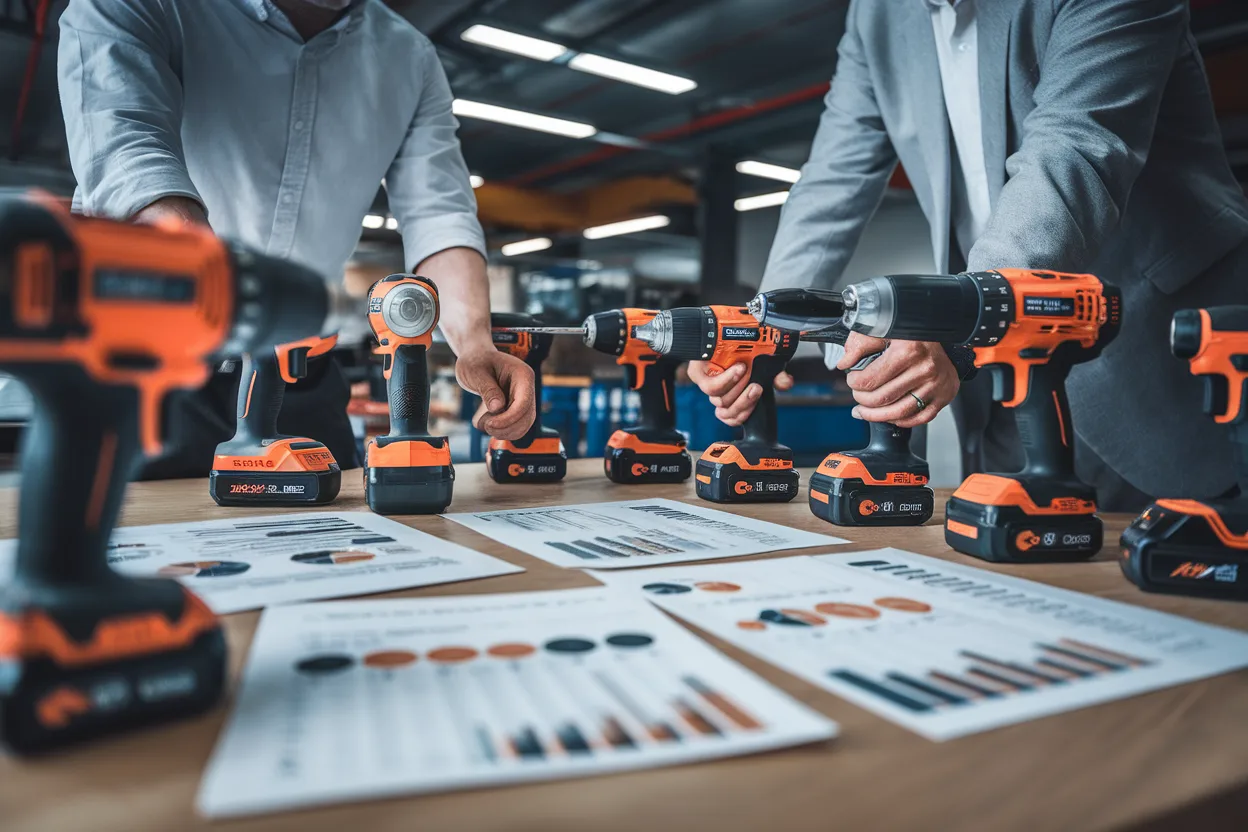
Brushless tools are becoming the new standard because cordless buyers now expect longer runtime, stronger torque, lower heat, and better durability. For many brands, brushless is no longer a premium extra. It is becoming the minimum level for serious cordless positioning.
I have watched this change happen step by step. Five years ago, many buyers asked if brushless was necessary. Now many buyers ask if brushed will hurt their brand image. That shift tells you where the market is going.
Battery expectations changed the market
The biggest reason is simple. Cordless users care about runtime more than before. They do not want to carry more batteries than needed. They do not want weak output after ten minutes of work. They do not want a tool that feels tired before the battery pack is empty.
Brushless motors help solve this. They use battery energy more efficiently. That means the same 21V platform can feel more capable without increasing battery size. For private label brands, that matters because bigger batteries increase cost, shipping weight, packaging size, and transport complexity.
For European buyers, battery efficiency also connects to compliance and logistics. Lithium battery rules are already strict. If a brand can deliver stronger performance from a cleaner motor system instead of simply using larger packs, that often makes the product line easier to manage.
User reviews now punish weak cordless performance faster
Online channels changed buyer behavior. On Amazon, ManoMano, and many regional platforms, customers quickly compare runtime, heat, and real power. They may not explain the motor design correctly, but they notice the result.
A brushed tool that gets hot, slows down, or feels rough under load can collect bad reviews fast. One-star reviews often mention "battery dies too fast" even when the battery is not the only problem. In many cases, the motor system is the hidden reason.
I have seen this happen with cordless drills and small chainsaws. The buyer wanted the lowest landed cost. The first batch sold well because the price was attractive. But the reviews later showed complaints about runtime and heat. Then the brand had to upgrade the next version anyway. That is a much more expensive path than planning the right motor choice from the start.
| Market Pressure | Why It Favors Brushless | Brand Impact |
|---|---|---|
| Shorter attention spans online | Buyers judge fast by performance feel | First impression matters more |
| More comparison shopping | Brushless specs stand out | Easier premium positioning |
| Higher return sensitivity | Weak runtime leads to returns | Returns hurt margin |
| Battery platform competition | Better efficiency helps cross-tool systems | Stronger ecosystem value |
| Professional user influence | Contractors prefer stable power | Better word-of-mouth |
Brushless supports better multi-tool battery platforms
For OEM and ODM projects, I always look beyond one tool. I look at the battery platform. A strong cordless brand is not one product. It is a family of products.
Brushless motors help a 21V, 24V, or 40V platform feel more consistent across different tools. That matters if a brand wants to build a full line with drills, impact wrenches, blowers, hedge trimmers, or pruning shears. Better efficiency means the same battery system can support more use cases with less frustration.
This is especially important for importers in Italy, Spain, and Germany who want to expand step by step. They often start with one or two SKUs. Then they want five. Then they want ten. If the early motor choice is too weak, the platform becomes harder to scale.
Brushless now matches what serious buyers expect from a new brand
New brands entering cordless tools face a trust problem. They do not have decades of market reputation. So they need product choices that reduce doubt.
Brushless helps with that. It gives a cleaner product story. It supports better spec sheets. It makes the line look more modern. It gives distributors more confidence when they present the tools to dealers or retailers.
That does not mean every SKU must be brushless. But for many core cordless tools, it now gives buyers a sense that the brand is building for the future, not just chasing the lowest entry cost.
When does it still make sense for a tool brand to choose brushed motors?
Some buyers now act like brushed motors11 are outdated in every case. I do not agree. That is too simple. There are still smart reasons to choose brushed, if the project goals are clear.
Brushed motors still make sense when a tool brand needs low entry cost, simple positioning, lighter-duty use, or fast market testing. For some entry-level SKUs, brushed can still be the right OEM choice if the performance promise matches the target customer.
I still recommend brushed in some projects. The key is not whether brushed is "old." The key is whether brushed is honest for the job, price, and user expectation.
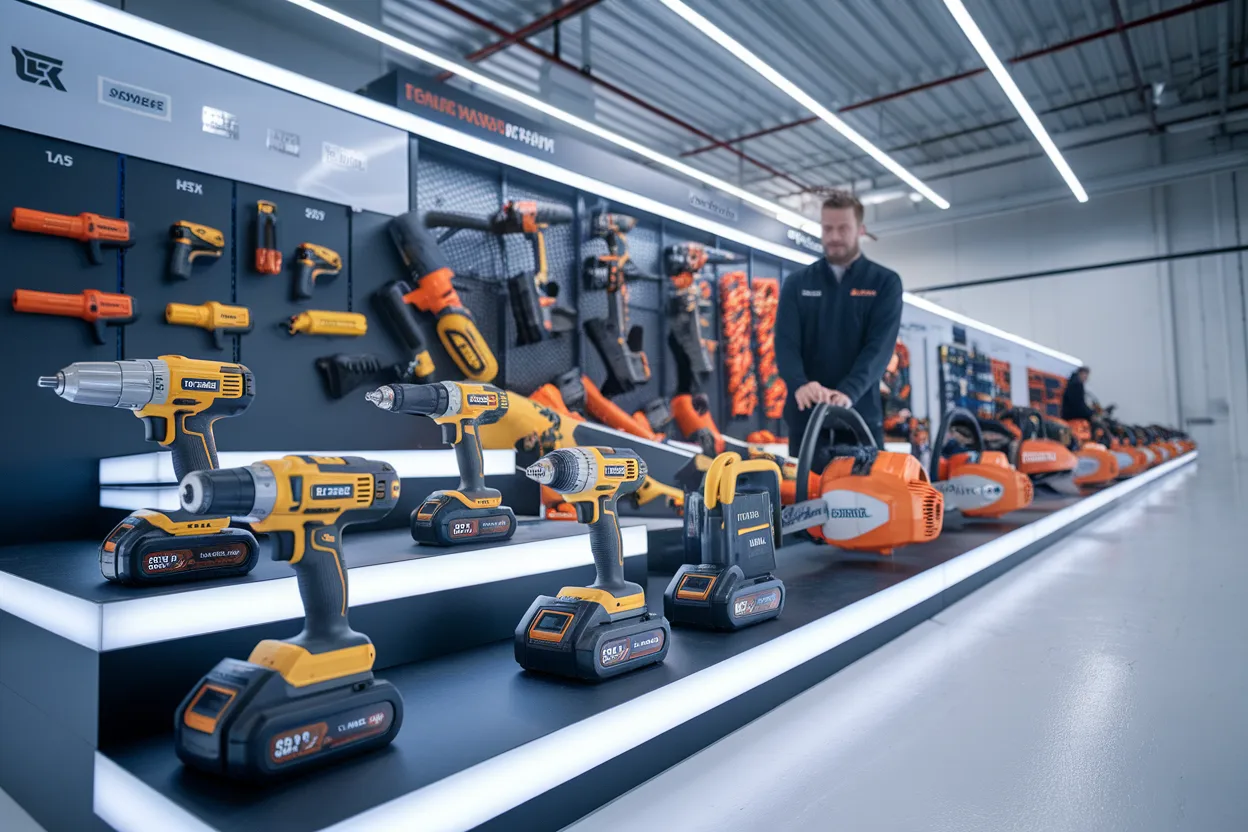
Brushed is still useful for entry-level market testing
Many of my customers are not old tool brands. They are companies entering cordless tools from nearby categories. They may sell hardware, garden items, industrial supplies, or building materials. They know how to sell. But they do not want to risk too much on the first launch.
In that case, a brushed model can be a smart first step. It lowers the first MOQ budget. It lowers the sample cost. It lets the buyer test price acceptance and packaging response without fully committing to a premium spec.
This is often useful when the buyer wants to launch a simple cordless drill, screwdriver, or light-use trimmer as a trial product. If the goal is learning the market, brushed can be a controlled-risk option.
Low-duty and occasional-use tools can still fit brushed
Not every customer is a contractor. Not every tool needs maximum runtime. Some users only use the tool a few times a month. Some retail channels sell mainly to homeowners who care more about price than peak performance.
For light-duty use, brushed can still be enough. The tool may still perform well if the motor, gearbox, battery cells, and overall matching are done correctly. A bad brushed tool is bad. But a well-built brushed tool for the right use case can still sell well.
I have seen this with basic cordless screwdrivers and compact drills. If the user is assembling furniture, hanging shelves, or doing light maintenance, a brushed tool can be perfectly acceptable. The problem starts when the brand markets it like a professional tool.
| Situation | Brushed Can Make Sense? | Why |
|---|---|---|
| First low-risk market entry | Yes | Lower investment and easier testing |
| Price-sensitive retail promo | Yes | Better shelf price |
| Light DIY use | Yes | Performance can be enough |
| Premium e-commerce brand | Usually no | Reviews punish weak feel |
| Professional use | Rarely | Runtime and heat become issues |
| Platform expansion strategy | Often no | Brushless scales better |
Brushed can help hit key price points in Europe and Latin America
Sometimes the market is not asking for the best spec. It is asking for the right shelf price. This matters in certain retail programs, distributor deals, and tender-style bulk requests.
A buyer may need to hit a specific retail band in Spain or Eastern Europe. A few dollars at factory level can decide whether the product lands in the right final price range after shipping, duty, packaging, VAT, and local margin.
In those cases, brushed can help protect the price structure. But I always tell buyers to be careful. If you save cost on the motor, you must be even more careful with battery cell quality, charger stability, and gearbox matching. A cheap brushed tool with weak cells becomes a double problem.
Brushed works best when the brand message is clear and honest
A brushed tool is not the problem. A bad product promise is the problem.
If you position the tool as an entry-level, affordable, light-use cordless solution, brushed can fit. If you promise pro-level runtime, heavy-duty power, and premium long-life performance, brushed will create tension in the market.
I once told a buyer, "If you want a budget product, that is fine. But do not give it premium words and budget internals." That rule still holds.
For private label brands, the smartest move is often to keep brushed in a clearly separated value line. Do not mix it into the same message as your main brushless range. That protects both your margins and your reputation.
Which cordless tools benefit most from brushless motors?
Not all tools gain the same value from brushless. Some tools improve a little. Some improve a lot. This is where many OEM buyers can save money by being selective.
Cordless tools that run longer, face heavy load, or need stable torque benefit most from brushless motors. Drills, impact wrenches, angle grinders, blowers, chainsaws, hedge trimmers, and pruning shears usually show the clearest gains.
I do not tell buyers to make everything brushless by default. I tell them to make the right tools brushless first. That is how you build a smarter product line.
High-load tools show the clearest brushless advantage
Any cordless tool that works under real resistance usually benefits strongly from brushless. That includes drills in harder material, impact wrenches under repeated fastening, angle grinders under cutting pressure, and circular saws under continuous load.
In these tools, heat and power stability12 matter a lot. A brushed motor can work, but it often loses efficiency faster when the load rises. The user feels this as weaker consistency, more heat, and shorter effective runtime13.
This is why many serious tool brands now treat brushless as standard in these categories. If the tool is supposed to feel strong and dependable, brushless usually makes the most sense.
Garden tools often gain even more than buyers expect
In my own product category, I see many buyers underestimate how much brushless helps garden tools14. They focus on power tools first. But many cordless garden tools run for longer periods and face changing load conditions. That makes efficiency and heat even more important.
Cordless blowers, hedge trimmers, chainsaws, and pruning shears often benefit a lot from brushless. A blower needs sustained airflow. A hedge trimmer deals with branch density changes. A chainsaw faces resistance changes during cutting. A pruning shear needs clean response and controlled force.
For example, a brushless pruning shear often feels more precise and more stable in repetitive cuts. A brushless blower can keep airflow more consistent during battery discharge. Those details matter to distributors selling to demanding users.
| Tool Category | Brushless Benefit Level | Main Reason |
|---|---|---|
| Cordless drill | High | Better torque control and runtime |
| Impact wrench | High | Repeated load and heat control |
| Rotary hammer | High | Heavy load and battery drain |
| Angle grinder | Very high | Heat, power demand, safety feel |
| Circular saw | High | Stable cutting under load |
| Reciprocating saw | High | Continuous resistance changes |
| Cordless blower | High | Sustained runtime and airflow consistency |
| Hedge trimmer | High | Long use and variable cutting resistance |
| Chainsaw | Very high | Torque stability and heat management |
| Pruning shear | High | Control, efficiency, repeated cuts |
| Cordless screwdriver | Medium | Depends on user level and price target |
| Glue gun / caulking gun | Low to medium | Less motor stress in many cases |
Some tools can stay brushed without hurting the line
There are also tools where brushless is less urgent. Compact screwdrivers, some light-duty vacuum cleaners, glue guns, or simple accessory tools may not need brushless in every market.
If the tool is low-load, short-use, or mainly convenience-driven, the value of brushless may be smaller than the cost increase. In those cases, the better strategy may be to spend the budget elsewhere, such as battery cells, charger quality, housing feel, or packaging.
I often tell buyers to use brushless where the user will notice it quickly. If the user cannot feel the difference in normal use, the upgrade may not give a good return.
Build the brushless story around hero SKUs first
For private label projects15, I often suggest this path: make the hero SKUs brushless first. These are the products that define the brand image.
For many new cordless brands, that means a drill, impact wrench, blower, chainsaw, or pruning shear. Once those products perform well, the rest of the line becomes easier to trust.
This is especially useful for buyers in Germany, Italy, and Spain who want to build dealer confidence16. Dealers need simple reasons to believe in a new brand. Strong hero SKUs do that faster than a wide but weak catalog.
How should tool brands decide between brushed and brushless for OEM or private label projects?
Many buyers ask me which motor is better. I usually answer with a different question: "What kind of brand are you trying to build?" That is the real starting point.
Tool brands should decide between brushed and brushless by looking at target users, channel, price band, battery platform, warranty risk, and long-term product line strategy. The right motor choice is a business decision first, not just a technical one.
This is where many OEM projects go wrong. Buyers compare sample price too early. They should compare market fit17 first.

Start with the target customer, not the motor spec
I always begin with the final user. Is this tool for occasional DIY use, trade users, garden contractors, or serious homeowners? Is the product going into e-commerce, retail chains, or distributor channels? Is the brand trying to look premium or value-focused?
Those answers should shape the motor choice. A product built for online reviews and repeat orders usually needs stronger user experience18. That often points to brushless. A product built for a seasonal retail promotion may accept a lower spec if the price is right and the promise is clear.
If the customer profile is wrong, the motor decision will be wrong too.
Check the full landed cost, not just the factory price
Some buyers focus too much on the motor cost difference. That is understandable, but it is incomplete. The better question is this: what is the total business cost after launch?
Brushless costs more upfront. But it may lower returns, improve reviews, reduce warranty claims, and support a higher selling price. That changes the real margin picture.
I often walk buyers through this logic during OEM planning. A cheaper brushed tool can become more expensive if it causes battery complaints, slow sell-through, or distributor pushback. A slightly more expensive brushless tool can sometimes create a much healthier business result.
| Decision Factor | Questions I Ask Buyers | Brushed Tends to Fit | Brushless Tends to Fit |
|---|---|---|---|
| Target user | Who will use it? | Light DIY | Serious DIY / Pro |
| Sales channel | Where will it sell? | Budget retail | E-commerce, dealer, premium retail |
| Price band | What shelf price matters? | Lower price points | Higher value positioning |
| Battery platform | One SKU or future line? | Single product test | Platform expansion |
| Warranty tolerance | Can you accept more claims? | Only if expectations are low | Better for lower risk |
| Brand strategy | Short-term or long-term? | Trial entry | Long-term growth |
Think in product line architecture, not single SKU logic
A good private label brand should not make each tool decision in isolation. It should build a line structure.
I often suggest a two-tier approach. Use brushed for selected entry SKUs if the market really needs them. Use brushless for core performance SKUs19 that define the brand. This gives flexibility without confusing the product story.
For example, a brand may launch:
- Entry line: brushed screwdriver, basic drill, light-use trimmer
- Core line: brushless drill, impact wrench, blower, pruning shear
- Growth line: brushless chainsaw, hedge trimmer, angle grinder, rotary hammer
This structure helps with MOQ control, packaging clarity, and battery platform planning. It also makes it easier to explain the range to distributors.
Use sample testing to make the decision visible
When buyers are unsure, I always prefer direct comparison. Side-by-side samples solve many arguments fast.
I recommend testing:
- Runtime under repeat use
- Housing temperature after work cycles
- Torque feel under real load
- Noise and vibration feel
- Battery drain speed
- User feedback from sales teams or dealers
This matters a lot for buyers entering cordless tools from other categories. They often understand business well, but they need to feel the difference, not just read the spec sheet.
In my experience, once a serious buyer tests a good brushless sample next to a basic brushed sample in the same category, the final decision becomes much easier.
Is brushless always worth the higher cost for tool brands?
Many articles say yes. I do not. The honest answer is more useful than the simple answer. Brushless is often worth it, but not always.
Brushless is not always worth the higher cost. It is worth it when the tool category, sales channel, customer expectations, and brand goals can turn better performance into better margin, lower risk, or stronger long-term positioning.
This is one of the most important decisions for any OEM or private label buyer. It is not about saving one dollar. It is about where that dollar creates value.
Brushless creates value only when the market can feel it
A brushless motor is not automatically profitable. It becomes valuable when the end customer notices the difference and is willing to reward it through better conversion, fewer complaints, or higher repeat purchase.
If the product sells in a channel where buyers only compare the lowest price, brushless may not create enough return. But if the product sells in a market where runtime, reliability, and user experience affect reviews and dealer trust, brushless can easily pay back the cost difference.
That is why I always ask buyers what kind of market feedback loop they expect. If user reviews matter a lot, brushless usually becomes more attractive.
The wrong cost view leads to the wrong product choice
Many new buyers compare only BOM cost. That is too narrow.
You should also think about:
- Return rate
- Warranty replacement cost
- Battery complaint risk
- Dealer confidence
- Product page conversion
- Ability to price above entry level
- Long-term line expansion
A brushless tool may cost more at purchase, but it can protect margin later. A brushed tool may save cost today, but create friction tomorrow.
I have seen buyers in Europe choose brushless not because the market demanded the word itself, but because they wanted lower service trouble after launch. That is a very smart reason.
| Cost View | Brushed | Brushless | Better Choice Depends On |
|---|---|---|---|
| Factory unit cost | Lower | Higher | Budget and MOQ |
| Entry risk | Lower | Higher | First launch vs long-term plan |
| Review protection | Weaker | Stronger | E-commerce exposure |
| Warranty risk | Higher in hard-use tools | Lower in many cases | Use intensity |
| Premium pricing ability | Lower | Higher | Brand positioning |
| Platform growth value | Limited | Stronger | Multi-SKU strategy |
A mixed strategy is often smarter than a pure strategy
Some buyers think they must choose one motor type for the whole brand. I rarely recommend that for growing private label brands.
A mixed strategy often works better:
- Use brushless where performance is central
- Use brushed where price access matters
- Keep clear packaging and naming differences
- Keep battery platform logic consistent where possible
This helps buyers control MOQ and cash flow while still building a serious cordless image. It also gives room to upgrade later without rebuilding the whole line.
For example, I may tell a new importer: start with one brushless hero SKU and one brushed entry SKU in the same category. Let the market teach you which one deserves the next order. That is practical, not theoretical.
Brushless is usually worth it for serious cordless brand building
If your goal is to build a real cordless brand, not just sell one container, brushless usually wins over time.
It supports stronger product confidence. It helps battery platform expansion. It improves your spec story. It often fits better with what buyers in Germany, Italy, and Spain now expect in mid-range and premium cordless categories.
But I still believe in discipline. Not every product needs brushless. Not every market rewards it equally. The right answer is not "always yes." The right answer is "use it where it protects your future."
Conclusion
After working with many OEM and private label buyers, I have learned one simple lesson: motor choice is never just a technical detail. It shapes your battery story, your product reviews, your warranty risk, and your brand position before your first shipment arrives. Brushless is clearly becoming the standard in many cordless categories, especially when you want stronger runtime, better user feel, and a product line that can grow across drills, blowers, chainsaws, pruning shears, and other high-demand tools. But I still do not believe every brand should blindly choose brushless for every SKU. Some buyers need a safer first step. Some markets still need an entry-level price point. In those cases, a well-matched brushed model can still do its job if the promise is honest and the positioning is clear. If I were building a new cordless line today, I would not start by asking which motor is cheaper. I would start by asking what kind of customer I want to keep for the next three years. If you are thinking through that same question for your own OEM or private label project, this is exactly the kind of decision I help buyers work through every week.
-
Explore the advantages of cordless tools, including portability and convenience, which are essential for modern users. ↩
-
Understanding motor types can help you choose the right tool for your needs, impacting performance and efficiency. ↩
-
User feedback can guide your purchasing decisions; learn how it shapes product development and marketing. ↩
-
Learn about the key factors that affect battery runtime, crucial for selecting the right cordless tool. ↩
-
Explore warranty risks to ensure you make informed decisions when purchasing power tools. ↩
-
Discover strategies for product positioning that can enhance your brand's visibility and appeal. ↩
-
Understanding price pressure can help you navigate competitive markets and optimize pricing strategies. ↩
-
Understanding battery platforms can help you choose compatible tools and maximize efficiency. ↩
-
A compelling product story can enhance brand perception; discover how to craft yours effectively. ↩
-
A strong market promise builds trust; learn how to align your product with customer expectations. ↩
-
Explore the limitations of brushed motors to make informed choices for your power tool needs. ↩
-
Understand the significance of power stability in ensuring consistent tool performance. ↩
-
Discover how brushless motors can extend the runtime of your cordless tools. ↩
-
Find out which garden tools benefit most from brushless technology for improved efficiency. ↩
-
Discover effective strategies for successful private label projects in the tool industry. ↩
-
Explore strategies to enhance dealer confidence and improve brand trust. ↩
-
Understand the importance of market fit in ensuring the success of your tool products. ↩
-
Understand the importance of user experience in choosing the right tools for your needs. ↩
-
Understand the significance of performance SKUs in establishing brand reputation. ↩