
Many buyers see the word "brushless1" and think the product must be high-end. I see this mistake often. It creates bad buying decisions, weak product positioning, and expensive inventory problems.
No, not all brushless drills are premium. Brushless only describes the motor type. Real product level depends on electronics, gearbox, battery quality, chuck, durability, certification, and how stable the factory can make the product at scale.
I have spoken with many buyers in Italy, Spain, Germany, and other export markets who wanted a "good brushless drill" but were not sure what that really meant. Most of them were not choosing between good and bad. They were choosing between different product level2s for different business goals. That is where many projects go wrong, and that is also where a good OEM can reduce risk before the first order.
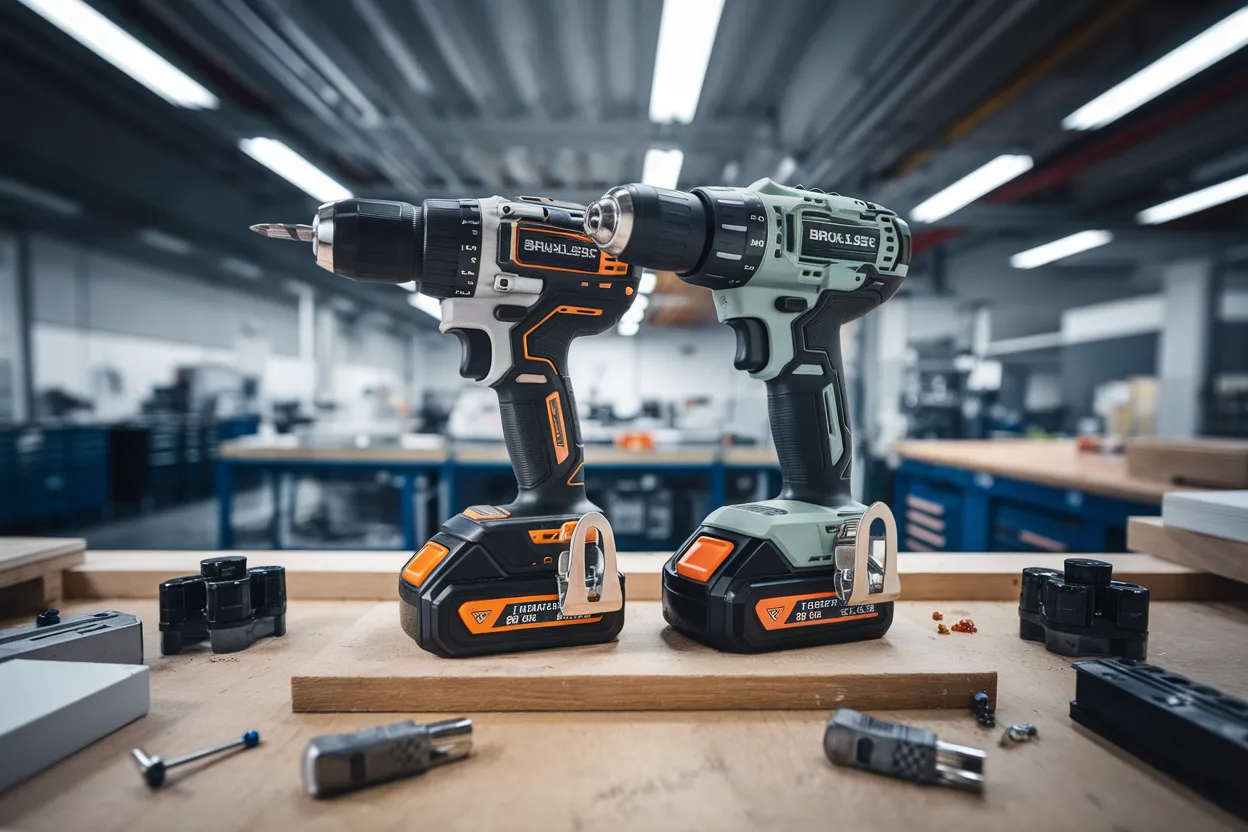
Many buyers hear "brushless" and assume the tool is already upgraded. I understand why. The market uses that word like a shortcut for quality. In real factory work, that shortcut is dangerous.
A brushless drill is not automatically premium because brushless only refers to the motor system. A low-cost brushless drill can still use basic electronics, lower-grade gears, weaker batteries, and less stable quality control.
Brushless is a motor type, not a full product standard
I always tell buyers one simple thing. "Brushless" is a component label. It is not a full quality grade.
A drill becomes premium3 because the full system is better, not because one part sounds better.
A brushless drill can still be built with:
- A basic controller board
- Low heat resistance MOSFETs
- Lower precision gearbox parts
- Thin copper winding
- Lower-grade plastic housing
- Entry-level battery cells
- Basic chuck with weaker clamping
- Limited cycle-life testing
That is why two brushless drills can look similar on a catalog page but perform very differently after 3 months in the market.
Many buyers confuse marketing language with product structure
In B2B buying, I often see importers from Europe compare drills by only three points:
- Voltage
- Torque
- Brushless or not
This is not enough.
A 21V brushless drill with "45N.m" on paper can still be a lower-tier product if the torque4 is peak value only, the gearbox5 uses softer metal, or the battery pack has inconsistent cell matching.
That is why I always ask buyers what market they sell to before I recommend a model. A retail chain in Germany is not the same as an Amazon seller in Spain. A distributor in Italy is not the same as a new brand testing in Poland.
What buyers should check first instead
If I want to know whether a brushless drill is really premium, I look at the full bill of materials and test logic.
| What many buyers look at | What I check first in factory review | Why it matters |
|---|---|---|
| Brushless label | Controller board quality | It affects heat, efficiency, and stability |
| Max torque | Gearbox structure and metal grade | It affects real output and life |
| Voltage | Battery cell type and pack balance | It affects runtime and return rate |
| Speed settings | Chuck, spindle, bearing quality | It affects user feel and failure risk |
| Product photos | QC process and endurance test | It affects consistency in mass orders |
My view as an OEM founder
If a buyer tells me, "I only want brushless," I know the conversation is still too early.
If a buyer tells me, "I need a brushless drill for a mid-range private label6 line in Italy, with stable quality, CE documents, and repeat orders," then I know we can build the right project.
That is the difference.
The smart question is not "Is it brushless?"
The smart question is "What level of brushless drill fits my market, channel, warranty risk, and battery platform plan?"
Many buyers ask me where the line really is. The answer is not one single part. The line is built by the full product system, cost structure, and how the tool behaves after real use.
A brushless drill becomes entry-level or premium based on the whole build: electronics, gearbox, battery cells, chuck, housing, assembly tolerance, test standards, certifications, and long-term consistency in production.
The controller system often separates basic from premium
In my experience, the biggest hidden difference is often the electronic control system.
A premium brushless drill usually has:
- Better motor control logic
- Better heat management
- Smoother start and stop
- Better overload response
- More stable speed under load
An entry-level brushless drill may still work well for light tasks. But under long screw driving or drilling into harder material, the power delivery often feels less stable.
This matters a lot for user reviews. End users may not say "the controller is weak." They say things like:
- "It gets hot fast"
- "It stalls too early"
- "It feels less powerful than expected"
- "It is noisy under load"
Gearbox and transmission quality change the real user experience
A premium drill usually uses tighter tolerance parts in the gearbox. It may also use stronger sintered or machined gear components, better lubrication, and more stable assembly control.
An entry-level model may use lower-cost parts that are still acceptable for normal household or light trade use.
The issue is not whether entry-level is "bad." The issue is whether the use case matches the design.
| Component | Entry-level brushless drill | Premium brushless drill | Buyer impact |
|---|---|---|---|
| Controller board | Basic control | More refined control | Feel, heat, power stability |
| Gearbox | Cost-focused | Durability-focused | Life, torque consistency |
| Chuck | Standard | Better clamping and less runout | User trust, fewer complaints |
| Bearings | Basic grade | Higher stability | Smoothness, life |
| Battery pack | Standard cells | Better matched cells | Runtime, warranty risk |
| Housing | Standard mold fit | Better fit and feel | Perceived quality |
Battery quality is often the real premium signal
This is very important for Europe buyers.
Many people compare the drill body first. I often compare the battery first.
Why?
Because the battery decides:
- Runtime
- Heat
- Voltage drop under load
- Cycle life
- Return rate
- Cross-tool platform trust
A premium drill with a weak battery system is not really premium.
A strong battery platform is often more valuable than one impressive drill model.
That is why at YOUWE, I usually talk about the battery platform before I talk about one single SKU. For buyers building a real cordless line, the battery system is the business foundation.
Certification and production consistency also define product level
For many importers in Germany, Spain, and Italy, premium is not only about performance.
Premium also means:
- Stable repeat orders
- Clean CE/EMC paperwork
- Fewer packaging errors
- Better spare part control
- Lower warranty cost
- Better carton consistency
- Better labeling compliance
That is why a premium product level is partly technical and partly operational.
A factory that can make one good sample is not enough.
A factory that can repeat the same quality across 2,000 to 10,000 units is where real premium starts.
Why similar specs can hide very different product tiers?
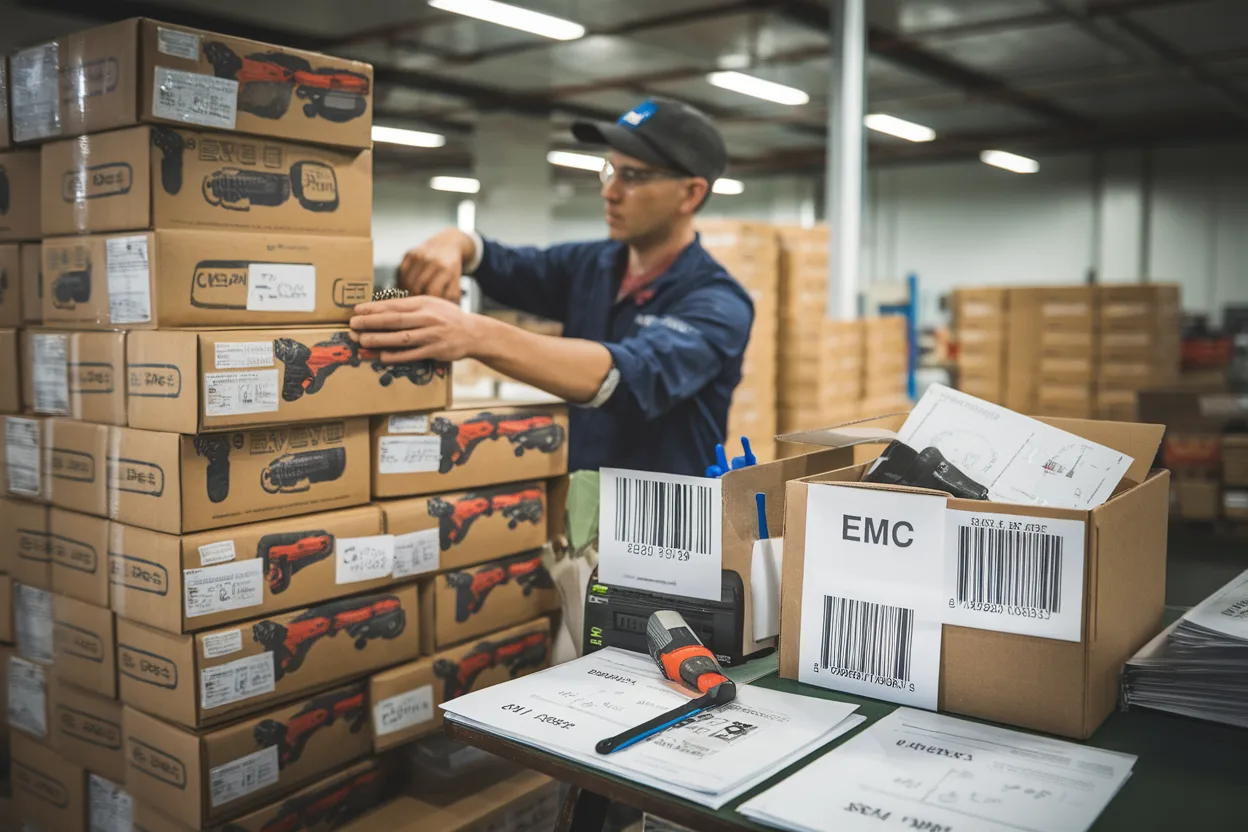
This is one of the biggest traps in cordless tool buying. Two drills can show almost the same specs on paper, but one will create repeat orders and the other will create complaints.
Similar specs can hide different product tiers because catalog numbers do not show controller quality, gearbox tolerance, battery cell grade, testing standards, or long-term production consistency.
Spec sheets show outputs, not system quality
A spec sheet usually shows:
- Voltage
- No-load speed
- Max torque
- Chuck size
- Battery capacity
That looks useful. It is useful. But it is not enough.
A spec sheet does not tell you:
- Whether the torque is measured honestly
- Whether the tool can hold that torque repeatedly
- Whether the battery sags under load
- Whether the controller cuts power too early
- Whether the gearbox noise rises after 50 hours
- Whether the chuck starts slipping in real use
This is why I always say that specs are the beginning, not the decision.
Factories can present numbers in different ways
Not every factory uses the same logic when showing performance.
For example:
- Some use peak torque
- Some use practical working torque
- Some test with ideal battery condition only
- Some test on new samples only
- Some use short-duration tests that look strong but do not reflect field use
This creates confusion for buyers who are new to cordless tools.
A buyer may think two drills are equal because both say "60N.m". But the real field performance can be far apart.
| Spec on paper | What can be hidden behind it | Why buyers get misled |
|---|---|---|
| 60N.m torque | Peak only vs usable torque | Real drilling power feels different |
| 2.0Ah battery | Cell grade and discharge rate | Runtime and heat can change a lot |
| Brushless motor | Controller quality not shown | Smoothness and efficiency vary |
| 13mm chuck | Internal quality differs | Grip and wobble may differ |
| 2-speed gearbox | Gear design and fit differ | Noise, heat, and durability vary |
Product tier often shows up after the first 3 months, not on day one
This is what many new buyers learn too late.
Both drills may pass basic first-use testing.
The difference often appears later:
- After repeated charging
- After screw driving in harder material
- After end users drop the tool once or twice
- After the battery sits in summer warehouse heat
- After the first batch reaches retail returns
That is why I prefer endurance testing7, not just showroom testing.
I have seen buyers reject a slightly higher-cost model because the catalog numbers looked similar. Then they return 6 months later after warranty issues.
They usually say the same thing: "The cheaper one looked the same at first."
How I compare beyond the spec sheet
When I help a buyer compare similar-looking brushless drills, I focus on these points:
- Loaded current draw
- Temperature rise after repeated cycles
- Torque retention under battery drop
- Gearbox sound after endurance test
- Chuck holding under repeated bit changes
- Battery pack balance after cycling
- Assembly consistency across random samples
That is where real product tier becomes visible.
Some buyers think premium only means more power. That is not how I see it. Premium often means the tool keeps behaving well under stress, repeat use, and real customer expectations.
Premium brushless drills usually outperform entry-level models in load stability, heat control, runtime consistency, durability, user feel, lower return rates, and better long-term brand perception.
Premium models feel stronger under real load
A premium drill often feels more powerful even when the paper specs look close.
Why?
Because premium models usually manage power better under load.
That means:
- Less sudden power drop
- Better control at low speed
- More stable drilling in wood and metal
- Better screw driving feel
- Less stalling under resistance
End users may not understand the technical reason, but they feel the difference quickly.
That matters a lot in reviews and repeat business.
Heat control and battery behavior are often much better
Heat is one of the most ignored risk areas in low-cost brushless projects.
Premium models usually have:
- Better current management
- Better cell matching
- Better internal resistance control
- Better airflow or internal layout
- Better thermal response in the board
This helps with:
- Longer runtime
- More stable charging behavior
- Lower battery swelling risk
- Better summer performance in warehouse or jobsite conditions
This is especially important if you sell into warmer markets or if your goods stay in containers for long shipping periods.
Premium models reduce hidden business costs
This is the part many buyers miss.
A premium drill may cost more per unit, but it can reduce:
- Return rates
- Spare part claims
- Customer service time
- Negative online reviews
- Replacement shipment costs
- Distributor trust issues
| Area | Entry-level model | Premium model | Business result |
|---|---|---|---|
| Unit cost | Lower | Higher | Easy first-order decision |
| Warranty risk | Higher | Lower | Premium often saves money later |
| User feel | Acceptable | More refined | Better reviews |
| Repeat consistency | Varies more | More stable | Better reorder confidence |
| Retail fit | Limited | Stronger | Better shelf positioning |
Premium supports stronger brand building
If a buyer wants to build a serious private label line, premium tools often make more sense because they support the brand story.
A premium drill helps you say:
- This is not a low-end copy
- This is a reliable system
- This battery platform can grow
- This product can sit next to stronger brands in retail
- This is worth a higher resale price
That matters a lot in Europe where many buyers want not only a product, but also a stable category strategy.
In Germany, I often see buyers focus on documentation and long-term consistency.
In Italy and Spain, I often see stronger attention on design feel, packaging, and value balance.
A premium drill helps across all of those if the positioning is right.
When an entry-level brushless drill is the smarter choice?
I do not believe premium is always the best answer. In many projects, entry-level brushless is actually the smarter and safer move.
An entry-level brushless drill is the smarter choice when the buyer is testing a new market, protecting cash flow, targeting value-driven users, or building a starter cordless line with lower risk and faster turnover.

Entry-level is often the right first step for new category buyers
If a company is entering cordless tools from another product category, I usually do not recommend starting with the most expensive premium drill8.
Why?
Because early-stage buyers still need to learn:
- Which end users respond
- What price band works
- What features matter in their channel
- How much support the market needs
- Which battery platform should expand later
An entry-level brushless drill9 can be a very good learning tool for the business.
It lets the buyer test demand without carrying too much inventory risk10.
It works well for price-sensitive but quality-aware markets
Some markets do not need top-tier premium positioning.
They need:
- Good value
- Reliable performance
- Clean packaging
- Stable certification documents
- Low complaint rate
- A simple path to reorder
That is where a well-made entry-level brushless drill is powerful.
This is very different from a "cheap" drill.
A smart entry-level model is not built to be the lowest cost. It is built to be the best acceptable balance.
| Situation | Why entry-level brushless works | What I usually recommend |
|---|---|---|
| New private label launch | Lower inventory risk | 1 or 2 core SKUs only |
| E-commerce testing | Faster pricing response | Clear value-focused package |
| Distributor trial order | Easier first PO | Stable 2.0Ah battery system |
| Price-sensitive region | Better price acceptance | Mid-basic brushless, not ultra-low-end |
| Multi-tool starter line | Easier battery platform entry | Drill + impact + one garden SKU |
It can create better ROI if positioned correctly
A premium drill with the wrong channel can fail.
An entry-level brushless drill with the right channel can win.
For example:
- Online marketplaces where price filtering matters
- Dealer networks testing new private labels
- Promotional hardware programs
- Seasonal bundles
- Cross-category expansion projects
I often tell buyers this:
A lower product tier is not a weak strategy if the positioning is clear.
It becomes a weak strategy only when the buyer expects premium results from an entry-level design.
The key is controlled entry-level, not uncontrolled low-end
If I build an entry-level brushless project, I still protect some non-negotiable points:
- Safe battery pack structure
- Stable charger compatibility
- Real QC checkpoints
- Honest torque communication
- Clean CE/EMC support
- Reliable packaging execution
That is the difference between a useful entry-level product and a future warranty problem.
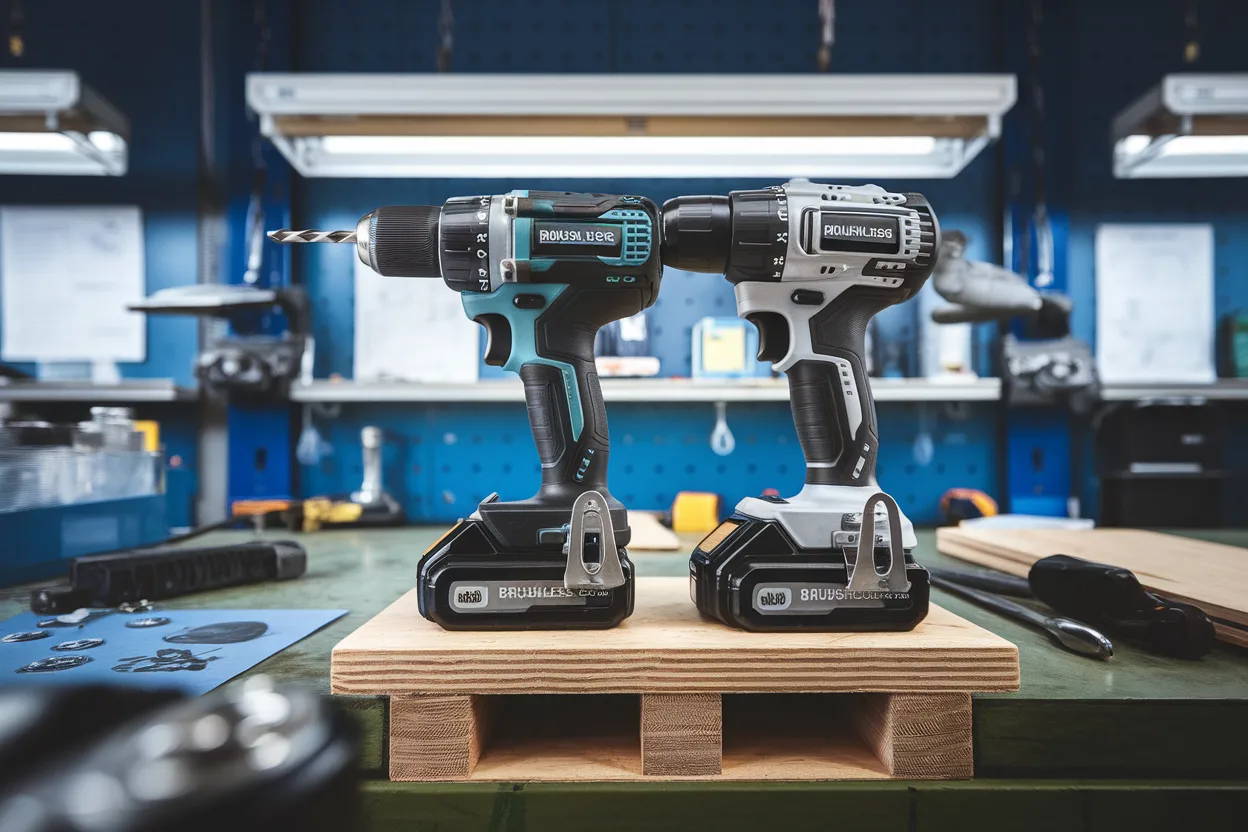
There are many cases where I believe premium is the right move from the start. The key is knowing when the market will actually reward that extra cost.
A premium brushless drill makes more sense when the buyer needs stronger brand positioning, lower warranty risk, better user reviews, longer product life, higher resale price, and a battery platform that can support future expansion.
Premium is often right for serious private label building
If a buyer wants to create a long-term cordless brand, premium usually makes more sense.
That is because brand trust is built on repeat user experience.
A better drill helps with:
- Better first reviews
- Better return customer confidence
- Easier expansion into more SKUs
- Better dealer acceptance
- Better shelf story in retail
This is especially true if the buyer wants to later add:
- Impact wrench
- Rotary hammer
- Angle grinder
- Chainsaw
- Hedge trimmer
- Blower
The first drill often becomes the "proof product" of the whole battery line.
Premium matters more in demanding channels
Some channels punish weak products faster.
Examples include:
- Professional distributors
- Specialist hardware stores
- Contractor-focused dealers
- Higher-rated Amazon stores
- Retailers with strict return tracking
- Markets with stronger product comparison culture
In these channels, small differences become visible fast.
A premium drill helps protect the brand when customers compare it directly with known names.
Premium often supports better economics after launch
This sounds strange to new buyers, but I see it often.
A premium drill can make more money because:
- It allows a higher selling price
- It reduces return handling cost
- It lowers negative reviews
- It reduces spare parts pressure
- It improves reorder confidence
- It supports premium packaging and bundle logic
| Reason to choose premium | Why it matters | Business effect |
|---|---|---|
| Stronger channel expectation | Users compare directly | Better acceptance |
| Lower warranty risk | Fewer failures | Lower hidden cost |
| Better battery platform base | Easier line expansion | More future SKUs |
| Better user feel | Better reviews | Stronger brand trust |
| Better product story | Easier sales training | Better distributor support |
I usually recommend premium when the buyer wants fewer but stronger SKUs
Some buyers think they need many models.
I often recommend the opposite.
If the buyer wants:
- 1 flagship drill
- 1 matching impact driver
- 1 strong battery platform
- 1 clean packaging system
Then premium can be a smarter strategy than launching many weak or confusing SKU11s.
This is often a better fit for Europe-focused buyers who care more about product confidence than just initial unit cost.
Common mistakes buyers make when comparing brushless drills?
I have seen the same mistakes many times. Most of them come from trying to simplify a product that should not be simplified too early.
The most common mistakes are comparing only price and headline specs, ignoring battery quality, missing certification details, testing only samples, and not matching the drill tier to the real market position.
Mistake 1: Comparing only by torque, voltage, and price
This is the most common problem.
Buyers ask:
- Is it brushless?
- How much torque?
- What is the price?
That is not enough.
Without checking the product structure, they may buy a drill that looks strong in a PDF but performs weakly in real user hands.
Mistake 2: Approving the sample but not the production standard
A good sample is not the same as good mass production12.
I always tell buyers to ask:
- Will the battery cells be the same in bulk?
- Will the charger PCB be the same?
- Will the gearbox supplier stay the same?
- What is the QC standard for random checks?
- What happens if one part supply changes?
This is where many new importers get surprised.
| Common mistake | What actually happens | Better buying habit |
|---|---|---|
| Choose lowest quote | Hidden quality gap appears later | Compare BOM and QC logic |
| Trust one sample only | Bulk consistency changes | Approve sample + production standard |
| Ignore battery cell source | Runtime and returns vary | Confirm cell grade and pack method |
| Ignore certification details | Customs or platform issues | Check CE/EMC/RoHS support early |
| Buy too many SKUs first | Inventory becomes slow | Start with focused core line |
Mistake 3: Treating all markets the same
A drill that fits one market may not fit another.
For example:
- Germany may require stronger confidence in documentation and consistency
- Spain may need sharper value balance in price positioning
- Italy may care more about practical design feel and product story
- Eastern Europe may need durable value, not premium styling alone
This is why I never recommend a drill without asking the target market and sales channel first.
Mistake 4: Starting with too many assumptions and too little testing
Some buyers already decide too much before they talk to the factory.
They say:
- "I need 5 brushless models"
- "I need the cheapest 21V"
- "I need 80N.m because my competitor shows 80N.m"
That is not product strategy13. That is catalog chasing.
I prefer a simple process:
- Define market
- Define price band
- Define channel
- Define battery plan
- Define risk tolerance
- Then choose the drill tier
That creates a much better result.
How to choose the right brushless drill tier for your market?
This is the real business question. The right drill tier is not the one with the best specs. It is the one that fits your market, your channel, your pricing, and your risk tolerance.
To choose the right brushless drill tier, I match the product level to the target country, price band, sales channel, warranty tolerance, battery platform plan, and how fast the buyer wants to expand the line.
Start with market position, not product fantasy
I usually ask buyers these first:
- Which country will you sell first?
- What is your target retail price?
- Are you selling online, through dealers, or through retail?
- Are you building a long-term brand or testing demand?
- Do you want one tool or a battery platform?
- What return rate can your business tolerate?
These questions are much more useful than asking only for torque.
Use a simple tier framework
I often help buyers use a simple 3-level logic:
-
Entry-level brushless
Good for testing, value channels, and starter projects. -
Mid-tier brushless
Good for balanced private label programs. -
Premium brushless
Good for long-term brand building and stronger channels.
| Tier | Best for | Key advantage | Main risk if used wrong |
|---|---|---|---|
| Entry-level | New market testing | Lower upfront risk | Can hurt brand if over-promised |
| Mid-tier | Most private label buyers | Best value balance | Needs clear feature control |
| Premium | Serious brand positioning | Better long-term trust | Higher first-order cost |
Think in systems, not single SKU decisions
If the buyer wants a cordless line, I always ask them to think about the battery system14.
For example:
- Will this 21V battery support future tools?
- Can the charger stay common across the line?
- Will the battery shell design support more SKUs?
- Will the platform look unified in packaging and branding?
A buyer who chooses one drill without a platform plan often pays more later.
A buyer who chooses the right tier with a platform plan usually moves faster in year two.
My practical advice for Europe-focused buyers
If I were helping a new buyer in Italy, Spain, or Germany enter cordless drills, I would usually suggest:
- Start with 1 brushless drill
- Add 1 impact driver or wrench only if needed
- Keep 1 battery platform
- Keep 2 battery sizes only
- Use clean CE/EMC support
- Make packaging clear and simple
- Test one realistic price band first
This creates a more stable launch than trying to copy a full big-brand catalog in the first season.
Why a good OEM should help define your product level?
If the factory only sends you a price list, that is not enough. A good OEM15 should help you avoid the wrong product tier before you spend money on samples, packaging, and inventory.
A good OEM should help define your product level by matching technical structure, battery platform, certifications, cost targets, and market fit before production starts, not after problems appear.

A real OEM should challenge weak assumptions
If a buyer tells me, "I want the cheapest brushless drill," I do not simply say yes.
I ask:
- Which market?
- Which target retail price?
- Which channel?
- Which battery platform plan?
- What is your MOQ comfort level?
- Do you need CE, EMC, GS support?
- What warranty exposure can you accept?
This is not to slow the deal down.
This is to prevent the wrong deal.
The OEM should connect product level to business reality
A good OEM should help the buyer decide:
- Entry-level vs premium
- 12V vs 21V vs 24V
- 2.0Ah vs 4.0Ah starter pack
- Single SKU vs platform launch
- OEM ready model vs ODM custom path
- Fast sample vs deeper validation
At YOUWE, this is how I prefer to work.
I do not believe the best factory is the one that only says "yes."
I believe the best factory is the one that helps the buyer avoid the wrong "yes."
| What a weak supplier does | What a good OEM should do | Why it matters |
|---|---|---|
| Sends quote only | Asks market and channel questions | Better product fit |
| Pushes cheapest option | Explains tier trade-offs | Lower risk |
| Focuses on sample only | Talks about mass production consistency | Better repeat orders |
| Talks about one SKU | Builds battery platform logic | Better future expansion |
| Hides compliance gaps | Clarifies certification scope early | Safer import process |
A good OEM should reduce uncertainty, not just offer products
This is the real value many buyers need.
Especially for buyers entering cordless tools from another category, the biggest need is not "a drill."
The biggest need is clarity.
They need help answering:
- What should I launch first?
- What should I not overbuild?
- Where should I spend more?
- What can stay simple?
- What can go wrong in Europe import?
- How do I avoid weak battery platform decisions?
- How do I control MOQ and lead time?
That is where an experienced OEM becomes part of the product strategy.
What I believe buyers should expect from the factory
A good factory should help with:
- Product tier recommendation
- Battery platform planning
- Certification document support
- Packaging logic
- MOQ planning
- Lead time planning
- Spare parts logic
- Sample-to-mass-production consistency
- Honest cost vs risk discussion
That is the kind of relationship that creates stable B2B business, especially when the buyer wants to build a real cordless line instead of buying random SKUs.
Conclusion
When I compare entry-level and premium brushless drills, I never start with the word "brushless." I start with the market, the buyer, the battery platform, and the real business goal. In my experience, many importers do not fail because they choose a bad drill. They fail because they choose the wrong drill tier for the wrong channel. A smart entry-level model can be the best first move. A premium model can be the right long-term base. The key is knowing why you are choosing it. If you are entering cordless tools and want a practical second opinion before you commit to samples, MOQ, or packaging, I am always happy to talk through the product level with you.
-
Understanding the term 'brushless' can help you make informed decisions about tool quality. ↩
-
Discover how product levels affect performance and reliability in tools. ↩
-
Explore what makes a tool premium to ensure you invest in quality products. ↩
-
Understanding torque helps you choose the right drill for your needs. ↩
-
Learn how gearbox quality affects the durability and performance of drills. ↩
-
Understanding private labels can help you navigate the tool market effectively. ↩
-
Endurance testing reveals long-term performance; find out why it's essential. ↩
-
Learn why a premium drill can be essential for strong brand positioning and user trust. ↩
-
Explore how entry-level brushless drills can minimize inventory risk while testing market demand. ↩
-
Get insights on strategies to reduce inventory risk when entering new markets. ↩
-
Understand how effective SKU management can streamline operations and improve sales. ↩
-
Explore the common challenges in mass production and how to address them effectively. ↩
-
Learn how to develop a product strategy that aligns with market demands and expectations. ↩
-
Get insights on selecting a battery system that supports your product line and future growth. ↩
-
Learn how to choose an OEM that aligns with your product strategy and market needs. ↩