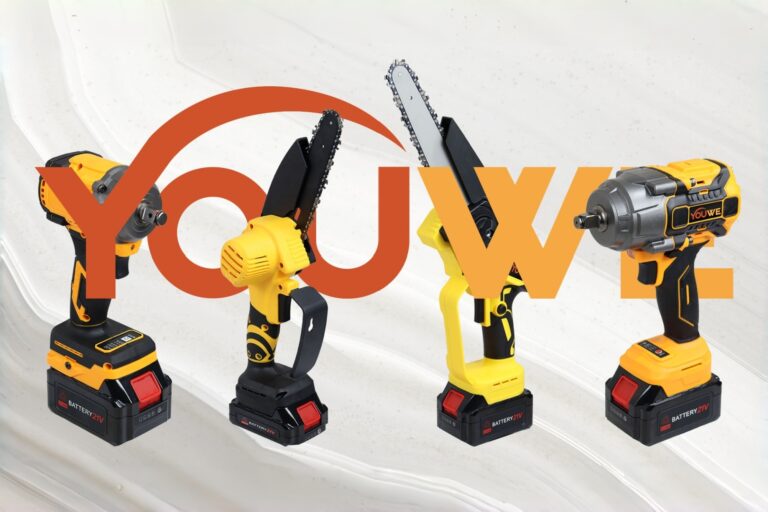
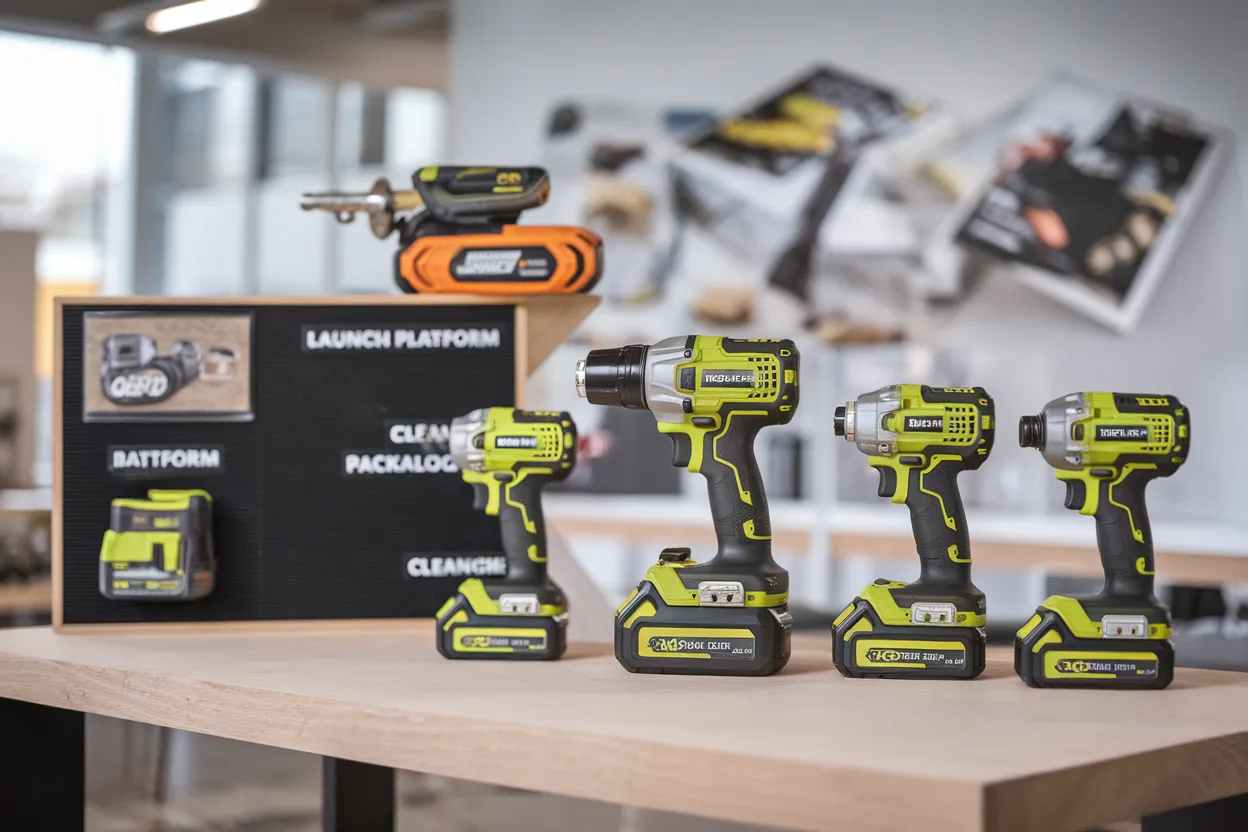
Many new buyers enter cordless tools1 by chasing one hot product. I see this often. They copy a popular SKU first. Then they realize the real risk starts after the first order, not before it.
A single best-selling cordless tool can win one order, but a battery platform can build a real product line. I believe new brands grow faster, sell more smoothly, and make safer decisions when they start with battery compatibility instead of one isolated hero product.
I have worked with many importers, distributors2, and private label buyers who wanted to move fast into cordless tools. Most of them first asked me about one model. A drill. A blower. A pruning shear. That is normal. But after a few calls, the better question always comes up: what happens after the first product sells? That is where battery platform3 planning changes everything.
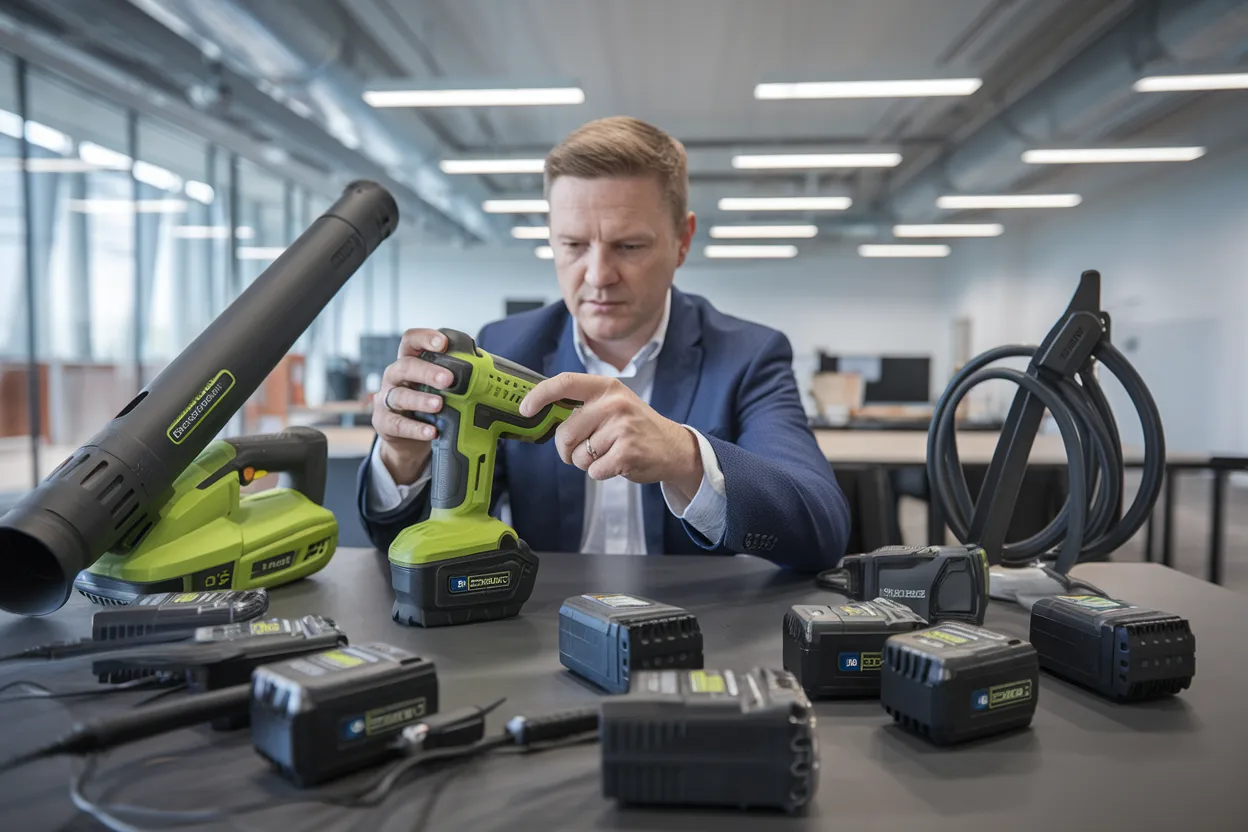
Why a best-selling tool is not the same as a strong cordless strategy?
Many buyers think a hot product is a safe start. I understand that logic. A proven seller feels low risk. But I have seen many brands get stuck because one good SKU does not create a system.
A best-selling tool can help you get your first order, but it does not automatically support repeat buying, easier expansion, or long-term brand logic. A cordless strategy needs product connection, not only product popularity.
A hot SKU solves only the first step
When a new buyer asks me, "Lynn, which cordless tool sells fastest?", I know what they are trying to avoid. They want to reduce risk. They want to test the market. That makes sense. But I always explain one thing first: a fast-selling SKU is only a market entry point4. It is not a brand structure.
For example, a cordless leaf blower may sell well in Spain or Italy during seasonal promotions. A cordless pruning shear may move quickly in Greece, Italy, or France if the buyer already serves vineyard or orchard channels. But if that product uses a battery that fits nothing else, the next order becomes harder. The customer bought one tool, not a system. The distributor stocked one model, not a line.
One product can create hidden cost
If the first product is disconnected, the buyer often faces these problems:
- Separate battery molds for future tools
- Different chargers for each tool family
- New packaging for each new battery system
- More spare parts complexity
- More certification review work for each platform
- More confusion for dealers and end users
That is why I do not judge a first SKU only by sales volume. I judge it by what it allows next.
| Decision Focus | Short-Term Result | Long-Term Result |
|---|---|---|
| Choose a best-selling single tool | Fast sample decision | Weak product family |
| Choose a tool within a platform | Slightly slower first decision | Easier expansion |
| Ignore battery compatibility | Lower first thinking cost | Higher future operating cost |
| Plan platform from day one | More strategy work upfront | Better repeat sales and lower risk |
A cordless brand needs logic buyers can understand
A buyer in Germany or Poland usually does not want to explain five different batteries to five different dealers. A retail buyer in Italy does not want shelf confusion. An Amazon brand in Spain does not want product reviews5 asking, "Why does this battery not fit your other tool?"
I have seen brands lose trust because their product line6 looked random. The tools were acceptable. The battery plan was not.
A strong cordless strategy should answer simple questions:
- What battery system am I building around?
- Which 3 to 5 tools fit this system first?
- Which channels will sell those tools?
- What is my next expansion step after the first order?
- Can the same battery support higher-margin tools later?
That is why I always tell new buyers this: do not confuse a best-selling tool7 with a scalable cordless plan. They are not the same thing.
What a battery platform really means for a new brand?
Many people hear "battery platform" and think it only means one battery fits several tools. That is only the surface. In my work, it means much more than that.
A real battery platform is not just physical battery compatibility. It is a full product system that links battery, charger, tool categories, cost structure, compliance planning, packaging, and future SKU expansion under one clear logic.
Battery platform is a business system, not just a battery pack
When I help a new private label buyer build a cordless line, I never start with voltage alone. I start with market use8. Then I connect that use to a battery system.
A battery platform usually includes:
- Battery pack design
- Battery cell structure
- BMS logic
- Charger type
- Housing interface
- Tool current demand range
- Packaging standards
- Safety labels
- Spare parts planning
- Future SKU map
That is why a 21V platform is not just "a 21V battery." It is a decision that affects the whole next 12 to 24 months of your brand.
The platform defines what kind of brand you can become
If you launch on a light-duty 21V platform, you can often start with:
- Cordless drill
- Impact driver
- Small blower
- Grass trimmer
- 4-inch to 8-inch mini chainsaw
- Pruning shear
- Small hedge trimmer
If you launch on a stronger 40V platform, you can often target:
- Full-size blower
- Full-size hedge trimmer
- Larger grass trimmer
- Pole tools
- Mid to heavy garden use
- Higher-end distributor positioning
The battery platform decides not only what you sell first, but what you can credibly sell next.
| Platform Element | Why It Matters for New Brands |
|---|---|
| Battery interface | Controls future tool compatibility |
| Charger design | Affects user convenience and SKU simplicity |
| BMS and protection | Impacts safety, returns, and market trust |
| Voltage range | Defines tool category ceiling |
| Cell quality level | Affects runtime, claims, and reviews |
| Certification path | Impacts EU import confidence and speed |
| Packaging logic | Supports retail consistency and brand image |
In Europe, the platform also affects compliance confidence
Many new buyers in Europe worry about battery rules more than they admit in the first meeting. They ask about price first. Later, they ask the real questions:
- Do you have CE?
- What about EMC?
- Can I get battery transport documents?
- Is the charger approved for my market?
- Can you support label and manual language?
This is exactly why platform thinking matters. If each tool uses a different battery system, compliance work becomes more scattered. It becomes harder to control manuals, charger specs, carton markings, and technical files.
In my own projects, the buyers who scale more smoothly usually treat the battery platform as a product architecture9 decision. They do not treat it like a spare accessory issue.
How battery compatibility creates repeat sales?
Many new brands focus on the first tool sale. I focus on the second, third, and fourth sale. That is where the margin story gets better.
Battery compatibility creates repeat sales because one battery lowers the cost and hesitation of buying the next tool. When users already own the battery and charger, the next purchase feels easier, cheaper, and more logical.
The second sale is easier than the first
If a customer buys a cordless blower with battery and charger, the next compatible tool can be sold as a bare tool. That changes the sales conversation10.
Now the end user thinks:
- I already have the battery
- I do not need another charger
- I save money on the next tool
- I already trust the platform
- I understand how this system works
This is a big shift. The first sale builds entry. The second sale builds habit.
For distributors and importers, that means:
- Better reorder chance
- More accessory sales
- Better gross margin on bare tools
- Less customer education
- Stronger product family sell-through
Battery ownership reduces friction
I have seen this in cordless garden tools many times. A buyer launches a mini chainsaw first. It performs well. Then the same buyer adds pruning shears and a blower on the same battery platform. The second and third products often move faster because the channel already understands the battery story.
That is why battery compatibility11 is not only a technical feature. It is a psychological advantage12.
| Sales Driver | Disconnected Tools | Compatible Platform |
|---|---|---|
| First order speed | Medium | Medium |
| Second product conversion | Low | High |
| Bare tool sales chance | Low | High |
| Accessory attachment rate | Low | High |
| Dealer confidence | Medium | High |
| Consumer loyalty | Weak | Stronger |
Compatible tools improve pricing flexibility
A strong platform gives you more offer formats:
- Full kit
- Bare tool
- Battery only
- Charger only
- Multi-tool combo
- Seasonal bundle
- Retail starter set
- Distributor promotion pack
This matters a lot in Europe. Some buyers in Germany want a cleaner premium kit structure. Some buyers in Spain want aggressive entry pricing with bare tool follow-up. Some buyers in Italy want seasonal gardening bundles. A platform gives you those options without rebuilding the product logic each time.
Repeat sales are usually where the brand becomes real
A single product can generate attention. A platform creates a reason to stay. In my view, the real sign of a healthy cordless brand is not one good launch. It is when the same customer asks, "What other tools can I use with this battery?"
That question is where the business becomes stronger.
Why distributors prefer a simpler platform over too many disconnected tools?
Distributors often look strong from the outside. But inside, they want less chaos. They want fewer mistakes. They want smoother replenishment. That is why simple platforms win.
Distributors usually prefer a simpler battery platform because it lowers training time, reduces inventory complexity, improves reorder logic, and makes the product line easier to explain to dealers and end users.
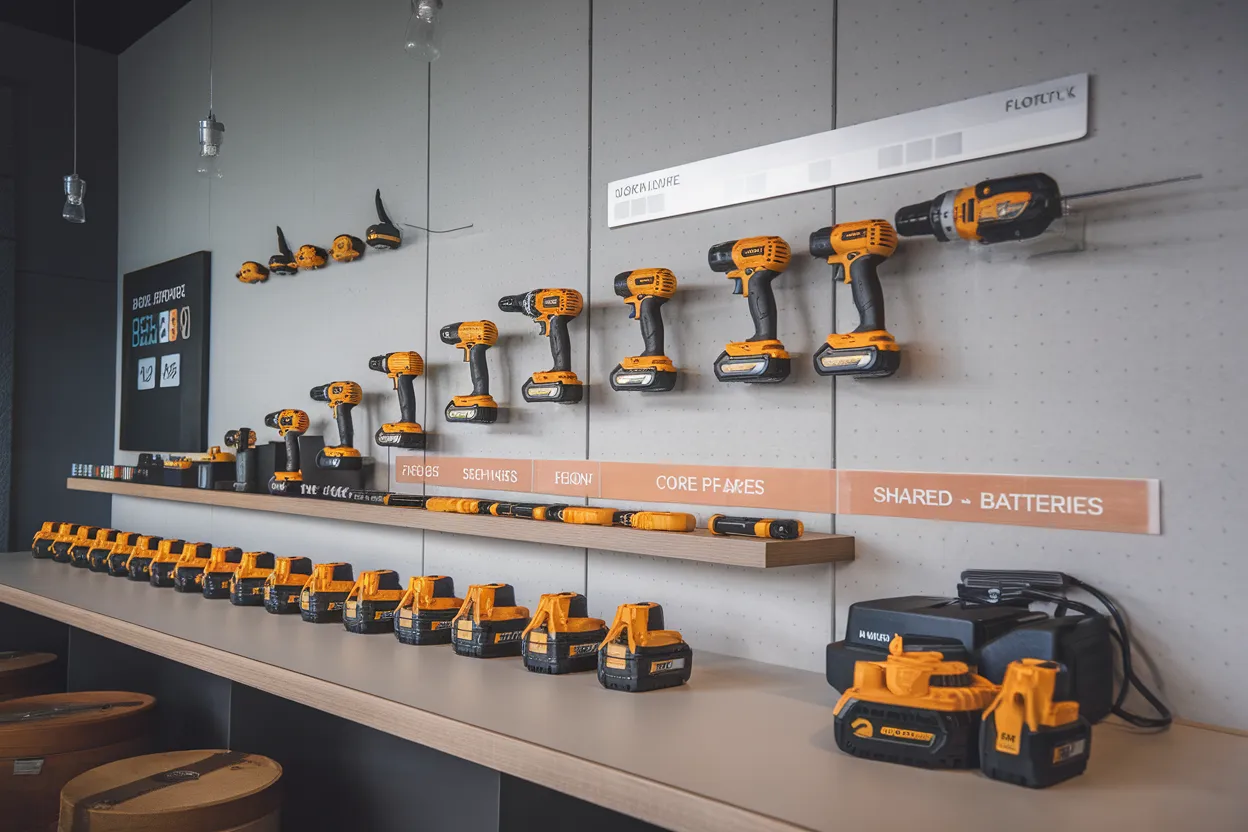
Distributors sell systems better than random SKUs
A distributor does not only buy products. They manage stock, sales teams, service questions, warranty issues, and dealer communication. If your cordless line has too many battery types too early, they feel the pain immediately.
They start asking:
- Which battery fits which tool?
- Which charger goes with which battery?
- Which spare pack should I stock?
- Which carton label applies to which market?
- Which manual version belongs to which charger plug?
If the answers are messy, the distributor loses speed.
Simple platform means simpler inventory
Inventory complexity kills confidence faster than many new brands realize. If the buyer has:
- 3 battery housings
- 3 chargers
- 9 tools
- 2 plug standards
- 4 retail bundle types
the warehouse and purchasing team will feel the problem fast.
A simpler platform reduces:
- Safety stock burden
- Mis-picks
- Dead stock risk
- Spare parts confusion
- Forecasting errors
- After-sales friction
| Inventory Factor | Too Many Platforms | Simpler Platform |
|---|---|---|
| Battery SKUs | High | Low |
| Charger SKUs | High | Low |
| Forecasting difficulty | High | Lower |
| Spare parts handling | Hard | Easier |
| Dealer training load | High | Lower |
| Warranty sorting | Messy | Cleaner |
European buyers often care about operational clarity
In many talks I have had with importers in Germany, Poland, and Italy, the real buying decision often comes down to one quiet question: "Will this line create problems for my team?"
That team includes:
- Purchasing
- Warehouse
- Sales reps
- Technical support
- E-commerce listing staff
- Retail account managers
If the product line is simple, everyone moves faster.
If the product line is disconnected, even good products become heavy to manage.
Simple platforms help distributors build trust with dealers
A distributor wants to tell a clean story:
- One battery
- Several tools
- One charger logic
- Easy upsell path
- Easy service support
That story is easier to sell to hardware stores, garden dealers, and online customers.
In my experience, many new brands try to impress distributors with too many models. That usually does not work. The better move is to show fewer tools with a clearer battery logic.
That is what makes the line feel professional.
How a strong battery platform makes future tool expansion easier?
A lot of buyers think about launch. Fewer buyers think about month 9, month 15, or year 2. That is where platform planning saves time and money.
A strong battery platform makes future expansion easier because the core battery, charger, and compatibility logic are already built. That reduces tooling duplication, shortens development decisions, and keeps the brand line consistent as new tools are added.
Expansion becomes a product map, not a reset
If the battery system is already fixed, the next tool decision becomes simpler:
- Does this tool fit the platform power range?
- Does the runtime meet user expectations?
- Does the current draw stay within safe design limits?
- Does the existing charger logic still work?
- Can the same packaging family continue?
This is very different from launching every tool as a separate project.
A disconnected launch often means every new tool becomes a new negotiation:
- New battery housing?
- New charger?
- New compliance file?
- New carton structure?
- New after-sales parts?
That slows growth.
Platform-first brands can build in stages
I often suggest a phased expansion model for new brands:
Phase 1
- 1 battery platform
- 3 core tools
- 1 or 2 battery capacities
- 1 charger family
Phase 2
- Add 2 to 4 adjacent tools
- Introduce bare tool packs
- Build combo kits
Phase 3
- Add higher-margin or pro-positioned models
- Expand seasonal promotions
- Strengthen accessories and spare sales
| Expansion Stage | Platform-First Brand | Random SKU Brand |
|---|---|---|
| First launch | Clear and focused | Fast but fragmented |
| Second wave | Add adjacent tools | Rebuild product logic |
| Packaging continuity | Strong | Weak |
| Dealer education | Easier | Repeated |
| Accessory sales | Better | Limited |
| Brand identity | Clear | Scattered |
Tooling and sourcing decisions become more efficient
As a manufacturer, I also look at expansion through supply chain control. If the battery platform is stable, I can help buyers make better decisions on:
- Cell sourcing consistency
- Charger plug variants for EU markets
- Plastic color matching across product lines
- Carry case or color box standardization
- Spare battery stocking
- Manual structure and language updates
This matters for OEM and ODM projects13. If you start with a stable platform, future custom branding and product additions become easier to manage.
The brand looks stronger when expansion feels intentional
Customers can feel the difference between:
- "We added another tool"
and - "We built a cordless system"
That difference affects trust. It affects dealer confidence. It affects retail shelf logic. It affects how serious your brand looks.
In my experience, the brands that expand best do not always start bigger. They start cleaner.
Common battery platform mistakes new brands make?
Most battery platform mistakes are not technical mistakes first. They are planning mistakes first. I see these patterns again and again.
New brands often make battery platform mistakes by choosing based only on one product, mixing incompatible systems too early, underestimating battery quality, ignoring charger and certification details, and launching more complexity than their sales channel can support.
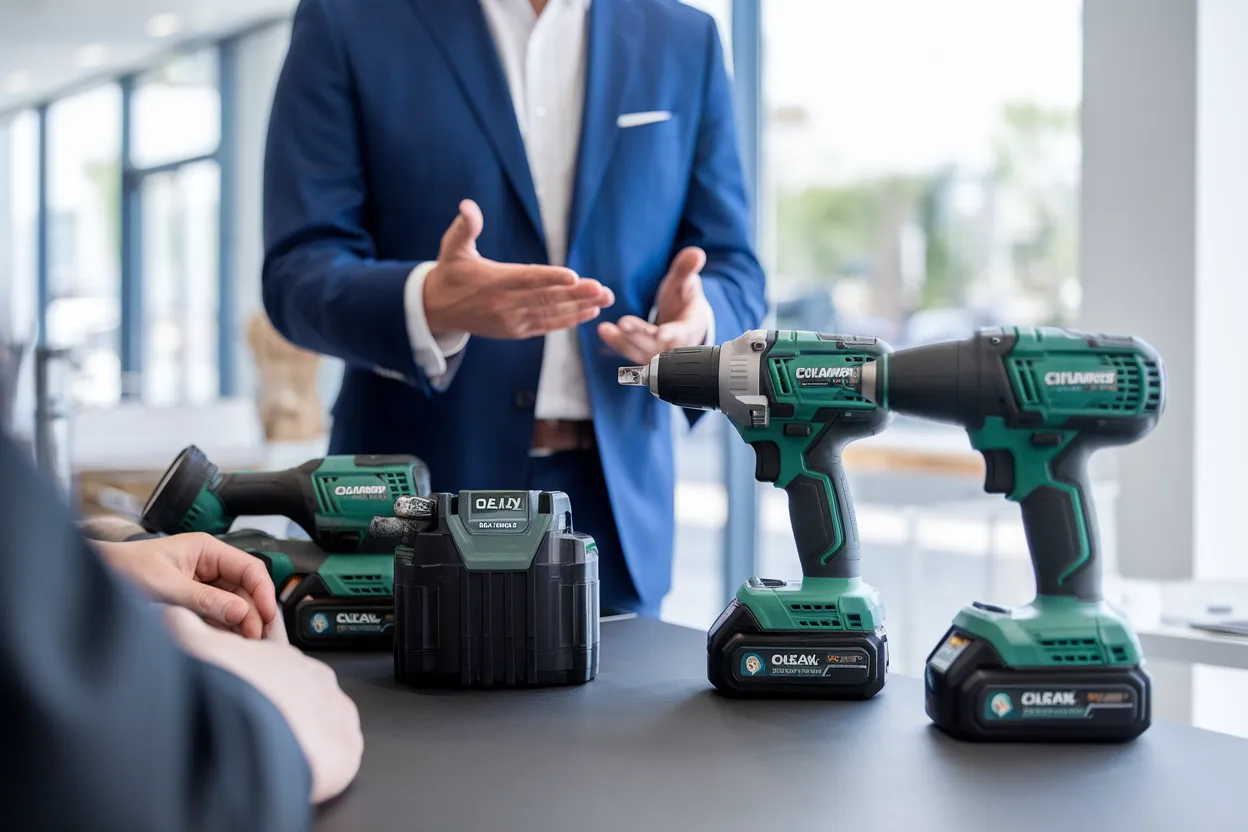
Mistake 1: Choosing voltage because competitors use it
Many buyers say, "My competitor sells 20V, so I need 20V too." I always slow that down.
Voltage labeling14 alone does not tell you:
- Real tool performance
- Battery cell quality
- BMS protection level
- Runtime
- Heat behavior
- Tool family fit
You should choose a platform based on:
- Which tools you want in the first 12 months
- What channel you serve
- What price band you target
- What user type you want to reach
Mistake 2: Launching too many battery families too early
This is one of the most common errors. A buyer wants:
- 12V screwdriver
- 21V drill
- 40V garden tools
- Another special battery for one promotional SKU
Now the line looks large. But it is not strong. It is fragmented.
For a new brand, too many platforms usually create:
- MOQ pressure
- More charger inventory
- More packaging cost
- More technical support burden
- Slower reorder clarity
Mistake 3: Treating battery quality like a side issue
Some buyers spend hours comparing tool housings and almost no time on battery details. That is dangerous.
Battery quality affects:
- Runtime
- Safety
- Return rate
- User reviews
- Perceived brand value
- Seasonal performance in garden tools
| Common Mistake | What Happens Later |
|---|---|
| Copy competitor voltage only | Weak fit for actual tool roadmap |
| Too many platforms at launch | Inventory and training chaos |
| Cheap battery cell focus only | Higher return risk and poor reviews |
| Ignore charger spec differences | Market mismatch and service issues |
| No bare tool plan | Missed repeat sales |
| No compliance planning | Import and listing delays |
Mistake 4: Ignoring Europe-specific import details
For buyers in Europe, this part matters more than many first-time importers expect.
They need to think about:
- CE and EMC support
- Charger plug type
- User manual language
- Carton marks
- Battery transport documents
- WEEE and local packaging obligations in some markets
- Country-specific distributor expectations
I have seen buyers choose a tool first and only later ask whether the charger configuration or document set matches Germany or Spain. That can delay launch.
Mistake 5: No clear next-step roadmap
A platform should answer this question:
"What are the next 3 tools after launch?"
If the buyer cannot answer that, the platform is usually not planned well enough.
I usually advise new buyers to write down:
- Launch tool
- Second tool
- Third tool
- First bare tool offer
- First spare battery offer
- First distributor bundle
That simple exercise often reveals whether the platform makes sense.
Why many successful cordless brands grow from a platform, not a single hero SKU?
People love hero products. I understand that. Hero SKUs are easy to market. But real cordless brands usually scale through systems, not one-off winners.
Many successful cordless brands grow from a platform because a shared battery system makes the product line easier to expand, easier to sell, and easier to support. The hero SKU may open the door, but the platform is what keeps the business moving.
A hero SKU gets attention, but a platform builds structure
A cordless drill may become the best seller. A mini chainsaw may trend online. A pruning shear may win seasonal demand. But the strongest brands do not stop there.
They ask:
- What tool should come next?
- What can reuse the same battery?
- How do we raise lifetime customer value?
- How do we reduce friction for dealers?
- How do we keep our catalog clean?
That is platform thinking.
Platform brands create better channel stories
A dealer or distributor can easily understand a platform story:
- One battery family
- Several tools
- Entry kits and bare tools
- Easy upsell
- Clear spare battery business
That is much easier than saying:
- This tool uses one battery
- This other tool uses another
- This charger only fits two items
- This battery shape changed after version B
| Growth Model | Early Attraction | Mid-Term Stability | Expansion Speed |
|---|---|---|---|
| Hero SKU only | High | Low | Low |
| Platform-first | Medium to High | High | High |
| Mixed random launches | Medium | Low | Low |
| Focused platform with phased rollout | High enough | High | High |
The best-performing brands often feel easier to buy from
I have seen buyers become more confident when the brand feels organized. They may not say "platform architecture" in the meeting. But they feel it.
They notice:
- Clean product family
- Logical accessory offer
- Easy cross-sell
- Consistent packaging
- Better shelf story
- Fewer support headaches
That is why many successful cordless brands look simple from the outside. That simplicity is usually planned, not accidental.
The hero SKU still matters, but it should serve the platform
I am not saying you should ignore best sellers. I am saying the best seller should be chosen for two jobs:
- It should help you enter the market.
- It should pull the next tools behind it.
That is the difference between a hot item and a smart launch.
How to choose the right first battery platform for your launch?
This is one of the most important decisions for any new cordless brand. I do not think there is one universal answer. I think there is one right answer for your channel, your tool mix, and your next-step plan.
The right first battery platform depends on your first 3 to 5 tools, your target market, your price position, your customer type, and your expansion path. The best platform is the one that supports your launch and your next moves with the least complexity.
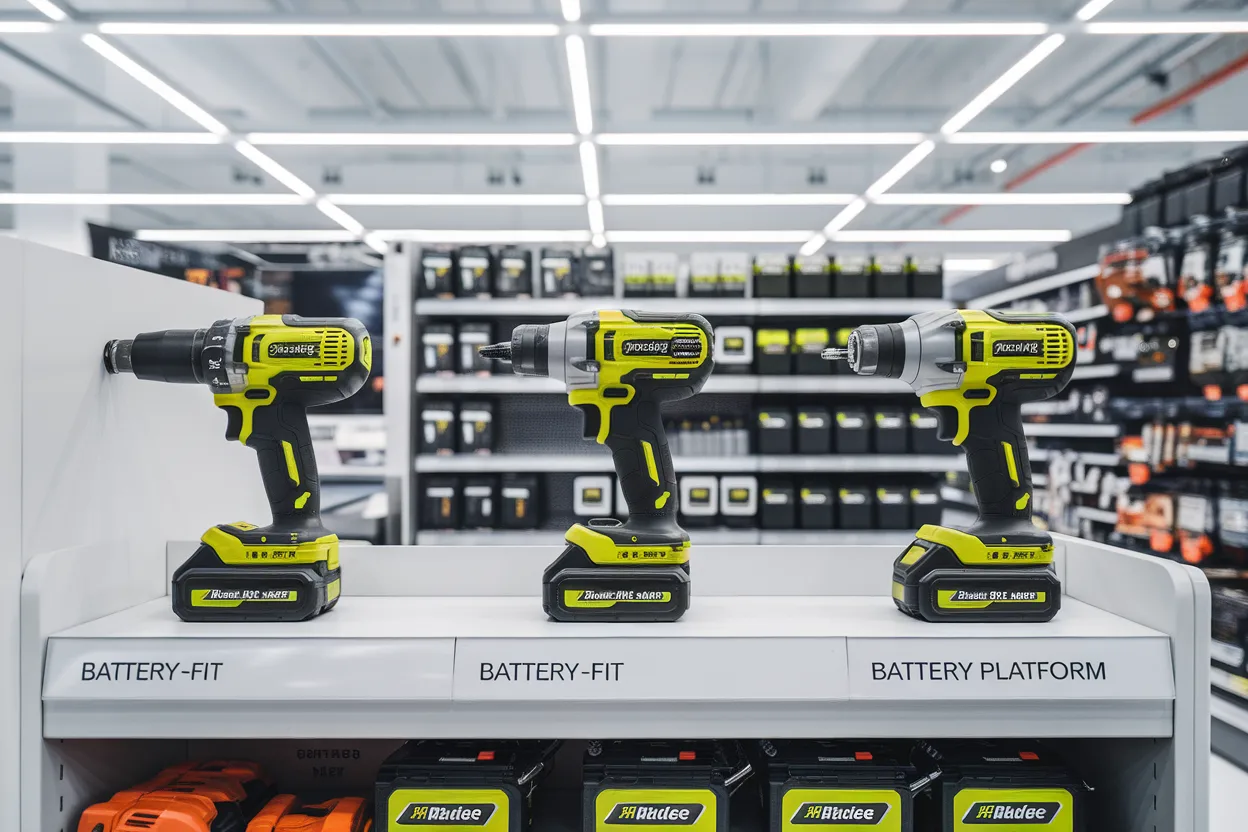
Start with the first 3 to 5 tools, not one tool
I always ask new buyers to define their first small lineup.
For example:
Light mixed platform launch
- Drill
- Mini chainsaw
- Pruning shear
- Small blower
Garden-focused launch
- Blower
- Grass trimmer
- Hedge trimmer
- Pruning shear
This matters because one tool can mislead you. A lineup shows real power demand, real user expectation, and real market fit.
Match the platform to the market and channel
Different markets often need different starting logic.
- Italy: strong garden and orchard opportunity in some channels
- Spain: seasonal garden tools and price-sensitive bundles in some segments
- Germany: strong demand for cleaner compliance and more structured product logic
- Eastern Europe: value and durability balance often matters
- Amazon sellers: packaging, listing clarity, and review risk matter a lot
That is why the right platform is not only a factory decision. It is a commercial decision.
| Buyer Type | Better First Platform Logic |
|---|---|
| New Amazon private label | Simple 1-platform, 3-SKU launch |
| Traditional distributor entering cordless | 1 platform with strong repeat-tool path |
| Garden specialist importer | Platform built around seasonal garden family |
| Multi-category hardware importer | Balanced platform with mixed entry tools |
| Retail chain test launch | Fewer SKUs, strong packaging consistency |
Think about MOQ, lead time, and price structure early
A platform decision should also include basic commercial reality:
- MOQ per tool
- MOQ per battery type
- MOQ per charger plug version
- Sample lead time
- Bulk lead time
- Battery cost impact
- Bare tool pricing path
- Spare battery margin
At YOUWE, I usually prefer helping buyers reduce early complexity. For many OEM launches, I find that a focused battery family with proven tools can make 30 to 45 day production planning much more manageable than scattered product decisions.
Ask what your second order should look like
Before I recommend a first platform, I ask this:
"If your first order sells well, what do you want your second order to be?"
Good answers look like this:
- Reorder same kit + add bare tool
- Add second compatible tool
- Add spare battery packs
- Launch seasonal combo
Weak answers usually sound like this:
- We will decide later
- Maybe another unrelated tool
- Maybe another battery system
That usually tells me the launch logic is still incomplete.
What a good OEM partner should help you plan?
A lot of buyers think the OEM only needs to quote price and lead time. I do not agree. A real OEM partner should help reduce uncertainty, especially when the buyer is entering cordless tools from another category.
A good OEM partner should help plan your battery platform, first SKU lineup, compliance path, packaging logic, cost structure, and future expansion roadmap. If the factory only pushes a hot model, they are helping you buy a product, not build a cordless business.
A real OEM should ask better questions
When I speak with serious buyers, I do not start with only a quotation sheet. I usually ask:
- Which country will you sell in first?
- Which channel do you serve?
- Do you want garden tools, power tools, or both?
- Do you want quick OEM or deeper ODM?
- What is your first 12-month plan?
- What price band do you want?
- Do you want one battery family or multiple?
- Do you need certification support for Europe?
These questions help avoid expensive wrong starts.
The OEM should help with more than product selection
A strong OEM partner should help you plan:
- Battery platform fit
- Tool roadmap
- Charger standards by market
- Certification document support
- Packaging and branding structure
- Sample strategy
- MOQ balance
- Spare battery planning
- Accessory sourcing
- Lead time staging
| OEM Capability | Why It Matters |
|---|---|
| Platform recommendation | Reduces wrong launch choices |
| Tool family planning | Improves repeat sales logic |
| Certification support | Helps EU import confidence |
| Packaging system planning | Builds retail and online consistency |
| MOQ guidance | Prevents over-buying early |
| Lead time transparency | Helps launch calendar planning |
| ODM support | Supports future product differentiation |
For Europe, the OEM should understand practical buying friction
European buyers often care about more than the product photo. They care about:
- CE / EMC support
- Battery transport paperwork
- Plug types
- User manuals
- Color box language
- Labeling details
- Stable reorder timelines
- Reasonable MOQ
- Packaging quality
- Warranty spare planning
If the OEM cannot discuss these details clearly, the buyer carries more risk.
That is why I believe the right factory should act like a planning partner, not only a supplier.
The best OEMs help you start smaller, not bigger
This may sound strange, but I trust a factory more when they tell a new buyer to launch fewer SKUs first.
In many real projects, the safest start is:
- 1 battery platform
- 3 to 5 tools
- 1 or 2 battery capacities
- Clear certification file set
- Clean packaging family
- One expansion step already planned
That kind of launch is easier to control. It is easier to sell. It is easier to learn from. It is also easier to scale.
Conclusion
In my experience, the smartest cordless brands do not start by chasing one best-selling tool. They start by building a battery system that makes the next sale easier than the first one. That is what lowers risk for new buyers, especially for importers and private label brands in Europe who care about compliance, product logic, and long-term margin. If I were launching a new cordless line today, I would spend more time mapping the first battery platform than comparing one hero SKU. A hot product can win attention. A good platform can build a business. If you are planning your first cordless launch and want a practical second opinion, I think that is the right time to talk with a factory that understands both tools and the real buying pressure behind them.
-
Explore the advantages of cordless tools for convenience and efficiency in various tasks. ↩
-
Gain insights into distributor preferences and how to meet their needs effectively. ↩
-
Learn how a battery platform can enhance product compatibility and user experience. ↩
-
Explore the concept of market entry points and their significance in product launches. ↩
-
Explore the significance of product reviews in shaping consumer decisions. ↩
-
Find out how a cohesive product line can improve brand perception and sales. ↩
-
Understand the limitations of relying solely on best-selling tools for long-term success. ↩
-
Discover how understanding market use can guide effective tool design and development. ↩
-
Learn how product architecture influences the development and success of tool lines. ↩
-
Explore techniques to enhance sales conversations and close more deals. ↩
-
Discover how battery compatibility can drive repeat sales and customer loyalty. ↩
-
Learn how battery compatibility can create a psychological edge in consumer purchasing. ↩
-
Understanding OEM and ODM can help in choosing the right manufacturing strategy for your brand. ↩
-
Voltage labeling is crucial for understanding tool performance and compatibility. ↩