Many buyers see a high CFM1 or a high MPH2 number and think the product will feel strong. I have seen many importers make that mistake, then lose time, money, and confidence after testing samples.
CFM and MPH both matter in a cordless leaf blower, but neither number alone tells the real story. I always tell buyers to judge airflow volume, air speed, fan design, battery output, runtime stability, and user feel as one system.
I often speak with buyers in Italy, Spain, and Germany who are entering cordless tools from garden, hardware, or retail channels. They already understand business, but they do not always understand blower performance. This is where many early buying decisions go wrong. A blower can look strong on paper and still feel weak in the hand. That gap between specs and real use is what I want to break down here.
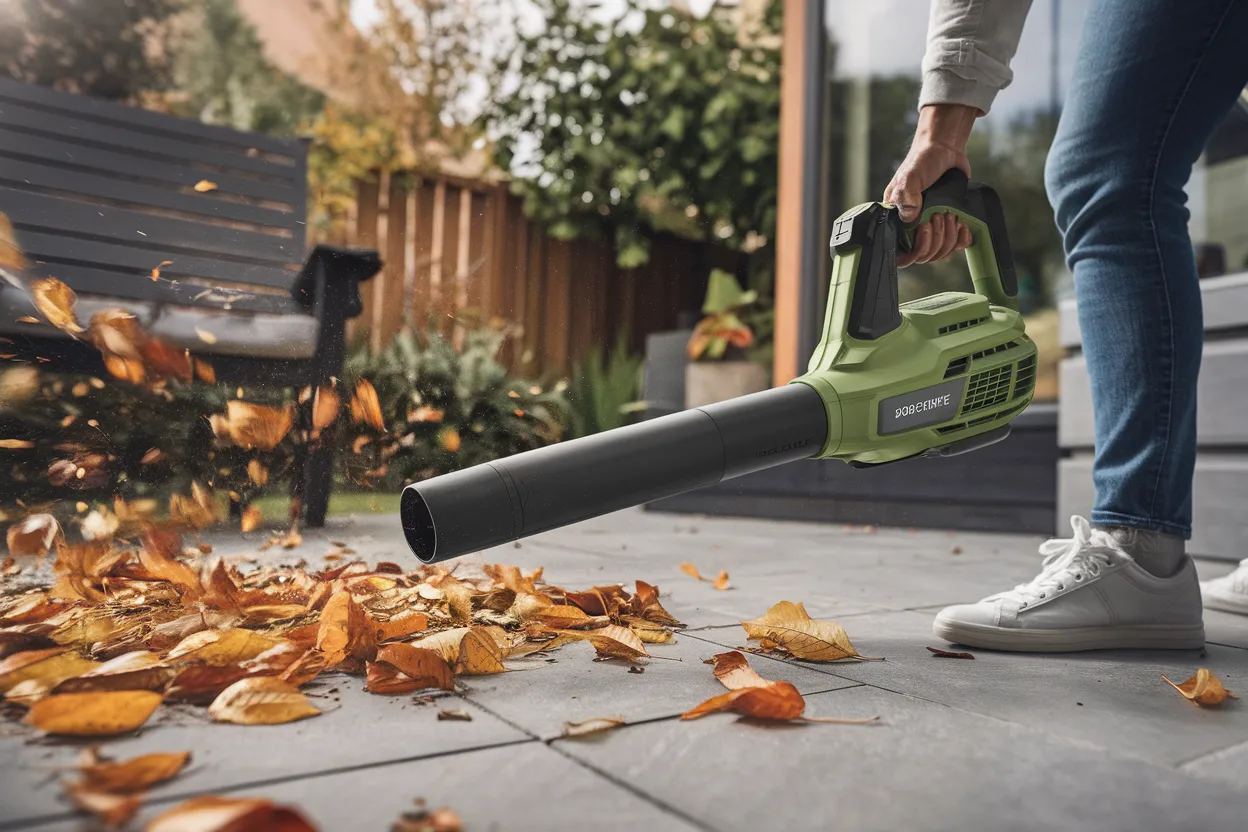
What do CFM and MPH actually mean in a cordless leaf blower?
A lot of buyers compare CFM and MPH as if they are direct competitors. I do not. I treat them as two different signals that describe two different parts of airflow.
CFM shows how much air the blower moves. MPH shows how fast the air exits the nozzle. CFM is airflow volume. MPH is air speed. A good blower needs the right balance between both.
CFM is airflow volume, not pushing force by itself
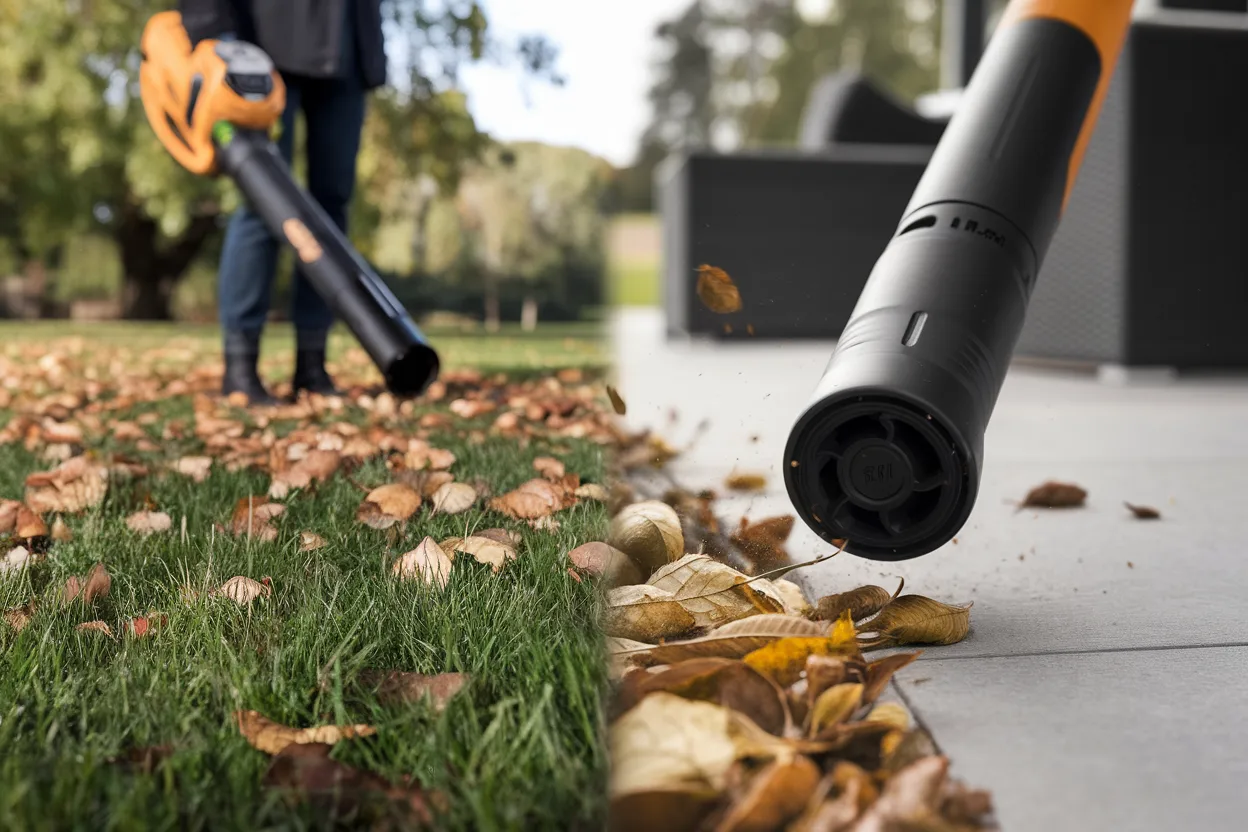
When I explain blowers to new buyers, I start with a simple idea. CFM means cubic feet per minute. It tells me how much air passes through the machine in a given time. A higher CFM usually helps when the user needs to move more loose material across a wider area. This is useful for dry leaves on lawns, patios, driveways, and open garden spaces.
But I do not let buyers stop at that number. A blower with high CFM can still feel soft if the air is not focused well. I have tested units where the housing was large and the fan moved a lot of air, but the outlet shape was poor. The result was broad airflow, but weak pressure at the point of contact.
MPH is exit speed, not total cleaning ability
MPH means miles per hour. It tells me how fast the air leaves the nozzle. This matters when users want to break stubborn debris loose, especially wet leaves, compact dust, or leaves trapped between stones, tiles, or narrow corners.
Still, MPH can also fool buyers. A narrow nozzle can raise exit speed and make the spec sheet look strong. But if the blower moves too little air overall, the cleaning width becomes small and the user feel3s like the tool is working too hard for too little result.
I always explain CFM and MPH as width versus punch
When I talk with OEM or ODM buyers, I often use simple language:
- CFM = how much air the blower carries
- MPH = how hard that air hits at the outlet
- Real performance = how well the whole airflow system works together
| Spec | What it tells me | What it helps with | What it does not guarantee |
|---|---|---|---|
| CFM | Air volume moved | Clearing wider areas, moving loose leaves | Strong impact at the target point |
| MPH | Air exit speed | Lifting wet debris, edge cleaning, tight spaces | Fast cleanup over larger surfaces |
| CFM + MPH together | Basic airflow profile | First screening for model positioning | Real user feel, runtime, balance, noise, efficiency |
Why this matters for European importers and private label brands
Many buyers in Europe ask for a target spec first. They want to know if 500 CFM is enough or if 150 MPH is strong enough. I understand that. It is a normal question. But I usually tell them that the first step is not chasing a number. The first step is defining the use case.
A homeowner-focused cordless blower for Spain may need easy handling, moderate noise, and stable runtime for light garden use. A more demanding buyer in Germany may care more about platform consistency, brushless efficiency, and better performance under continuous load. A retail chain in Italy may want a balanced model that looks strong in both online listings and in-store comparison cards. In each case, CFM and MPH matter, but only after the market position is clear.
My practical rule when reviewing supplier claims
I always tell buyers to ask these questions before they trust any blower spec:
- Was the CFM measured with or without the tube?
- Was the MPH measured at the nozzle tip or elsewhere?
- Was the battery fully charged at the start only?
- Was the blower in turbo mode only?
- How long can the blower hold that output?
- What battery pack was used?
- Is the motor brushed or brushless?
- Is the fan and nozzle design optimized for that claim?
Those answers tell me more than the spec itself. That is why I never buy the number first. I buy the system first.
Why CFM alone does not tell the full performance story?
I have seen many buyers choose a blower because the CFM looked impressive. Then they test the sample and say, "Why does it feel weak?" This is one of the most common mistakes in cordless blower sourcing.
High CFM can look good on paper, but airflow volume alone does not guarantee strong cleaning. If the air is too diffuse, the nozzle is too open, or the battery cannot sustain output, the blower can still feel disappointing.
High CFM can be wide but soft
A blower can move a large amount of air, but that does not always mean it will move debris well. If the outlet is wide and the airflow is not compressed correctly, the air spreads too much before it reaches the ground. That can feel comfortable and less aggressive, but it may not satisfy users who expect a strong "push."
I often compare this to water from a hose. A lot of water without direction can soak an area, but it does not hit with force. The same logic applies to blower airflow.
This matters a lot for buyers who sell through e-commerce4. Online shoppers see big numbers. They expect a strong experience. If the real product does not match that expectation, return rates go up and reviews turn negative.
CFM claims can be inflated by test setup
Not every factory measures the same way. Some suppliers test CFM in conditions that favor a bigger number:
- Without final nozzle installed
- With a short tube
- In short burst mode only
- With a larger battery pack than the standard sales version
- At full charge only, before voltage drops
This is why I always tell new brands to ask for test conditions5, not just the result.
| CFM Claim Issue | What can happen | Risk for buyer |
|---|---|---|
| Tested without nozzle | Airflow looks higher than real use | Product feels weaker in customer hands |
| Tested in turbo only | Peak number looks strong | Normal mode feels underpowered |
| Tested with oversized battery | Better temporary output | Standard kit underperforms |
| No defined test method | Numbers cannot be compared fairly | Wrong sourcing decisions |
CFM does not show pressure concentration
A high-CFM blower may be good for sweeping dry leaves across open surfaces. But if users need to clean around curbs, flower beds, fence lines, or workshop corners, they also need focused air pressure. CFM alone does not tell me that.
When I review blower projects for OEM buyers, I always ask what kind of debris the end user deals with:
- Dry leaves
- Wet leaves
- Grass clippings
- Light dust
- Sawdust
- Gravel-adjacent dirt
- Patio edge debris
Each type reacts differently to airflow shape. A high CFM number may help in one use case and disappoint in another.
Battery platform affects usable CFM, not just rated CFM
This is where many first-time buyers miss an important detail. A blower is not just a fan and motor. It is also a battery discharge system.
A 20V or 21V platform with a weak pack, high internal resistance, or poor BMS tuning may not hold the airflow under load. The blower may start strong, then fade quickly. So the rated CFM may be technically true at the start, but not during actual work.
This is one reason why I often tell buyers not to compare only by voltage. A well-matched 21V brushless blower can outperform a poorly tuned "40V" style product in real user feel if the battery and controller system are better balanced.
What I ask buyers to verify before trusting CFM
Before I approve a blower for a private label project, I want these checks:
- Real cleaning test on dry leaves
- Real cleaning test on slightly wet leaves
- Turbo mode hold time
- Output drop after 2 to 3 minutes
- Standard battery vs upgraded battery comparison
- Tube and nozzle configuration review
- Noise and vibration feel
If the blower passes those tests, then the CFM number starts to matter. Until then, it is only a marketing number.
Why MPH alone can also be misleading?
A high MPH number can look powerful and exciting. Many buyers like it because it sounds aggressive. But I have seen high-MPH blowers that feel sharp at the tip and weak in actual cleaning.
MPH can be misleading because air speed is easy to increase with a narrow nozzle. If the blower lacks enough airflow volume behind that speed, it may feel punchy at first but slow and tiring in real use.
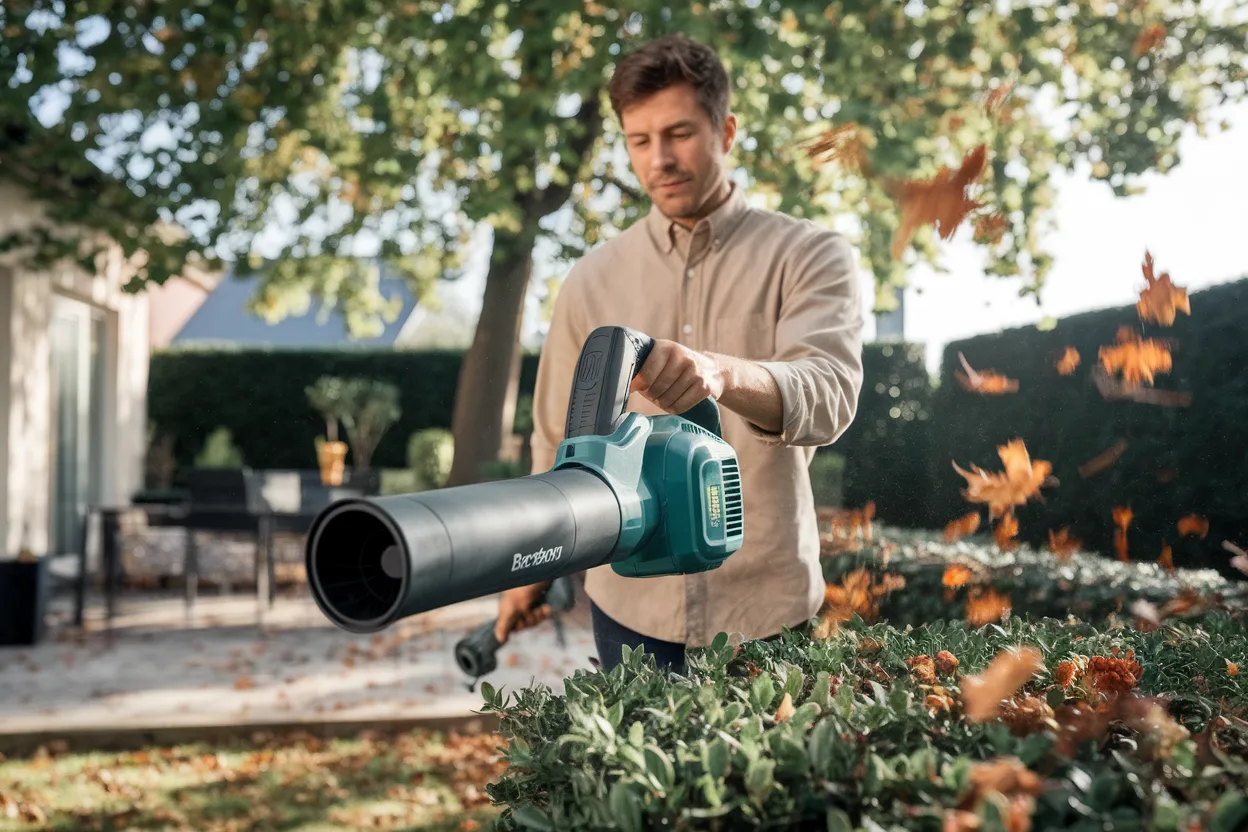
A narrow nozzle can create a strong number but a weak experience
This is a very common trick in the market. If I reduce the nozzle opening, I can increase exit speed. That pushes the MPH number up. On paper, it looks impressive. In the hand, the user may feel a sharp jet of air in one small spot.
But real garden cleanup is not just about one small spot. Users want to clear paths, patios, corners, decks, and driveways with reasonable speed. If the airflow is too narrow, they need more passes. That means more time, more battery drain, and more frustration.
I have had buyers send me competitor samples that claim very high MPH. Then we test them side by side with a better-balanced model. Our model often clears a wider path faster, even with a lower MPH number.
MPH does not show total work done per minute
A blower is a productivity tool. I always ask one simple question: how much real cleaning can the user finish in five minutes?
MPH alone cannot answer that. A blower with a high exit speed but low air volume may be good for stubborn edges, but it may be inefficient across larger surfaces.
This matters a lot for:
- Homeowner brands
- Retail chains
- Online private label sellers
- Importers testing starter cordless lines
These buyers often need one model that feels strong but still covers common home-use scenarios well.
| High MPH Scenario | What user feels at first | What can go wrong later |
|---|---|---|
| Narrow nozzle, low volume | Sharp air blast | Slow area coverage |
| Turbo-only rating | Strong first impression | Fast battery drain |
| Light blower body with small fan | Easy handling | Limited deep cleaning ability |
| Spec-led sourcing | Good listing headline | Higher return or complaint risk |
MPH is useful, but only in the right context
I do not ignore MPH. It is important. It matters when users need:
- Better edge cleaning
- More concentrated airflow
- Lifting wet leaves
- Cleaning between pavers or stones
- Directing debris out of corners
- Blowing dust from workshop zones
But I only value MPH after I know how the airflow system is built. I want to see:
- Fan diameter
- Housing design
- Tube shape
- Nozzle options
- Motor type
- Battery current capability
- Controller tuning
If those parts are weak, a high MPH claim is just a short-lived headline.
European buyers should watch how MPH is used in listings
In some markets, especially where e-commerce4 comparison is strong, MPH becomes a marketing weapon. Buyers in Germany and Spain often compare listings side by side. A higher number can influence clicks. I understand that.
But if the product underdelivers in user testing6, that number becomes a liability. For brands building long-term trust, I always suggest using believable, testable specs and pairing them with real application proof. That means videos, runtime ranges, battery notes, and clear use-case language.
My sourcing habit when I see a very high MPH claim
When I see an unusually high MPH number, I immediately ask:
- What nozzle was used?
- Is that nozzle included in the retail package?
- What is the airflow width at normal working distance?
- How much CFM is available with that nozzle?
- How long can turbo hold?
- What battery pack is standard?
- Is the tool still comfortable after several minutes?
These questions save buyers from making the wrong choice for the wrong reason.
Which matters more for real leaf blower performance: CFM or MPH?
This is the question most buyers ask me first. I understand why. People want one answer. But in real product development, the better answer is about balance and target use.
For real cordless leaf blower performance, neither CFM nor MPH matters more by itself. I look at the balance between airflow volume, air speed, fan efficiency, battery output, and how the blower performs in the user’s actual cleanup task.
I match the spec balance to the job, not the other way around
When a buyer asks me which number matters more, I ask them what they want the blower to do.
If the target user is clearing dry leaves from a garden path or lawn edge, I usually prioritize stronger airflow volume7 and stable delivery. If the target user is cleaning wet debris from hard surfaces or tight edges, I care more about concentrated speed and nozzle control.
That is why I do not treat blower sourcing as a number contest. I treat it as application matching8.
Typical use cases need different airflow behavior
| Use Case | What I usually prioritize | Why |
|---|---|---|
| Dry leaves on open lawn | More balanced-to-higher CFM | Wider cleaning path, faster coverage |
| Patio and driveway cleanup | Balanced CFM + good MPH | Enough width plus useful impact |
| Wet leaves near walls or edges | Stronger focused MPH with enough volume | Better lift and directional control |
| Light workshop dust | Moderate CFM + good nozzle control | Cleaner handling in tighter spaces |
| Multi-purpose homeowner use | Balanced CFM and MPH | Better all-around satisfaction |
Real performance is about useful airflow, not peak airflow
I always care about what I call useful airflow. That means the airflow the user can actually feel and use during the job.
Useful airflow depends on:
- How the fan builds pressure
- How smooth the airflow path is
- How much turbulence the housing creates
- How the nozzle shapes the exit
- How stable the battery current remains
- How long the controller allows peak output
- How the tool handles heat
A blower can have excellent headline specs and poor useful airflow if these parts are not well designed.
For new brands, balance usually wins over extremes
If a buyer is launching a first cordless blower9 under a private label, I usually do not suggest chasing the most extreme CFM or the highest MPH. I usually suggest a balanced product that:
- Feels strong in first test
- Clears common debris well
- Has believable runtime
- Fits the battery platform plan
- Matches the expected price band
- Can scale into a broader cordless system
This is especially true for importers entering the category from other industries. They often want to reduce risk. A balanced blower gives them better chances of stable customer feedback.
My advice for Italy, Spain, and Germany buyers
In many European channels, a blower is not bought as a standalone item forever. It often becomes part of a system sale. That means the first blower should not only perform well. It should also support the battery platform10 story.
For example:
- Italy: buyers often need a practical, retail-friendly balance
- Spain: buyers often care about value, visible performance, and ease of use
- Germany: buyers often pay more attention to consistency, compliance, and product logic across the range
This is why I often recommend a blower that is not just "strong enough," but "easy to defend" in a product line meeting. That means the specs, the runtime, the kit, the battery, and the price all make sense together.
How nozzle design and airflow path change what buyers feel?
Many buyers think the motor decides everything. It does not. I have seen average motors perform better than expected because the airflow path11 was smart. I have also seen strong motors wasted by poor housing and nozzle design12.
Nozzle design and airflow path change how the blower feels because they control pressure concentration, turbulence, direction, and usable force at the target point. The user feels the system, not just the motor.
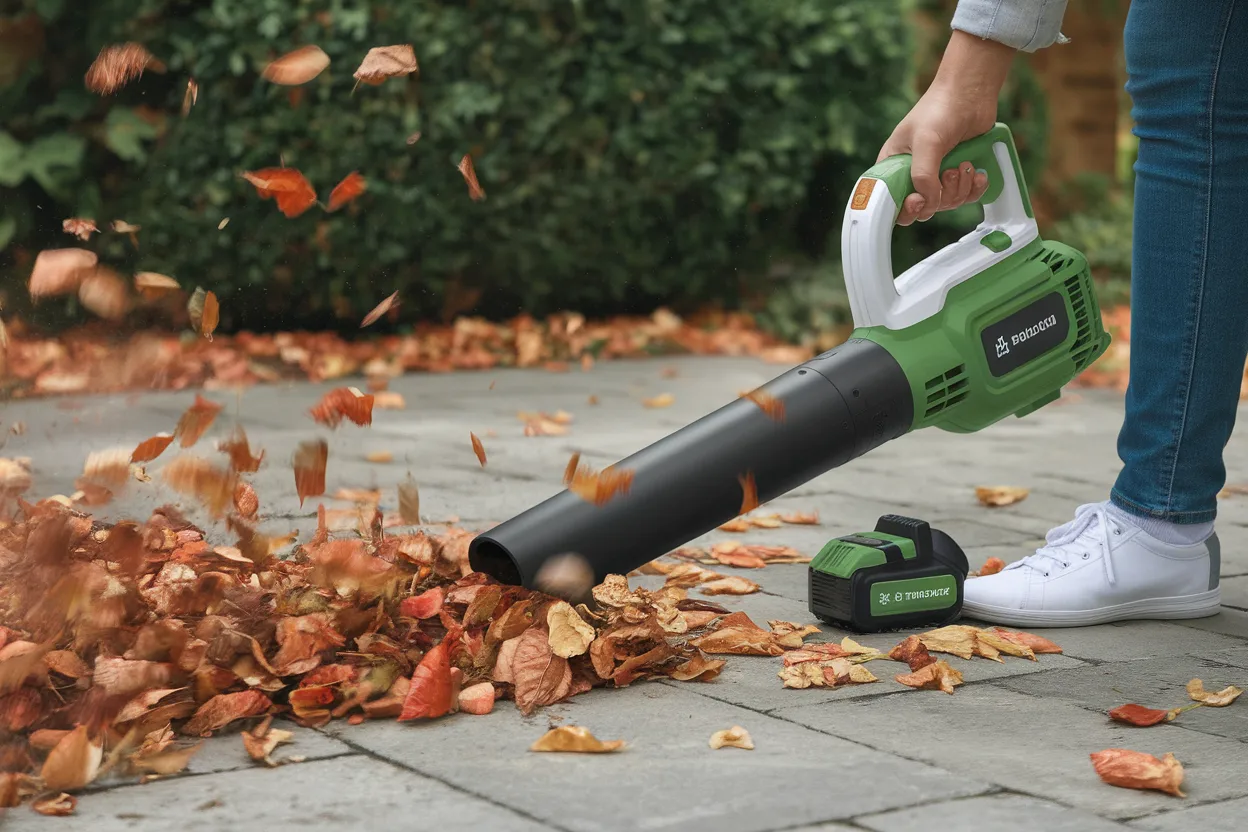
The nozzle can make the same blower feel very different
This is one of the most overlooked parts in blower development. If I change the nozzle shape, outlet size, or transition angle, I can change how the same blower behaves.
A wider nozzle often gives:
- Softer feel
- Broader coverage
- Lower perceived punch
- Better for loose dry debris
A narrower nozzle often gives:
- Sharper impact
- Better point cleaning
- Higher measured exit speed
- Less area coverage
This is why I tell buyers to test the actual retail nozzle, not just the bare unit.
Airflow path losses can kill good motor output
Inside the blower, air does not magically move perfectly. It faces resistance. Every turn, narrowing, rough surface, poor seal, or badly matched fan chamber can reduce usable airflow.
I look closely at:
- Intake path smoothness
- Fan housing shape
- Internal clearances
- Tube connection design
- Tube length and bends
- Nozzle transition section
- Air leakage points
If these are poor, the blower wastes energy before the air reaches the user.
| Design Area | Good design result | Poor design result |
|---|---|---|
| Fan housing | Better pressure build | Turbulence and energy loss |
| Tube connection | Smooth transfer | Leakage and unstable flow |
| Tube diameter | Balanced volume and speed | Too soft or too restricted |
| Nozzle shape | Controlled exit behavior | Artificial spec inflation or poor feel |
| Intake layout | Cleaner breathing | Heat and flow restriction |
User feel is often stronger than spec differences
In real buyer meetings, I have seen this happen many times. Two blowers have similar numbers. One feels clearly better in hand. The reason is often airflow path quality.
The buyer says:
- "This one feels stronger."
- "This one clears faster."
- "This one sounds more stable."
- "This one feels less hollow."
Those are not random reactions. They usually come from how the air is shaped and delivered.
That is why I always tell new brands: do not buy the spec sheet13 only. Buy the hand feel, the cleaning path, and the stability of the airflow.
Nozzle options can help one platform fit more markets
For some OEM and ODM projects, I like using different nozzle options to help one blower platform fit different channel needs.
For example:
- Standard round nozzle for balanced household use
- Concentrator nozzle for stronger edge cleaning
- Wider nozzle concept for softer broad cleanup in some markets
This can help private label brands create better market fit without redesigning the full blower system.
What I ask factories and buyers to test
I always ask for real side-by-side tests with:
- Standard nozzle
- Concentrator nozzle
- Dry leaves
- Slightly wet leaves
- Concrete surface
- Grass edge
- 2-minute and 5-minute runtime checkpoints
That is where nozzle design stops being theory and becomes a buying decision.
Why runtime stability matters more than peak specs?
This is one of the most important lessons I share with new buyers. Peak performance sells samples. Stable performance sells repeat orders.
Runtime stability matters more than peak specs because users judge a blower over several minutes, not the first five seconds. A blower that starts strong and fades quickly creates disappointment, even if the peak CFM or MPH looks impressive.
Peak output is easy to show, hard to sustain
Many blowers can produce a strong first burst. That does not mean they can hold it.
In cordless systems, output drops for several reasons:
- Battery voltage sag
- Heat buildup
- Controller protection
- Motor efficiency loss
- Small cell capacity
- High internal resistance
- Conservative BMS current limits
A blower that feels great for 20 seconds but fades after 90 seconds will create complaints fast, especially in Europe where users often compare products carefully and leave detailed feedback.
Users remember the drop, not the peak
When I test blowers, I watch the moment when the airflow starts to feel weaker. That point matters a lot.
Most end users do not measure exact CFM or MPH. They notice:
- "It got weaker too fast."
- "Turbo did not last."
- "The battery became hot."
- "It was strong at first, then not enough."
That is why I say runtime stability14 is often more important than the best number on the carton.
| Runtime Behavior | Buyer risk | User reaction |
|---|---|---|
| Strong peak, fast drop | High return risk | Feels misleading |
| Stable medium-high output | Better long-term satisfaction | Feels reliable |
| Short turbo only | Listing may look good | Real use disappoints |
| Weak battery pairing | Inconsistent performance | Brand trust suffers |
Battery pack quality changes blower truth
I always remind buyers that the same blower body can behave very differently with different battery packs.
A better pack can offer:
- Higher current delivery
- Lower voltage drop
- Better heat control
- More stable turbo
- More honest runtime
This is why platform planning matters so much. If a brand wants a blower to support a 21V or 40V cordless family, the battery system must be designed for blower load, not just for drills or light tools.
This is a mistake I see from cross-category buyers. They assume one battery can do everything equally well. In reality, a blower can expose battery weaknesses faster than many other tools.
European buyers should ask for runtime curves, not only minutes
I do not like vague runtime claims such as "up to 20 minutes." That sentence alone is not enough.
I prefer to see:
- Runtime in normal mode
- Runtime in turbo mode
- Output drop behavior over time
- Battery temperature after continuous use
- Performance with standard kit battery
- Performance with optional larger battery
This helps importers compare products honestly. It also helps with pre-transactional buyers who care about warranty risk, return rates, and customer support burden.
My practical test before I approve a blower
For a blower project, I usually ask for a simple but honest test:
- Full charge
- Real nozzle installed
- Standard battery pack
- Continuous use in normal mode
- Continuous use in turbo mode
- Check feel at 30 seconds, 2 minutes, 5 minutes
- Check battery and housing heat
- Repeat after partial discharge
This tells me far more than a peak lab number.
What new tool brands should compare beyond CFM and MPH?
If a new brand only compares CFM and MPH, it is still looking at the category too narrowly. I always push buyers to look at the full product logic15.
New tool brands should compare battery platform strength, motor type, runtime stability, noise, weight, balance, certification readiness, MOQ, lead time, packaging, and warranty risk, not just CFM and MPH.
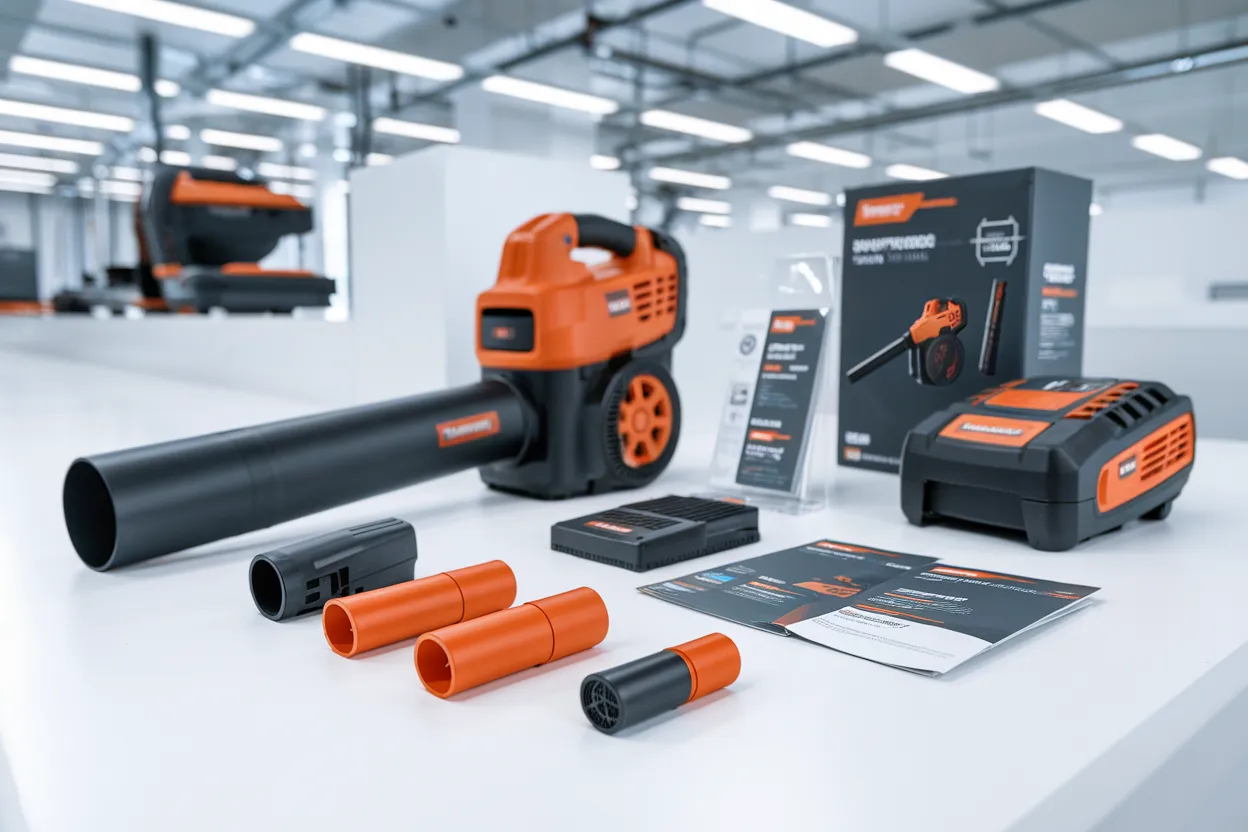
Battery platform should be part of the first blower decision
I say this often because it saves brands from expensive mistakes later. The blower is not just a single product. It can become the anchor for a cordless garden tool line.
If a buyer plans to add:
- Grass trimmer
- Hedge trimmer
- Chainsaw
- Pruning shear
- Vacuum blower
Then the battery platform matters from day one.
A blower can reveal whether the battery system is strong enough for real garden tool expansion. This is why at YOUWE, I usually guide buyers toward platform thinking, not isolated item thinking.
Brushless motor quality matters more than brushless label
A lot of buyers now ask for brushless by default. I agree that brushless is usually the better direction for a stronger cordless blower line. But I still tell them one thing: "brushless" on the label does not guarantee a good result.
I compare:
- Controller tuning
- Fan matching
- Heat control
- Battery current delivery
- Efficiency under load
- Noise profile
- Output stability
A weak brushless setup can still disappoint. A well-tuned system wins.
Compliance and certification affect buying confidence in Europe
For buyers in Germany, Italy, Spain, and across Europe, performance is only part of the decision. Compliance is also part of the risk.
I always tell buyers to check:
- CE
- EMC
- RoHS
- Packaging labeling
- Battery transport requirements
- Charger compliance
- User manual localization
- Spare parts and after-sales planning
A blower can be good technically but still become a problem if the documentation is weak.
| Comparison Area | Why it matters | What I recommend buyers ask |
|---|---|---|
| Battery platform | Future tool expansion | Is this system ready for more SKUs? |
| Motor and controller | Real output quality | Can it hold performance under load? |
| Certification | Import risk control | Are CE/EMC files complete and usable? |
| MOQ | Launch flexibility | Can I test market without overcommitting? |
| Lead time | Cash flow and planning | Are samples and bulk realistic? |
| Packaging | Retail and online conversion | Can branding look consistent across range? |
| Spare parts | Long-term support | Are batteries, chargers, tubes, switches available? |
MOQ, lead time, and pricing should match market test strategy
A lot of first-time buyers ask me for the "best" blower. I usually ask a different question: what is your market entry plan16?
If the brand is testing a new cordless category, I usually suggest:
- Reasonable MOQ
- Faster sample cycle
- Stable, proven platform
- Simple packaging upgrade
- Clear margin logic
- Easy second-order planning
This is more useful than chasing the highest spec.
For many buyers, the safer path is:
- Start with one balanced blower
- Validate demand
- Watch feedback
- Expand into trimmer or chainsaw
- Keep one battery platform story
That is a better business move than launching with an overbuilt or poorly matched hero product.
What I usually help buyers compare in real projects
When I support a new private label buyer, I often build a short comparison sheet that includes:
- Real-use performance
- Battery compatibility
- Tool family expansion
- Standard kit options
- Packaging customization
- Certification readiness
- Sample timing
- Bulk lead time
- Price ladder by battery configuration
That gives them a clearer, lower-risk decision than a spec card alone.
How to choose the right CFM and MPH balance for your target market?
There is no single perfect CFM and MPH target for every blower. The right balance depends on who you want to sell to, how they use the tool, and what product line you plan to build next.
The right CFM and MPH balance depends on your target user, price level, battery platform, and sales channel. I always choose blower specs based on use case, not on the biggest headline number.

Start with user type, not spec ambition
I always ask buyers to define one of these first:
- Entry homeowner
- Mid-range homeowner
- Semi-pro garden user
- Professional light commercial user
- E-commerce test model
- Retail chain line-filler
- Premium battery platform anchor product
Each one needs a different balance.
For example:
- Entry homeowner: easy handling, believable runtime, balanced airflow
- Mid-range homeowner: stronger feel, better turbo, broader use cases
- Semi-pro: stronger sustained output, better battery, better thermal control
Choose based on channel expectations
Different channels create different pressure.
For Amazon or e-commerce:
- The product needs a clean spec story
- The first user impression matters
- Returns can destroy margin
- Packaging and accessory clarity matter
For retail chains:
- Shelf comparison matters
- Tool family consistency matters
- Warranty burden matters
- Compliance and packaging quality matter
For distributors:
- Repeat order stability matters
- Spare parts matter
- Battery platform expansion matters
- Price ladder and stock planning matter
| Target Market | Recommended airflow strategy | Business logic |
|---|---|---|
| Entry homeowner | Balanced, moderate CFM and usable MPH | Safer user experience, lower complaint risk |
| Mid-range private label | Stronger balanced airflow with stable turbo | Better reviews and broader appeal |
| Semi-pro garden user | Higher sustained output, not just peak | Better credibility and repeat demand |
| E-commerce new brand | Honest specs + strong first-use feel | Lower return risk, stronger trust |
| European distributor | Platform-ready, stable performance | Easier line expansion and repeat orders |
For Europe, I usually recommend a balanced and defendable setup
For many Europe-focused private label projects, I usually prefer a blower that is:
- Strong enough to feel real in first use
- Stable enough to avoid "it fades too fast" complaints
- Quiet enough to fit homeowner expectations
- Light enough for repeated use
- Compatible with future garden tools
- Supported by clear certification files
- Easy to explain in product pages and distributor meetings
This is more valuable than chasing extreme spec numbers that are hard to defend in real life.
My simple decision framework for new buyers
If a buyer is entering cordless tools for the first time, I usually suggest this order:
- Define target user
- Define price band
- Define battery platform plan
- Define one core use case
- Test 2 to 3 blower profiles
- Compare real cleaning speed, not just spec sheet
- Check runtime drop
- Check certification and packaging readiness
- Confirm MOQ and lead time
- Launch the safest strong option
This is exactly how I help reduce uncertainty for buyers who already know how to build a business, but do not yet know cordless blower details.
Why this approach reduces risk for OEM and ODM buyers
When buyers follow this method, they stop asking only "Which blower has the highest CFM?" and start asking better questions:
- Which blower fits my channel?
- Which blower supports my battery story?
- Which blower will create fewer returns?
- Which blower is easier to scale into a range?
- Which supplier can support the next 3 SKUs?
Those are the right questions. Those are the questions that usually lead to better product decisions and stronger long-term partnerships.
Conclusion
After years of working with cordless garden tool buyers, I have learned that the best blower is rarely the one with the biggest single number. It is the one that fits the market, feels honest in the hand, and stays stable during real use. If I am helping a new buyer in Italy, Spain, Germany, or any other export market, I always focus on balance first, then platform logic, then long-term product line planning. CFM and MPH are useful, but they are only the start of the conversation. If you are entering cordless blowers and want to reduce risk, test the full system, ask better questions, and build around a supplier who can explain the trade-offs clearly.
-
Understanding CFM is crucial for evaluating airflow volume in leaf blowers, ensuring you choose the right tool for your needs. ↩
-
Knowing what MPH represents helps you assess air speed and its impact on cleaning efficiency. ↩
-
User feel is essential for satisfaction; understanding it can guide your purchasing decisions. ↩
-
E-commerce influences buyer expectations; understanding this can help you navigate online shopping. ↩ ↩
-
Test conditions can skew performance claims; knowing this helps you make informed decisions. ↩
-
User testing provides real-world insights; exploring this can lead to better product choices. ↩
-
Exploring airflow volume can help you understand how effectively a blower can clear debris. ↩
-
Application matching ensures you choose the right blower for specific tasks; learn how to apply it. ↩
-
Explore this link to understand the essential features that make a cordless blower effective and user-friendly. ↩
-
Discover how a well-designed battery platform can enhance the performance and versatility of cordless tools. ↩
-
Understand the significance of airflow path design in maximizing the efficiency and effectiveness of blowers. ↩
-
Find out how nozzle design influences airflow and user experience, making it a critical factor in blower performance. ↩
-
Discover the essential elements that should be present in a blower spec sheet for informed purchasing decisions. ↩
-
Learn why runtime stability is crucial for user satisfaction and how it impacts performance over time. ↩
-
Explore the concept of product logic and how it guides the development of effective and marketable tools. ↩
-
Find out how to develop a strategic market entry plan that aligns with product offerings and customer needs. ↩