
Many new tool brands focus on brushless vs brushed1 too early. I see this mistake often. It feels technical, but it can push a brand into weak product planning, poor repeat sales, and hard battery problems later.
Battery platform strategy matters more than motor type because it shapes your full product line, repeat order potential, long-term margins, and customer retention. Motor type affects performance, but battery platform affects the whole business system.
I have worked with many buyers who entered cordless tools from hardware, garden, or industrial channels. Most of them first asked me about brushless motors. Very few asked me about battery platform design. In my experience, that order is backwards. If I want a stable cordless tool business, I need to think about battery compatibility2, expansion path, certification, replacement packs3, and future SKU planning4 before I decide how many brushed or brushless models I want.
Why does battery platform strategy matter more than motor type over time?
Many buyers compare motors first because motors are easy to market. Battery platforms feel less exciting. But in real business, the battery system decides what I can sell next year, not just what I can launch this quarter.
Battery platform strategy matters more over time because it controls product expansion, accessory sales, replacement demand, after-sales simplicity, and long-term brand stickiness across multiple cordless tools.
Why motor type looks bigger than it really is
When I talk with new importers, they often ask one direct question: "Should I choose brushed or brushless first?" I understand why. Brushless sounds premium. It sounds modern. It is easy to put on a box. It is easy for sales teams to explain. It is also easy for distributors in Italy, Spain, or Germany to compare because the market already knows the term.
But I have learned something from real OEM and ODM projects. Motor type is only one layer of the product. It changes efficiency, heat, runtime, and service life. That matters. But it does not decide whether my customer can later add a blower, chainsaw, hedge trimmer, drill, or angle grinder into one clean battery family.
If I choose a battery platform first, I am building a system. If I choose motor type first, I am often only choosing one model.
What battery platform really controls in a brand business
A battery platform is not only the battery pack. It includes pack housing, BMS logic, charger structure, current limits, connector design, voltage architecture, tool load matching, future product compatibility, and safety rules. In Europe, it also touches transport paperwork, battery labeling, compliance documents, and replacement pack strategy.
| Business Area | If I Start With Motor Type | If I Start With Battery Platform |
|---|---|---|
| First product launch | I can launch fast, but often narrow | I launch with a clear family path |
| Future SKU expansion | Often messy and reactive | Planned and easier to scale |
| Repeat battery sales | Weak or random | Strong and predictable |
| Charger compatibility | Often split across models | Unified and easier to explain |
| Distributor confidence | Limited to one SKU | Higher because line looks complete |
| After-sales service | More spare part confusion | Simpler battery and charger support |
| Brand retention | Lower | Higher because users stay in system |
Why this matters for European buyers
Many of my buyers are not pure tool specialists. They may already sell garden supplies, hardware, building materials, or industrial products. They understand channels. They understand margins. But they do not always understand cordless tool system design at the start.
In Germany, buyers often care about long-term service and documentation. In Italy and Spain, many buyers also care about product line consistency, packaging, and how easy the line is to expand in retail or distributor channels. If I show them one strong brushless drill but no clear battery family, they see risk. If I show them a 21V or 40V platform with future tools mapped out, they see a business plan.
That is why I always tell new brands this: a cordless tool line is not a product decision first. It is a platform decision first.
Why does battery platform strategy matter more than motor type over time?
I repeat this question on purpose because many buyers still underestimate it after the first explanation. The longer I stay in cordless tools, the more I see platform decisions create profit, while motor decisions mainly create feature differences.
Over time, battery platform strategy drives margin structure, inventory efficiency, certification reuse, and new product rollout speed. Motor type matters, but platform decisions shape the operating model behind the brand.
Why long-term cost structure starts at the platform level
When I build a cordless tool line, I am not only buying tools. I am also buying future inventory behavior5. If each tool uses a different battery family, I create hidden cost. I need more battery SKUs, more charger SKUs, more packaging variants, more manuals, more testing combinations, and more support cases.
This becomes painful fast. I have seen buyers start with two or three attractive models from different factories. At first, the product list looks exciting. Six months later, they have three chargers, two battery shell styles, mixed carton sizes, and unclear replacement policy. Their sales team gets confused. Their warehouse gets confused. Their distributors ask hard questions.
A clean platform reduces this.
| Cost Area | Mixed Platform Risk | Unified Platform Benefit |
|---|---|---|
| Battery inventory | More SKUs, slower turnover | Fewer SKUs, better stock planning |
| Charger inventory | Duplicate items | Shared chargers across tools |
| Packaging cost | More artwork and inserts | Easier standardization |
| Certification workflow | More separate files | Better document reuse |
| Training for sales team | More confusion | Clearer product story |
| After-sales spare parts | Harder to manage | Easier replacement logic |
Why platform strategy supports OEM and ODM growth
For OEM projects, a stable platform lets me move faster. I can take proven models, adjust logo, colors, packaging, and bundle structure, then launch a private label line with lower risk. For ODM projects, the platform matters even more. If I create a new shell, new electronics, or new pack structure too early, I increase tooling risk and testing time.
At YOUWE, when I work with new brands, I usually do not push them to design everything from zero. I first help them map the battery family they can actually support in their market. Then I help them choose which tools should enter first. This is much safer for a buyer who is still validating demand.
Why timing matters for new brands
Many ready-to-buy buyers want to test the market first. They do not want to overbuild. That is smart. But market testing6 should still happen inside a real battery roadmap.
I often suggest a simple first-phase plan:
- 1 battery platform
- 3 to 5 core tools
- 2 battery capacities
- 1 charger system
- 1 clear price ladder
That structure makes the second order much easier. If I skip that structure, I may still get a first order. But I make my second and third order harder than they should be.
Why can a great brushless motor still fail inside a weak battery platform?
A brushless motor can look excellent on paper. It can still perform badly in real use if the battery system cannot feed it correctly. I see this mistake often in rushed sourcing projects.
A great brushless motor can fail when the battery platform has weak cells, poor BMS tuning, low current output, unstable connectors, or bad thermal design. The motor cannot fix a weak power system.
Why the motor is not the full power story
Many buyers think brushless equals better performance automatically. I do not think that is safe. Brushless motors need the right controller, the right current delivery, and the right battery discharge ability. If any of these are weak, the final tool feels disappointing.
A brushless angle grinder with a weak pack may stall under load. A brushless chainsaw with poor current control may cut well for a few seconds, then sag fast. A brushless blower with bad thermal protection may reduce output too early. The buyer still paid more for "brushless", but the user does not feel the value.
That is why I always say: brushless is only half the story. Battery, BMS, controller, and load matching complete the story.
Common weak points inside a bad battery platform
| Weak Point | What Happens in Real Use | What Buyers Often Misread |
|---|---|---|
| Low-grade cells | Short runtime, voltage drop | "Motor is weak" |
| Weak BMS current limit | Tool cuts out under load | "Brushless is unstable" |
| Poor connector design | Heat, arcing, loose contact | "Random quality issue" |
| Bad thermal layout | Output drops early | "Runtime problem only" |
| Poor charger logic | Battery life drops faster | "Battery brand problem" |
| Unbalanced pack design | Inconsistent performance | "Tool batch issue" |
Why this matters for European importers
European buyers often face more pressure after launch. If a tool performs badly, they do not just lose one sale. They may face returns, bad distributor feedback, negative marketplace reviews, and higher service cost. If the line is sold in Germany or other quality-sensitive markets, this damage can spread quickly.
I have seen cases where a buyer wanted the most attractive brushless claim for the catalog. But after testing, the brushed version on a better battery platform felt more stable. That surprises many people. Yet it happens. Real user satisfaction7 comes from the full system, not the label.
What I check before I trust a brushless platform
Before I feel comfortable recommending a brushless model for OEM or ODM, I look at:
- Cell grade and discharge capability
- BMS protection thresholds
- Connector fit and heat behavior
- Controller tuning under real load
- Runtime drop pattern
- Thermal response after repeated cycles
- Charger compatibility and charge speed
- Battery pack consistency across batches
If I do not check these, I am not evaluating a cordless tool. I am only reading a spec sheet.
How does battery platform strategy create repeat sales and customer lock-in?
A good cordless business does not only sell one tool. It sells the next tool, the extra battery, the charger upgrade, and the replacement pack later. That is where platform strategy becomes powerful.
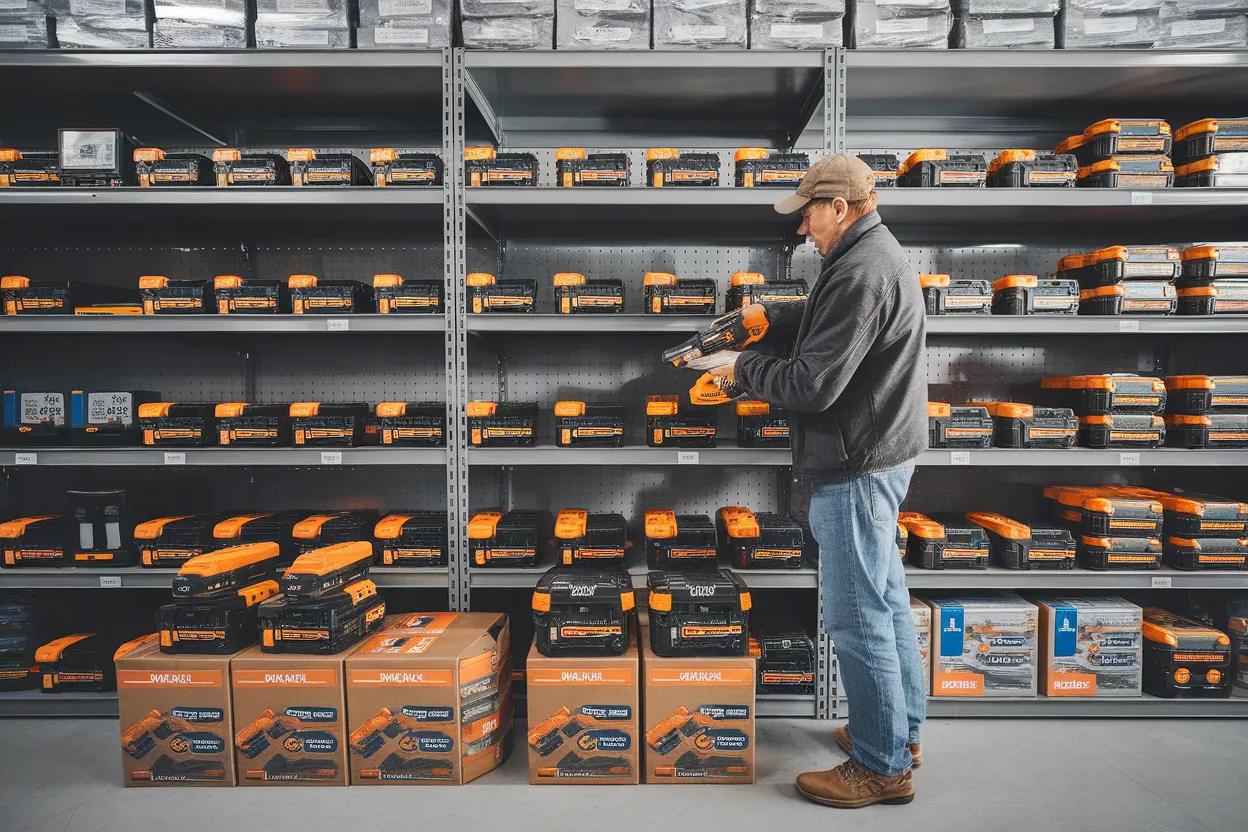
Battery platform strategy creates repeat sales because users who already own compatible batteries are far more likely to buy the next bare tool, extra pack, and related accessories within the same brand system.
Why the first battery sale changes the next sale
Once an end user buys into a battery platform, the next decision becomes easier. If they already own two batteries and one charger, a bare tool feels cheaper and simpler. This is true in garden tools and power tools.
A user who starts with a cordless pruning shear may later add a mini chainsaw. A user who starts with a drill may later add an angle grinder or impact wrench. If the battery fits, the mental barrier is low.
This is why platform design improves customer retention8 without loud marketing. The system itself does the work.
| User Journey Step | No Platform Strategy | Strong Platform Strategy |
|---|---|---|
| First tool purchase | One-off product | Entry into a system |
| Second purchase | Must compare again from zero | Easy add-on decision |
| Extra battery sale | Unclear or model-specific | Natural upsell |
| Charger sale | Fragmented | Standardized |
| Distributor reorder | Uncertain | Predictable bundle logic |
| Brand loyalty | Weak | Stronger over time |
Why distributors like platform logic
Distributors do not only want a product. They want reorder logic. If I sell them a battery platform instead of a single tool, I give them a better business model:
- Starter kits for first-time buyers
- Bare tools for higher margin follow-up sales
- Seasonal bundles
- Replacement battery programs
- Shared display and shelf logic
- Easier sales training for channel partners
In Italy and Spain, where many regional distributors and specialist dealers still play a strong role, this matters a lot. In Germany, structured product families also help with professional presentation and long-term service planning.
Why lock-in is not a bad word in B2B
Some people hear "lock-in" and think it sounds negative. I do not see it that way when the platform is stable and fair. If the battery system is reliable, well-documented, and backed by replacement supply, lock-in becomes convenience.
The user wins because they spend less on each next tool. The distributor wins because repeat orders are easier. The brand wins because retention is stronger.
That is healthy lock-in. It is built on compatibility, not on tricks.
How does battery platform strategy create repeat sales and customer lock-in?
I want to stress this again because many buyers still underestimate how much revenue sits outside the first tool sale. A cordless line becomes stronger when the battery system creates reasons to come back.
The real long-term value of a battery platform is not only tool compatibility. It is the repeat buying behavior it creates across kits, bare tools, batteries, chargers, and seasonal category expansion.
Why bare tool sales can improve margin
After the first kit sale, bare tools often become very attractive. Packaging can be smaller. Freight can be lower. Battery cost is removed. The buyer already owns the platform. This can improve sell-through and margin structure.
For importers and private label brands, this matters because:
- Bare tools can create a wider SKU range without huge cost
- Retail pricing can look more accessible
- End users feel the value of their existing battery investment
- Battery inventory can be planned more efficiently
| Sales Format | What the Customer Buys | Why It Matters |
|---|---|---|
| Full kit | Tool + battery + charger | Good entry product |
| Bare tool | Tool only | Better for repeat users |
| Battery upgrade | Higher Ah pack | Adds margin and performance story |
| Multi-tool bundle | 2 or 3 tools sharing one platform | Good for promotions |
| Seasonal expansion | Add garden or workshop tool later | Extends brand lifecycle |
Why this supports cross-category growth
This is especially important for the kind of buyers I often serve. Many of them are entering cordless tools9 from related categories. They may not want to commit to 20 SKUs at once. That is reasonable.
A good battery platform10 lets them start with:
- Drill + impact wrench
or - Pruning shear + mini chainsaw + blower
Then later they can add:
- Hedge trimmer
- Grass trimmer
- Angle grinder
- Circular saw
- Vacuum blower
- Car washer
This reduces launch risk. It also makes the catalog feel planned, not random.
Why I like platform-led expansion for OEM buyers
When I help a buyer build a private label line11, I want their second catalog to look smarter than the first. A good platform helps that happen. The first catalog proves demand. The second catalog deepens the system. The third catalog makes the brand feel established.
That is much easier when the battery family was chosen first.
How should brands choose a battery platform before deciding brushed vs brushless?
Many new brands ask me which voltage12 they should choose. My answer is always the same: do not choose by trend first. Choose by product path13, user load14, price band, and future category map.
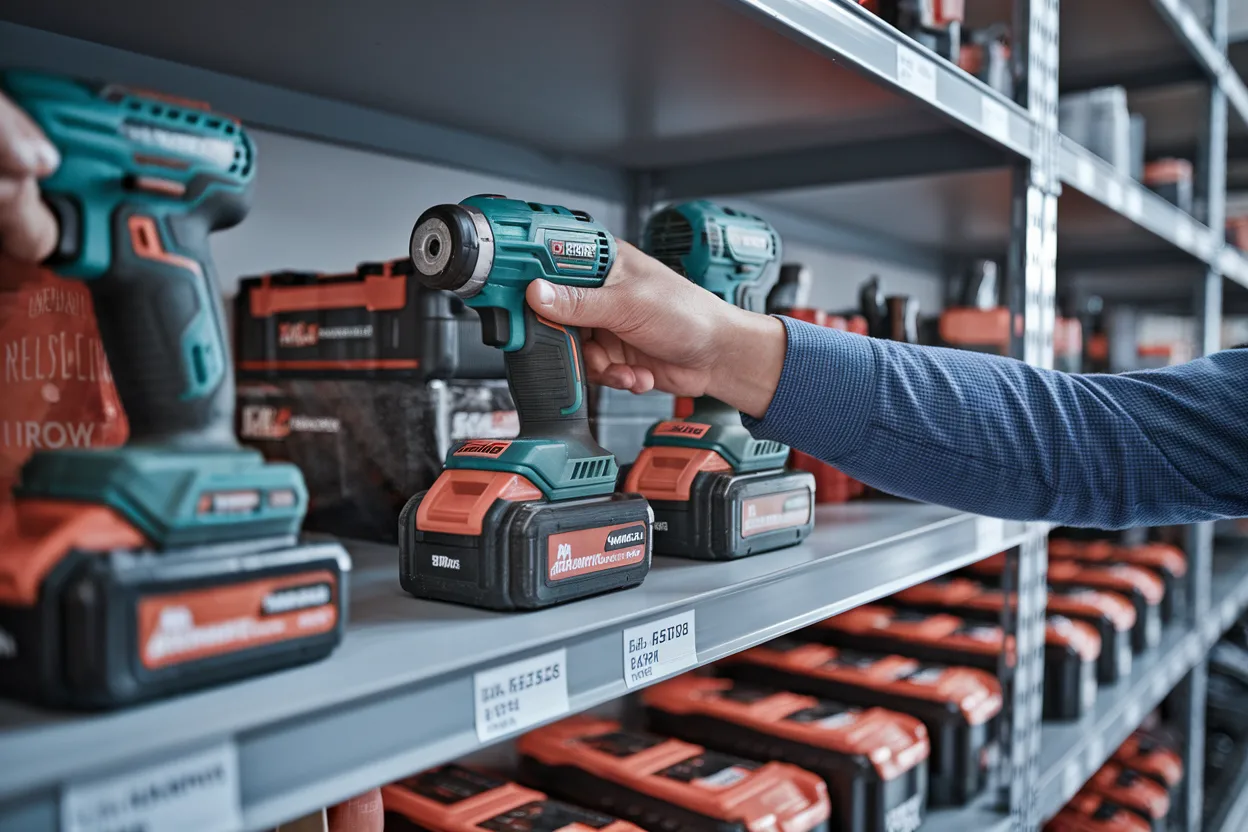
Brands should choose a battery platform by target user, planned tool family, current draw needs, battery transport rules, certification requirements, MOQ reality, and future expansion path before choosing brushed or brushless.
Start with the product family, not the first hero tool
If I only think about the first hero SKU, I may choose badly. I need to ask:
- What tools will I sell in 12 months?
- What tools do my distributors expect next?
- Do I need one platform or two?
- Do I need entry-level and premium under the same battery family?
- Will I focus on garden tools, power tools, or both?
A 21V platform is often a practical starting point for many private label buyers because it supports a wide range of consumer and semi-pro cordless tools. A 40V platform may make more sense for stronger garden tools where runtime and output matter more.
Questions I ask before I recommend a platform
| Question | Why I Ask It |
|---|---|
| What country will you sell in? | Rules, expectations, and certification can differ |
| Who is the end user? | DIY, prosumer, or professional changes platform choice |
| What are your first 3 to 5 tools? | The tool family shapes voltage and current needs |
| Do you need entry-level and premium together? | This affects brushed vs brushless mix |
| Will you sell batteries separately? | This changes pack strategy and packaging |
| What MOQ can you accept? | Platform depth depends on realistic first order size |
| What lead time do you need? | OEM can be faster than deep ODM changes |
| Do you need CE, GS, EMC files? | Compliance readiness affects launch speed |
How I think about Europe-specific needs
For Europe, I do not only think about tool performance. I also think about:
- CE, GS, EMC documentation
- RoHS alignment
- Battery transport and labeling
- Manual language needs
- Retail box space
- Replacement battery supply
- Price ladder for Italy, Spain, Germany
- Delivery timing and bulk planning
Many buyers ask me about pricing too early. I understand that. But pricing is not stable if the platform is wrong. A bad platform creates hidden costs15 later. A good platform makes pricing more reliable because it reduces fragmentation.
How I usually guide new buyers
If I am working with a new brand entering cordless tools, I often suggest this sequence:
- Define target user and country
- Define first 3 to 5 tools
- Choose one main battery platform
- Decide battery capacities
- Decide charger structure
- Decide entry-level vs premium ladder
- Then decide which SKUs should be brushed and which should be brushless
That order reduces risk. It also creates a better long-term product line.
When does motor type still matter a lot?
I do not want to overcorrect. Motor type still matters. It matters a lot in some cases. I just do not think it should be the first decision for most new brands.
Motor type still matters a lot when load is high, duty cycle is long, heat control is critical, runtime is a selling point, or the buyer targets professional or premium positioning.
Where brushless really earns its place
Brushless often makes strong sense in:
- Angle grinders
- Rotary hammers
- Chainsaws with higher cutting demand
- Hedge trimmers for longer duty cycles
- Blowers where efficiency matters
- Professional-use drills and impact tools
In these tools, heat, efficiency, and control matter more. Brushless can improve performance and life when the platform behind it is strong.
Where brushed can still be the smart choice
Brushed is not automatically outdated. In many entry-level or price-sensitive launches, brushed can still work well:
- First-market test SKUs
- Light-duty drills
- Entry-level screwdrivers
- Some compact household tools
- Some lower-load garden tools
If the battery platform is solid, a brushed tool can still give a stable user experience. For some brands, that is a smarter first move than forcing brushless across the board.
| Situation | Brushed Can Work Well | Brushless Usually Better |
|---|---|---|
| Entry-level price launch | Yes | Sometimes too expensive |
| Heavy continuous load | Limited | Yes |
| Premium positioning | Less ideal | Yes |
| Market testing phase | Often useful | Selective use |
| Heat-sensitive applications | Less ideal | Better |
| Long runtime expectations | Limited | Better if platform is strong |
Why I prefer a mixed product line
This is why I often recommend a mixed lineup for new brands:
- Brushed for entry-level and test-market SKUs
- Brushless for high-value or high-load hero SKUs
- One battery platform across both when possible
That gives better pricing coverage. It lowers launch risk. It also helps distributors16 understand the upgrade path.
This approach is especially useful for commercial buyers who already know distribution but are still learning cordless tool detail.
What happens if you choose motor type first and platform second?
This is one of the most common mistakes I see. It often starts with good intention. A buyer wants the best-looking spec. Then the product line becomes harder and harder to manage.
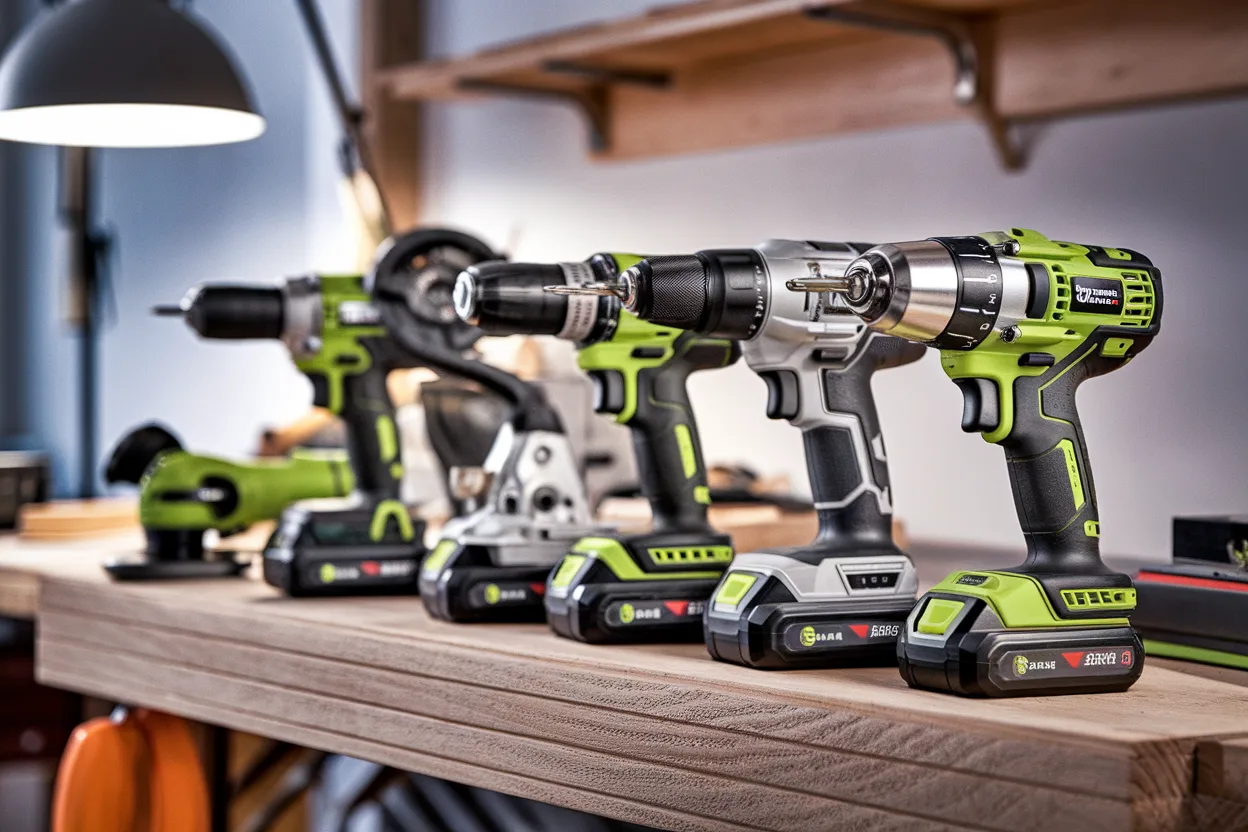
If you choose motor type first and platform second, you often create a fragmented line, mixed batteries, poor upsell logic, harder inventory planning, and weak long-term brand structure.
How the mistake usually starts
A buyer sees a strong brushless drill. Then they add a brushless angle grinder from another supplier. Then they add a chainsaw from a third source because the price looks good. On paper, the catalog looks exciting. In reality:
- The battery shells do not match
- The chargers do not match
- The connectors are different
- The packs have different BMS behavior
- Replacement planning becomes messy
- The distributor cannot explain the system clearly
This is not a technical problem only. It becomes a brand problem.
The hidden business damage
| Hidden Problem | What It Causes |
|---|---|
| Multiple battery families | Lower repeat sales |
| More charger types | Higher inventory complexity |
| Weak spare part logic | More after-sales friction |
| Mixed pack performance | More user complaints |
| No upgrade ladder | Harder premium positioning |
| Random sourcing | Less trust from distributors |
| Poor certification structure | Slower market expansion |
Why this hurts ready-to-buy buyers the most
The buyers I want to help most are not casual shoppers. They are serious business buyers entering a new category. They already have channels. They already have customers. They do not want cheap mistakes. They want a stable first move.
If they choose motor type first, they may still get a decent first shipment. But they increase uncertainty:
- Can I expand this line?
- Can I support replacement batteries?
- Can I build a private label system?
- Can I keep pricing stable?
- Can I present a clean story to distributors in Europe?
That uncertainty is exactly what many of them want to reduce.
What I tell buyers before they commit
Before I recommend any motor decision, I ask them to slow down and answer:
- What battery family do you want users to buy into?
- What will your second and third tool be?
- What battery packs will you stock locally?
- How will you explain compatibility on the carton?
- What happens when a user asks for a replacement pack in 18 months?
- Can your supplier support the same platform long enough?
If they cannot answer these questions, they are not ready to decide motor type first.
Conclusion
In my experience, the brands that win in cordless tools do not win because they picked brushless first. They win because they built a battery system that made the next sale easier than the first one. That is what creates real momentum. If I am entering this category for Italy, Spain, Germany, or any other serious market, I want a platform that supports expansion, compliance, repeat orders, and clean after-sales work. Then I decide where brushless truly adds value. If you are planning your first cordless tool line and you want a lower-risk path, this is exactly the kind of conversation I like to have with buyers before they spend money in the wrong place.
-
Explore the differences to make informed decisions about motor types in your tool lineup. ↩
-
Explore the significance of battery compatibility for a cohesive tool ecosystem. ↩
-
Learn about the importance of planning for replacement packs in your product strategy. ↩
-
Discover how a clear battery platform can streamline SKU management and reduce complexity. ↩
-
Explore how a unified battery platform can streamline inventory management. ↩
-
Understand how market testing within a battery roadmap can lead to better product decisions. ↩
-
Discover the connection between a solid battery platform and overall user satisfaction. ↩
-
Learn how a solid battery platform can enhance customer loyalty and repeat sales. ↩
-
Explore the advantages of cordless tools to see how they can enhance efficiency and convenience in various applications. ↩
-
Understanding battery platforms is crucial for making informed decisions in tool design and user experience. ↩
-
Discover strategies for creating a private label line that stands out in the competitive market. ↩
-
Discover how voltage levels influence the performance and efficiency of cordless tools. ↩
-
Explore the concept of product paths to guide your product development strategy. ↩
-
Understanding user load is vital for designing tools that meet customer needs and expectations. ↩
-
Identify potential hidden costs in your product strategy to avoid financial pitfalls. ↩
-
Gain insights on building strong relationships with distributors to enhance your market reach. ↩