
Many new tool brands make one early mistake. They try to choose brushless1 or brushed2 too soon. That simple choice can create pricing gaps3, weak product planning, and hard questions from distributors later.
I do not think a new cordless tool brand should choose only brushless or only brushed. I believe most brands should build a mixed product line first. A mixed lineup gives better pricing coverage, lower launch risk, and a clearer path from entry-level to premium buyers.
I have seen this many times with importers in Italy, Spain, and Germany. They already know how to sell hardware or garden products, but they do not yet know how to build a cordless platform. They want to test demand, protect margin, and avoid battery platform4 mistakes. That is why I usually tell them not to start with a motor debate. I tell them to start with a product line strategy5.
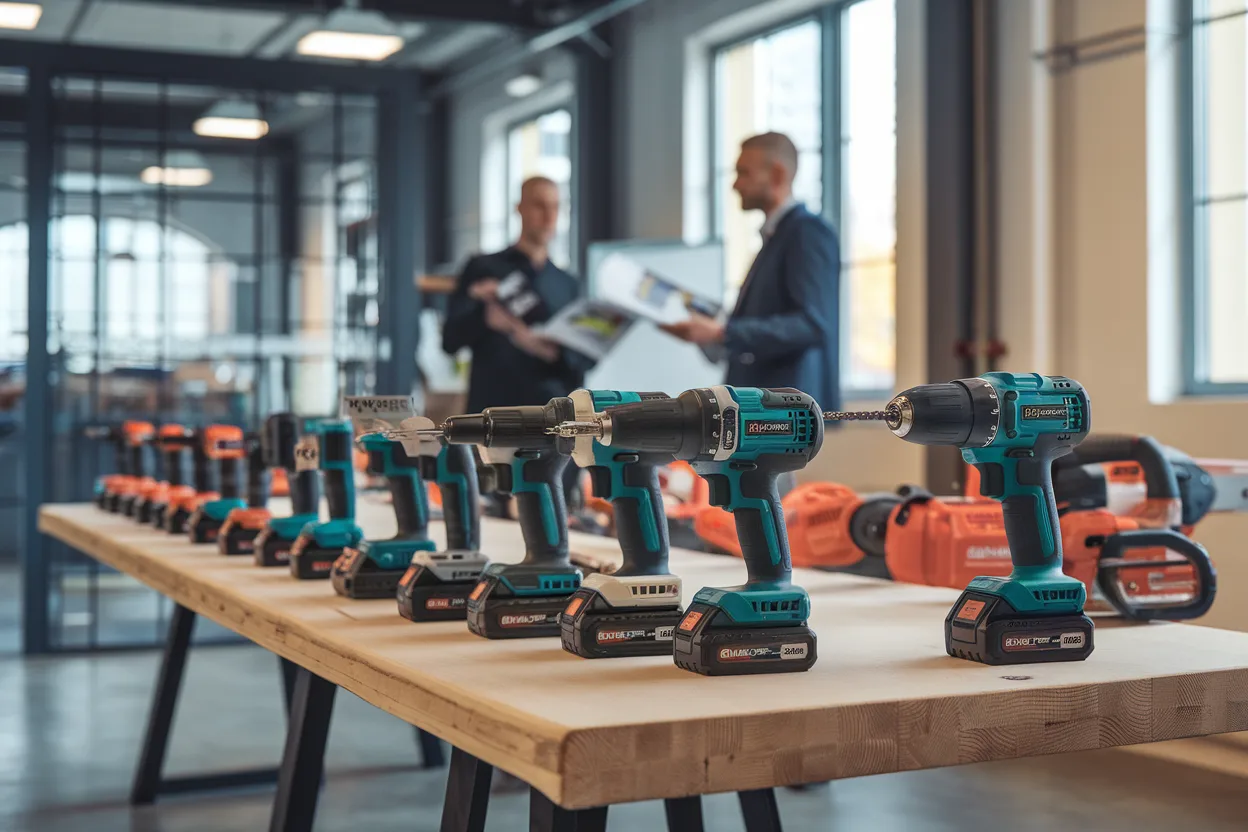
Why should a tool brand build a mixed brushless and brushed product line instead of choosing only one?
If I choose only one motor type too early, I limit my future options. I also make it harder to serve different buyers, price levels, and sales channels.
I build a mixed brushless and brushed product line because it gives me better market coverage, lower inventory risk, and a cleaner path from entry-level offers to premium upgrades. It helps me test the market without overbuilding too soon.
Why one motor type is usually the wrong first decision
When I talk with new private label6 buyers, many ask me one question first: "Should I launch only brushless?" I understand why they ask. Brushless sounds modern. Brushless sounds premium. Brushless is easier to market online.
But when I look deeper, I often see a problem. Their channel is not only Amazon. Their channel may include import distribution, hardware stores, regional dealers, and even project sales. These buyers do not all want the same tool. A distributor in Spain may want a lower entry price for a first order. A retail chain in Germany may want a stronger premium shelf story. An importer in Italy may want both.
If I build only brushless, I may create a price wall. If I build only brushed, I may look weak in premium segments. A mixed lineup solves both problems.
What a mixed lineup does for real B2B buyers
A mixed lineup lets me create product ladders. This matters more than many new brands expect. Buyers do not always buy the best tool first. They buy what matches their market, their customer trust, and their cash flow.
I often see these buyer groups:
- Entry-level importers testing cordless demand
- Established hardware distributors adding a private label line
- Garden tool sellers moving into power tools
- Regional brands that need both good and better price points
A mixed lineup helps each one start at the right level.
| Buyer Type | What They Usually Need First | Why Mixed Lineup Helps |
|---|---|---|
| New private label importer | Safe MOQ and lower risk | Brushed SKUs reduce first-order pressure |
| Retail distributor | Full shelf coverage | Brushed and brushless fill price gaps |
| E-commerce brand | Clear upgrade story | Brushless drives premium AOV |
| Mature regional brand | Better margin control | Can segment by channel and user level |
Why Europe often needs mixed positioning
In Europe, I see another issue. Certification, battery shipping, and pricing pressure all matter. Buyers in Germany often care about long-term product consistency. Buyers in Italy may care about shelf value and category expansion. Buyers in Spain may need sharper opening price points for distribution.
If I only build premium brushless, my landed cost can rise too fast. If I only build brushed, I may lose product story and miss higher-margin dealers. A mixed lineup gives me room to match channel needs without changing the whole battery platform.
How I explain it to a new buyer
I usually say this in simple terms: I do not build a motor lineup. I build a buying ladder.
The buyer may think the question is "brushless or brushed." I think the real question is:
- What should the customer buy first?
- What should they upgrade to next?
- Which tools truly need premium performance?
- Which tools only need reliable basic output?
That is why I treat motor type as one part of a product line system. I look at battery platform, controller quality, user type, channel margin7, MOQ8, lead time, and service risk at the same time. That is how I help a new brand enter the cordless market with less uncertainty.
Which tools should be brushless first in a mixed cordless product line?
If I make the wrong tools brushless first, I waste budget and confuse the lineup. I need to put brushless where buyers can feel the value fast.
I make high-load, high-heat, or high-runtime tools brushless first. These tools show the clearest user benefit and the strongest premium story in both online and offline channels.
What I look for before choosing brushless-first SKUs
I do not choose brushless first because it sounds better. I choose brushless first where the motor upgrade changes the user experience in a clear way.
I usually ask:
- Does the tool run under continuous load?
- Does heat build up fast?
- Does torque consistency matter?
- Does battery runtime affect user trust?
- Will the buyer notice the difference in a short demo?
If the answer is yes, that tool is a strong brushless-first candidate.
The best brushless-first tools for most new brands
From my factory view, these are usually the best early brushless choices:
- Cordless angle grinder
- Cordless rotary hammer
- Cordless impact wrench
- Cordless circular saw
- Cordless reciprocating saw
- Cordless chainsaw
- Cordless hedge trimmer for larger cutting jobs
- Cordless blower when runtime matters
These tools often work under heavier load. They also create more heat. That is where brushless performance is easier to feel, easier to show, and easier to justify.
| Tool Category | Brushless Priority | Main Reason |
|---|---|---|
| Angle Grinder | Very High | Heat, load, duty cycle |
| Impact Wrench | Very High | Torque output and battery draw |
| Rotary Hammer | Very High | Power demand and premium expectation |
| Circular Saw | High | Load consistency and runtime |
| Reciprocating Saw | High | Vibration, heat, cutting stability |
| Chainsaw | High | Runtime and power under load |
| Hedge Trimmer | Medium to High | Depends on blade length and use case |
| Blower | Medium to High | Runtime and airflow expectations |
Why some tools show brushless value better in sales channels
Some tools are easier to sell as brushless because the difference is visible or easy to explain.
For example, when I compare a brushed and brushless angle grinder, the buyer often understands the story quickly. They can feel heat control, smoother power, and better stability. The same happens with an impact wrench. The word "torque" is already part of the buying conversation.
But in a low-duty cordless screwdriver, the brushless story is weaker. The buyer may not feel enough difference to pay more. That is why I do not spread brushless evenly across all categories.
How I reduce launch risk with brushless-first choices
If a new brand is testing the market, I usually suggest this structure:
- Launch 2 to 4 brushless hero SKUs
- Use them as the premium face of the brand
- Keep the rest of the range simpler and lower risk
- Use one battery platform from day one
This approach helps in Europe because certification9 and shipping already add complexity. It also helps with MOQ. Brushless tools often need more careful controller tuning and more testing. I would rather do that well on fewer SKUs than rush a wide premium line with weak consistency.
That is why I tell buyers: make brushless visible, not everywhere.
Which tools can stay brushed without hurting your brand?
If I make too many basic tools brushless, I can raise cost without creating real value. That can weaken my price ladder and slow early sales.
I keep low-load, short-use, or price-sensitive tools brushed when the user cannot clearly feel the upgrade. A brushed tool does not hurt the brand if it is reliable, honest, and positioned correctly.

Why brushed is still useful in a serious product line
I think many buyers have become too emotional about brushless. Brushless is important, but brushed is not automatically bad.
A brushed tool can still be a smart product when:
- The duty cycle is short
- The job load is moderate
- The tool is used occasionally
- The market needs a lower opening price
- The buyer wants to test category demand first
If I make a reliable brushed tool with good switches, stable battery communication, and honest specs, I do not damage the brand. I only damage the brand when I oversell it.
Good brushed candidates in a mixed lineup
These tools can often stay brushed, especially in entry-level10 or test-market phases:
- Cordless drill for light home use
- Cordless screwdriver
- Small jigsaw for light DIY
- Caulking gun
- Glue gun
- Polisher for light use
- Vacuum cleaner
- Grass shear
- Small pruning tools in entry-level kits
These are not universal rules. I still check the target user. But for many importers, these are good brushed anchors.
| Tool Category | Can Stay Brushed? | When It Works Best |
|---|---|---|
| Cordless Drill | Yes | Light DIY, starter kits |
| Cordless Screwdriver | Yes | Household and furniture use |
| Jigsaw | Yes | Light cutting, lower frequency use |
| Caulking Gun | Yes | Controlled low-speed application |
| Glue Gun | Yes | Utility use, low load |
| Vacuum Cleaner | Yes | Entry-level accessory category |
| Polisher | Yes | Light detailing, not pro-grade |
| Grass Shear | Yes | Small garden trimming tasks |
How I protect the brand while using brushed tools
The problem is not brushed. The problem is unclear positioning.
If I sell a brushed drill like it is a pro-grade contractor tool, I create returns and bad reviews. If I sell it as a reliable entry-level cordless drill for homeowners, bundle it well, and match the battery correctly, I can build trust.
I always tell buyers to avoid these mistakes:
- Do not use "pro" language on weak entry tools
- Do not put brushed tools in the same packaging story as premium brushless without separation
- Do not mix feature claims carelessly
- Do not let sales teams oversell runtime
What matters more than motor type in these SKUs
In many brushed tools, buyers focus too much on the motor and not enough on the full product.
I care more about:
- Chuck quality
- Gearbox stability
- Switch life
- Battery cell consistency
- Charger reliability
- Ergonomics
- Plastic fit and drop resistance
- Spare parts plan
I have seen brushed tools succeed because the total build was stable. I have also seen brushless tools fail because the controller, battery, or switch system was weak.
That is why I say this often: a bad brushless tool is still a bad tool.
How should you structure pricing tiers in a mixed brushless and brushed lineup?
If I do not build clear pricing tiers, buyers get confused. They cannot see the reason to upgrade. Dealers also struggle to explain the range.
I structure a mixed lineup into clear good, better, and best tiers. Brushed tools usually hold the opening price, and brushless tools carry the premium story. Each tier must have a clear use case, not just a different motor.
Why price tiers are more important than motor labels
Many new brands build SKUs first and pricing later. I do the opposite. I first decide what the shelf should look like.
I want the buyer to understand:
- What is the entry offer?
- What is the upgrade path?
- What is the premium proof point?
- Why does each step cost more?
If I cannot explain that simply, the lineup is weak.
A mixed lineup works best when the pricing ladder is easy to see. Brushless helps. But the price step must also match battery pack size, accessories, case, charger speed, warranty support, and channel margin.
A simple tier model I often use
I often recommend a 3-tier structure for new brands:
| Tier | Motor Mix | Buyer Type | Key Goal |
|---|---|---|---|
| Entry | Mostly Brushed | First-time buyers, price-sensitive channels | Low-risk market entry |
| Mid | Mixed | Importers and dealers testing growth | Balance value and performance |
| Premium | Mostly Brushless | Pro users, better dealers, strong online offers | Margin and brand image |
This works well because it matches real buying behavior.
The entry tier is not about being cheap. It is about being safe and reliable.
The mid tier is where I usually place the best commercial value.
The premium tier is where I place hero SKUs, stronger packaging, larger battery options, and better feature storytelling.
How I create visible upgrade reasons
A higher price should not depend on "brushless" alone.
I like to combine:
- Brushless motor
- Better battery capacity
- Faster charger
- Better accessories
- Stronger case or packaging
- Longer expected duty cycle
- Better warranty terms for distributors
- Better demo value for dealers
This creates a full upgrade story11. It also reduces price complaints because the buyer sees a system difference, not only a motor label.
How Europe buyers usually react to poor tier design
European buyers often compare landed cost carefully. They look at margin, VAT impact, freight, and shelf competition.
If my tier gaps are too small, dealers ask why they should stock both.
If my tier gaps are too large, importers worry about sell-through.
If my entry tier is too weak, returns rise.
If my premium tier is too expensive without a clear reason, the product stalls.
That is why I try to keep:
- Clear performance separation
- Clear packaging separation
- Clear target user separation
- Clear channel separation
In Italy and Spain, I often see better results when the mid tier becomes the real volume tier. In Germany, buyers often want the premium tier to look technically consistent and well documented. That means specs, certifications, and battery platform logic all need to support the price story.
How do you keep one battery platform across both brushed and brushless tools?
If I split battery systems too early, I create supply chain problems, higher inventory pressure, and more after-sales issues. That is one of the most common beginner mistakes.
I keep one battery platform across both brushed and brushless tools by planning the battery system first. I design current range, BMS logic, connector tolerance, charger compatibility, and SKU limits before I expand the tool count.
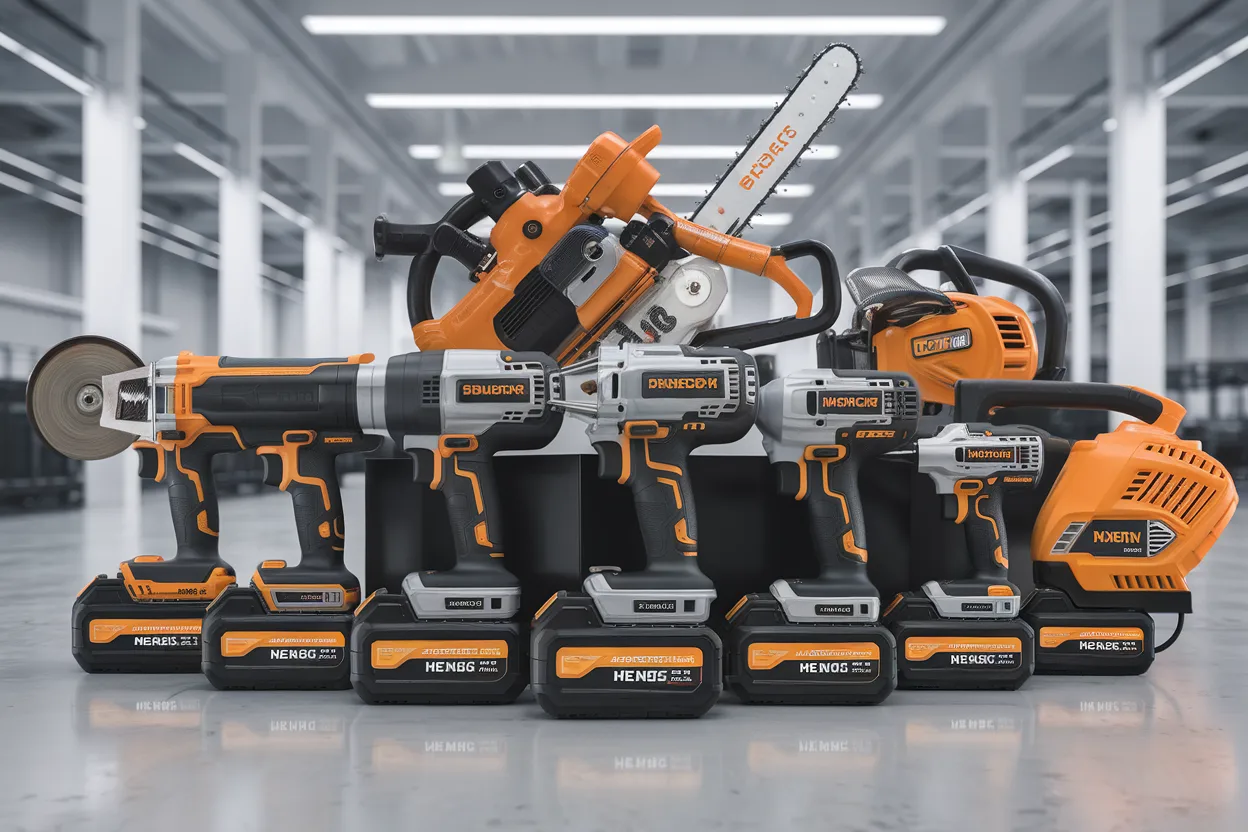
Why the battery platform matters more than the motor debate
This is the point I repeat most often.
A cordless brand is not really a tool brand first. It is a battery platform brand.
If I get the battery system wrong, the product line becomes messy fast:
- More chargers
- More adapters
- More inventory
- More support questions
- More user confusion
- Higher return risk
That is why I tell buyers to choose the platform before they choose the lineup depth.
What I check before mixing brushed and brushless on one platform
A shared platform is possible, but only if I control the electrical and mechanical details.
I usually check:
- Nominal voltage strategy (such as 12V, 16.8V, 21V, 24V, 40V)
- Cell type and discharge capability
- Peak current draw of hero SKUs
- BMS protection thresholds
- Terminal temperature rise
- Connector wear tolerance
- Charger output compatibility
- Housing and latch durability
A brushed drill may tolerate a simpler load profile. A brushless grinder will not. If I use one battery platform, I need to make sure the pack can support the higher-demand tools without harming cycle life too fast.
| Battery Platform Check | Why It Matters | Risk If Ignored |
|---|---|---|
| Peak Current Capacity | Supports high-load brushless tools | Voltage sag, shutdown, heat |
| BMS Protection Logic | Prevents unsafe draw or pack stress | False cut-off or battery damage |
| Connector Design | Stable power transfer | Melt, loosen, arcing |
| Charger Match | Correct charge behavior across packs | Slow charge or pack stress |
| Cell Grade Consistency | Runtime and warranty stability | Uneven field performance |
How I build product limits inside one platform
Using one platform does not mean every battery should run every tool equally.
I often create internal rules like:
- 2.0Ah pack allowed for light brushed tools
- 4.0Ah or above recommended for high-load brushless tools
- Premium kits include fast charger
- Heavy tools use stricter controller and thermal validation
This keeps the platform unified while still protecting performance.
I also tell buyers to be careful with packaging claims12. If a battery physically fits, customers assume it is fully suitable. That means my manuals, labels, and dealer training must be clear.
Why this matters for certification and shipping
For Europe, battery rules matter. Buyers care about UN38.3, MSDS, carton labeling, transport class13, and import document readiness. A unified battery platform makes this much easier.
It can reduce:
- Packaging complexity
- Spare battery SKU count
- Freight confusion
- Certification document spread
- Warehouse mistakes
This is one reason I like a shared 21V or 40V family for many private label buyers. It gives cleaner OEM/ODM expansion later. It also makes MOQ planning easier because the battery becomes a common volume item across multiple tools.
How do you prevent channel conflict between brushed and brushless SKUs?
If I sell similar brushed and brushless tools14 into the same channel without a plan, I create price fights, confusion, and unhappy distributors.
I prevent channel conflict by separating brushed and brushless SKUs through use case, packaging, bundle structure, and channel rules. I do not let two similar products compete with no reason to exist.
Why channel conflict happens so easily
A mixed lineup sounds smart on paper. But many brands create internal competition.
They launch:
- A brushed drill kit at one price
- A brushless drill kit slightly above it
- The same battery
- The same packaging style
- The same feature claims
- The same dealer target
Then dealers ask: why do I need both?
If the answer is unclear, the lower price wins. Or the distributor gets upset because another channel undercuts them.
How I separate SKUs without overcomplicating the line
I use simple separation rules.
I separate by:
- User type
- Application intensity
- Kit contents
- Battery size
- Packaging quality
- Warranty positioning
- Channel exclusivity where possible
For example:
- Brushed drill kit for entry-level retail starter offers
- Brushless drill combo kit for dealer upsell or pro-light channels
- Brushed garden combo for seasonal promo
- Brushless standalone hero SKU for higher-margin dealers
| Conflict Risk | What Causes It | How I Prevent It |
|---|---|---|
| Same price band | Poor tier spacing | Increase visible bundle difference |
| Same packaging feel | No premium signal | Use distinct box design and naming |
| Same feature claims | Overlapping copy | Separate user promise clearly |
| Same channel access | No distribution rules | Assign channel-specific offers |
| Same battery bundle | No value ladder | Use battery and charger as separators |
How naming and packaging reduce channel confusion
I believe naming matters more than many buyers think.
If I call everything "Pro Series," I create trouble.
I prefer simple systems like:
- Home Series
- Trade Series
- X Series
- Core Series
- Plus Series
The name should help the distributor explain the difference in ten seconds.
Packaging should also show the difference fast:
- Different color bands
- Different feature callouts
- Clear battery compatibility marks
- Different runtime or application story
This is especially useful in Europe where retail and distribution buyers often review products quickly during meetings or fairs.
What I tell distributors before launch
I like to be direct with channel partners.
I explain:
- Which SKU is the traffic driver
- Which SKU protects margin
- Which SKU is for online comparison
- Which SKU should not be price-matched carelessly
- Which bundles are exclusive
This matters for OEM and ODM15 projects because a product line is not only about production. It is about channel behavior after shipment.
A stable factory can make the tools. A smart brand must control how those tools meet the market.
What launch strategy works best for a new brand building a mixed cordless tool range?
If I launch too many SKUs too early, I create slow stock, weak training, and messy feedback. A new brand needs learning speed more than lineup size.
The best launch strategy is a focused phased launch. I start with a small battery platform, a few hero brushless tools, a few safe brushed tools, and clear tier logic. I expand only after I learn what the market actually buys.

Why small and structured beats wide and rushed
Many buyers feel pressure to look complete. They want a full catalog. They want many SKUs on day one.
I understand that feeling. But I usually advise the opposite.
A new cordless brand does not need to look big first. It needs to look clear first.
If I launch too wide, I create:
- More MOQ pressure
- More battery forecasting errors
- More packaging work
- More compliance document load
- More training gaps for dealers
- More slow-moving inventory
That is not a good trade for a first launch.
The launch model I often recommend
I often recommend this first-phase structure:
- 1 battery platform
- 6 to 10 total SKUs
- 2 to 4 brushless hero SKUs
- 3 to 5 brushed volume SKUs
- 1 or 2 combo kits only
- 2 battery capacities maximum
- 1 charger family
This is usually enough to test demand without losing control.
| Launch Element | Recommended Range | Why |
|---|---|---|
| Battery Platforms | 1 | Keeps system simple |
| Total SKUs | 6 to 10 | Fast learning, lower risk |
| Brushless Hero SKUs | 2 to 4 | Builds premium image |
| Brushed Volume SKUs | 3 to 5 | Supports entry price points |
| Battery Capacities | 2 | Limits stock complexity |
| Combo Kits | 1 to 2 | Easier sell-through and training |
What I watch in the first 90 to 180 days
After launch, I do not just watch sales volume. I watch signal quality.
I look at:
- Which SKU gets repeat orders
- Which SKU gets real distributor interest
- Which battery pack moves fastest
- Which tools create support questions
- Which tools get price resistance
- Which tier gets the best gross margin after freight and local costs
- Which markets ask for certification documents most often
This helps me decide the second phase.
Sometimes the buyer thinks the brushed drill will be the volume leader. But the brushless impact wrench becomes the hero. Sometimes a simple garden combo sells better than expected in Southern Europe. Sometimes Germany wants a cleaner premium spec story before scaling.
That is why I want market proof16 before I expand.
How I use OEM and ODM differently during launch
For first launch, I often suggest more OEM and less ODM.
Why?
Because OEM lets the buyer:
- Move faster
- Test real demand
- Keep tooling risk lower
- Use proven models
- Get samples faster
- Control initial cash flow
After the market proves itself, then I can move selected winners into deeper ODM work:
- New housing language
- Exclusive feature upgrades
- Packaging family design
- Accessory differentiation
- Better channel protection
This staged method works well for buyers who are strong in business but new in cordless tools. It reduces uncertainty. It also gives them time to learn what their customers really value beyond the spec sheet.
Conclusion
When I build a mixed brushless and brushed product line, I do not start with motor labels. I start with risk, buyer behavior, battery platform logic, and channel fit. That is the real work. Brushless matters, but only when it sits in the right place. Brushed still has value when it is honest, stable, and priced correctly. If I were entering cordless tools today, I would launch narrow, learn fast, and expand only after the battery platform and tier logic prove themselves in the market. That is how I help buyers in Italy, Spain, Germany, and other growing markets avoid expensive early mistakes. If you are building your first cordless range and want a second opinion on your product line, I think that conversation is worth having before you place the first order.
-
Explore the benefits of brushless motors, including efficiency and performance, to understand why they are favored in modern tools. ↩
-
Learn about the advantages of brushed motors, including cost-effectiveness and reliability, for specific applications. ↩
-
Understand the implications of pricing gaps on brand positioning and market entry strategies. ↩
-
Explore the concept of battery platforms and their impact on product compatibility and user experience. ↩
-
Gain insights into effective product line strategies that can help new brands succeed in competitive markets. ↩
-
Learn about private label strategies and how they can benefit new tool brands. ↩
-
Discover the role of channel margins in pricing strategies and distributor relationships. ↩
-
Learn about Minimum Order Quantity (MOQ) and its implications for new brands entering the market. ↩
-
Understand the significance of certification for compliance and market acceptance in Europe. ↩
-
Understand the characteristics of entry-level tools and their role in attracting new customers. ↩
-
Understand how to create compelling upgrade stories that resonate with customers. ↩
-
Exploring the impact of packaging claims can help you create effective marketing strategies. ↩
-
Knowing about transport class can help you comply with regulations and ensure safe shipping of battery products. ↩
-
Exploring the differences can guide you in selecting the right tools for your needs and understanding their performance. ↩
-
Understanding the differences can help you choose the right approach for your product launch. ↩
-
Knowing about market proof can guide your decisions on product expansion and development. ↩