Many buyers think the first question is simple: brushless or brushed1? I have seen this create expensive mistakes. The wrong first question can lead to weak product planning, poor battery match, and warranty problems later.
Before choosing brushless or brushed tools, I always ask about the full product system first. I look at battery platform, controller quality, heat control, target user, warranty risk, and real cost. Motor type matters, but it should never be the first decision alone.
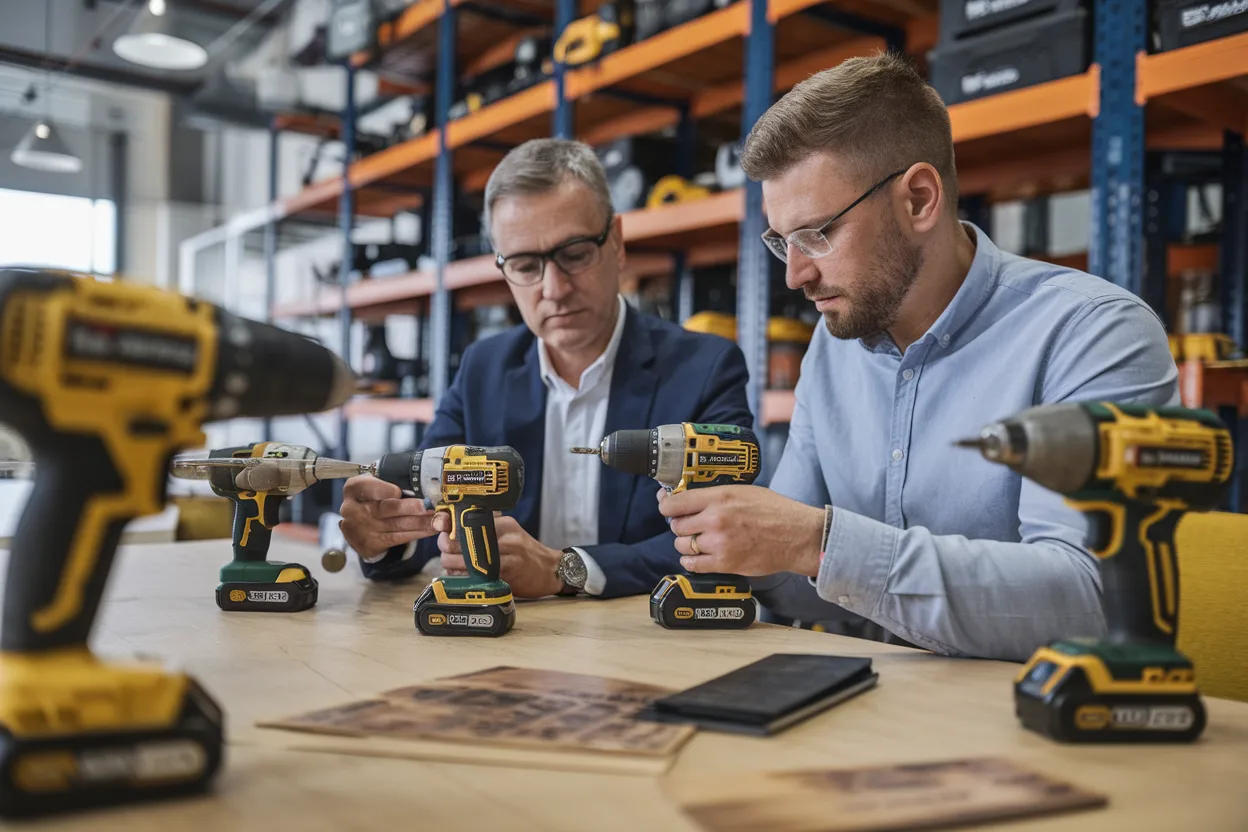
I have worked with importers in Italy, Spain, Germany, and other markets who were ready to build a cordless tool line but did not know where to start. Many of them focused on the motor label first. That is normal. But in real OEM and ODM work, the motor is only one part of the decision. I always tell buyers that a good cordless tool is a system. If the system is wrong, the brushless label will not save the product.
What should you ask first before choosing brushless or brushed tools?
Many buyers start with the wrong question. They ask, "Is brushless better?" I understand why. The market pushes that message every day. But that question is too early and too narrow.
The first thing I ask is not whether the tool should be brushless or brushed. I ask what job the tool must do, who will use it, and what price range the product line must hit in the target market.
Start with the product line, not the motor label
When I talk with a new buyer, I do not begin with the motor. I begin with the product line strategy2. I ask simple questions:
- Is this an entry-level product or a premium product?
- Is the buyer selling to home users or professional users?
- Is the market sensitive to price or sensitive to after-sales cost?
- Is the goal fast market testing or long-term platform building?
This is where many new private label brands make mistakes. They think brushless always means premium and brushed always means cheap. That is too simple. I have seen brushed drills that worked well in a controlled entry-level range. I have also seen low-quality brushless tools create more returns than good brushed tools.
Match the motor choice to business goals
For B2B buyers, the right motor type depends on business structure, not only tool performance. A distributor in Germany may need stable repeat orders and low return rates. A new e-commerce seller in Spain may need a strong product page story and a safe first MOQ. A hardware importer in Italy may want a starter line that covers multiple categories before moving to premium brushless models.
| First Question | Why I Ask It | What It Changes |
|---|---|---|
| Who is the end user? | It defines performance needs | Motor, battery, controller level |
| What price band are you targeting? | It controls BOM space | Brushed may be safer in low range |
| How many SKUs will you launch first? | It affects platform planning | Battery system becomes more important |
| What is your return tolerance? | It affects warranty risk | Low-quality brushless can be risky |
| Are you testing or building a full line? | It affects long-term choice | OEM starter line vs ODM platform |
Ask about market reality in Europe
In Europe, many buyers also need to think about certification, battery rules, and channel expectations. If a product is sold into professional-looking retail channels, the brushless label may help shelf appeal. But that only works if the actual performance matches the claim. If the tool runs hot, drains fast, or fails under load, the label becomes a problem, not a benefit.
I remember a buyer who wanted a full brushless launch because his competitors used that word in product listings. After we discussed his first-year budget, his MOQ, and his target price, I suggested a mixed line. We kept the drill and impact wrench brushless. We kept some lower-rotation products brushed for the first test. That made his pricing safer and his stock risk lower. That is why I always ask about the business plan first. The motor comes after that.
What should you ask about the battery platform before choosing motor type?
Many buyers compare motors first and batteries later. In cordless tools, that order is dangerous. I have seen many projects fail because the battery platform3 was weak, unstable, or poorly matched.
Before I choose brushed or brushless, I always ask about the battery platform. Battery voltage, cell quality, BMS design, discharge ability, and cross-tool compatibility often matter more than the motor label.

Ask if the battery can actually support the tool load
A brushless motor can demand strong current under load. If the battery pack is weak, the tool will feel disappointing. The buyer may think the motor is bad, but the real problem is the battery system.
I always ask:
- What cells are used in the pack?
- What is the real discharge capability?
- What is the BMS cut-off setting?
- What happens under peak load?
- Does voltage sag badly under continuous work?
This is critical for tools like angle grinders, chainsaws, circular saws, and rotary hammers. These tools punish weak battery packs fast.
Ask if the battery platform is built for a product line
If a buyer wants only one tool, they may ignore platform planning. But most serious buyers in Italy, Spain, and Germany do not want one tool forever. They want a line. That means the battery platform becomes a commercial decision.
A stable 21V, 24V, or 40V platform can help with:
- Cross-selling
- Better shelf story
- Easier spare battery sales
- Better user retention
- Lower packaging and charger complexity
At YOUWE, I often tell buyers that battery platform strategy is one of the most important decisions in the whole project. If the battery platform is weak, the whole line becomes hard to scale.
| Battery Platform Question | Why It Matters | Risk If Ignored |
|---|---|---|
| What cell brand or grade is used? | It affects runtime and cycle life | Short runtime, early complaints |
| What is the pack discharge ability? | It affects power under load | Weak performance in brushless tools |
| What BMS protections are included? | It affects safety and pack life | Cut-off issues, overheating |
| Is the battery cross-compatible? | It affects future product line growth | Hard to expand SKU range |
| Can the same charger support multiple tools? | It affects user convenience and cost | Higher accessory complexity |
Ask about battery rules and compliance for Europe
European buyers should also ask about battery compliance and transport handling. This is not only a factory issue. It affects import, warehousing, labeling, and sales.
I usually advise buyers to ask:
- What battery labeling is provided?
- What transport documents are ready for air, sea, or truck freight?
- What test reports are available for the pack?
- Is the pack design stable for repeat production?
- Are spare batteries available with the same housing and same connector?
A buyer once told me his brushless product looked great on paper but his real problem was not the motor. His real problem was battery consistency between batches. That caused user complaints, charger mismatch, and return costs. This is why I always say the battery platform comes before the motor debate.
What should you ask about controller and electronics in brushless tools?
Many buyers hear "brushless" and think the tool is automatically advanced. That is not true. A brushless tool is only as good as its controller and electronics.
If I am evaluating a brushless tool, I always ask about the controller first. The controller decides power delivery, start-up feel, efficiency, heat, protection logic, and long-term reliability more than the motor name alone.
Ask what controller architecture is being used
Not all brushless tools use the same controller quality4. Some factories use very basic boards. Some use stronger solutions with better MOSFET selection, better current control, and better protection logic.
I ask questions like:
- Is the controller built for the exact load range of this tool?
- What MOSFET quality level is used?
- Is there soft start?
- Is there overload protection?
- Is there temperature protection?
- Is current limiting tuned properly?
These questions matter because a weak controller can make a brushless tool feel unstable. The tool may surge, stop under load, or run too hot.
Ask how the electronics are protected in real use
Cordless tools do not live in clean lab conditions. They face dust, vibration, heat, shock, and user abuse. This is why I care about board protection and assembly details.
I want to know:
- Is the board coated or protected from dust?
- How is vibration managed?
- How is heat moved away from the board?
- Are wire connectors stable under repeated shock?
- Are trigger and switch components rated for the expected cycles?
For garden tools like chainsaws and blowers, dust and debris matter. For power tools like grinders and hammers, vibration and heat matter even more.
| Controller Question | Why I Ask It | What Can Go Wrong |
|---|---|---|
| Is there overload protection? | It protects the motor and battery | Burnt board, tool cut-out |
| Is there thermal protection? | It reduces heat damage | Early electronic failure |
| Is soft start included? | It improves control and current spike | Harsh start, unstable feel |
| Are key components rated correctly? | It affects service life | Random failures in field use |
| Is the board protected from dust and vibration? | It matters in real work | Intermittent faults, returns |
Ask for controller behavior, not only specifications
Many factories can send a spec sheet. That is not enough. I ask how the tool behaves:
- How does it start under load?
- How does it react when the battery drops?
- Does speed stay stable?
- Does torque fall sharply when hot?
- Does the tool protect itself or simply stop?
I once reviewed a brushless tool that looked excellent in the quotation. The controller had the right buzzwords. But in real use, the speed dropped badly after a few minutes. The problem was not the motor. The problem was controller tuning and heat. That experience made me even more careful. Brushless without strong electronics is only a sales label.
What should you ask about durability, heat, and warranty risk?
A buyer can survive a slightly higher ex-factory price. A buyer cannot easily survive repeated warranty claims. This is why I care about durability and heat more than marketing language.
Before I approve brushed or brushless tools, I always ask how the tool handles heat, wear, and field abuse. Warranty risk often comes from thermal stress, bad material choices, and poor system matching, not from the motor type alone.

Ask where the real failure points are
Every tool has weak points. A good factory should know them clearly. If a supplier cannot explain common failure points5, I become careful.
For brushed tools, common risks include:
- Brush wear
- Commutator wear
- Heat under overload
- Carbon dust contamination
For brushless tools, common risks include:
- Controller board failure
- MOSFET overheating
- Sensor or control instability
- Poor heat transfer inside compact housings
The important point is simple: brushless removes brush wear, but it adds electronics risk. Buyers must understand this trade.
Ask how the tool behaves in long continuous work
Short demo videos can hide problems. I care about sustained use. A tool that feels strong for 30 seconds may fail after 8 minutes of heavy work.
I ask for:
- Continuous run test results
- Housing temperature data
- Battery pack temperature under load
- Trigger and switch cycle test
- Gearbox noise change after endurance testing
This is especially important for angle grinders, chainsaws, circular saws, hedge trimmers, and rotary hammers.
| Durability Question | Why It Matters | Business Impact |
|---|---|---|
| What is the continuous load test result? | It shows real field behavior | Predicts return risk |
| What are the hot spots in the tool? | It reveals thermal design limits | Helps prevent failures |
| What failed in past batches? | It shows factory honesty and learning | Better trust and planning |
| What is the switch and trigger cycle life? | It affects daily use reliability | Common after-sales issue |
| What spare parts can be supported? | It affects service network planning | Better distributor confidence |
Ask how warranty cost changes by motor type
Many buyers think brushless means fewer returns. That can be true, but only if the controller and battery are well designed. A cheap brushless setup can create a worse warranty profile than a stable brushed setup.
I usually tell buyers to ask:
- What is the real return rate by model?
- What are the top 3 failure reasons?
- What warranty issues are motor-related vs battery-related vs switch-related?
- Which spare parts are replaceable?
- Is the board repairable or only full replacement?
I once worked with a buyer who wanted the lowest-cost brushless option in order to match an online competitor. I warned him that the thermal margin looked too tight. Later, his biggest issue was not performance claims. His biggest issue was warranty cost. That is why I always say this clearly: the cheapest brushless can be more expensive than a good brushed tool when after-sales begins.
What should you ask about real cost instead of just ex-factory price?
Many buyers ask for price too early. That is understandable. But the ex-factory price alone can hide the real business cost.
I never compare brushed and brushless only by ex-factory price. I compare the full landed and operating cost, including battery level, controller quality, certification needs, warranty exposure, spare parts, MOQ pressure, and long-term product line value.
Ask what is included in the quoted configuration
Some quotes look cheap because the battery is weak, the cells are lower grade, the controller is basic, or the accessories are minimal. This is why I never trust a single number without a full BOM discussion.
I ask:
- What cell grade is included?
- What charger power is included?
- What plastic quality is used in the housing?
- Is the gearbox spec the same?
- Are certifications already covered?
- Is packaging basic or retail-ready?
This is where many "cheap" brushless quotes become expensive later.
Ask about MOQ, lead time, and cost of change
For European buyers, real cost also includes flexibility. If the MOQ6 is too high, your stock risk rises. If the lead time7 is unstable, your launch risk rises. If packaging or logo changes are expensive, your test cycle slows down.
At YOUWE, I often discuss:
- Sample lead time
- Bulk lead time
- MOQ by model and by color box
- MOQ for battery pack variants
- MOQ for logo, label, and carton changes
This matters a lot for buyers who are entering cordless tools from other categories and want a safe first launch.
| Cost Question | Why It Matters | Hidden Cost Risk |
|---|---|---|
| What exact BOM level is quoted? | It shows true configuration | False low price comparison |
| What battery and charger are included? | It affects performance and margin | Weak user experience |
| What certifications are already available? | It affects Europe market entry | Delays and extra testing cost |
| What is the MOQ by SKU? | It affects inventory risk | Slow turnover, cash pressure |
| What is the lead time stability? | It affects launch planning | Stock-outs or missed season |
Ask what the cheaper option will cost after six months
I like this question because it changes the buyer's mindset. Instead of asking only "Which tool is cheaper now?", I ask "Which tool is cheaper after six months of sales, support, returns, and reorders?"
Sometimes brushed wins for a first test. Sometimes brushless wins because it supports better pricing and lower service pain. The answer depends on:
- Sales channel
- End-user expectations
- Tool category
- Return tolerance
- Reorder speed
- Accessory and battery repeat sales
That is the real commercial investigation buyers should do. The ex-factory number is only the first layer.
What test data should you request before approving a brushed or brushless OEM project?
A sample can feel good in your hand and still fail in the market. That is why I always ask for test data8 before I approve any OEM or ODM project.
Before I approve a brushed or brushless tool, I ask for test data that shows real load performance, heat, endurance, battery behavior, and safety consistency. A good sample without data is not enough for a serious private label launch.
Ask for performance data under real load
No-load speed is not enough. Spec sheet torque is not enough. I want data from actual working conditions.
I ask for:
- Loaded runtime
- Loaded speed stability
- Peak current
- Average current under working load
- Stall behavior
- Restart behavior after protection
This is especially important when buyers compare brushed vs brushless9 in the same category. Without the same test condition, the comparison is weak.
Ask for endurance and thermal data
A tool that performs well in the first minutes can still become a warranty problem later. I ask for endurance data10 because it shows the truth.
I want to see:
- Continuous working test duration
- Temperature rise at motor housing
- Temperature rise at battery pack
- Controller temperature if brushless
- Gearbox noise after endurance cycles
- Brush wear trend if brushed
| Test Data to Request | Why It Matters | Best Use |
|---|---|---|
| Loaded runtime test | Shows real battery efficiency | Compare pack quality |
| Temperature rise test | Shows thermal margin | Predict failure risk |
| Endurance cycle test | Shows wear and stability | Estimate warranty exposure |
| Drop or vibration check | Shows assembly strength | Reduce transport and field failures |
| Protection trigger test | Shows safety logic | Validate controller and BMS behavior |
| Charger consistency test | Shows accessory stability | Prevent charging complaints |
Ask for certification and batch consistency evidence
For Europe, I also ask for documentation readiness. Buyers in Germany, Italy, and Spain often care more about smooth import and repeat batch consistency than about flashy features.
I ask for:
- CE / EMC / GS related availability if applicable
- Battery test support documents
- Material consistency plan
- IQC, IPQC, OQC checkpoints
- Same-spec confirmation for repeat orders
I once saw a buyer approve a tool because the first sample looked excellent. The second batch used slightly different cells. The result was different runtime, different heat, and customer confusion. Since then, I always remind buyers: sample approval is not enough. Batch consistency is part of product quality.
How should you choose between brushed and brushless for different tool categories?
This is the question many buyers ask first. I understand that. But by the time I answer it, I want the buyer to understand the system, not just the motor.
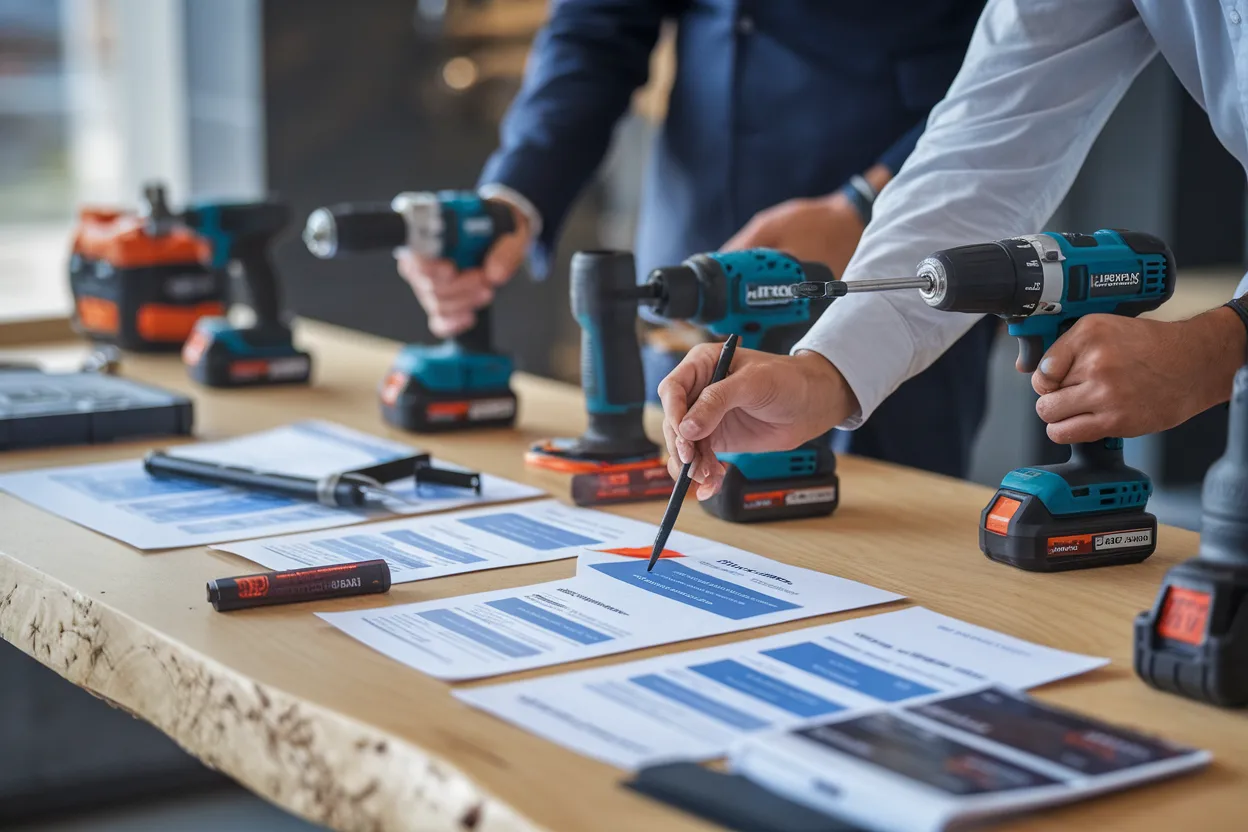
I choose brushed or brushless by tool category, user demand, battery platform strength, and business target. High-load or premium tools often fit brushless better. Entry-level or lighter-duty tools can still fit brushed if the system is well designed.
Brushless usually makes more sense in high-load tools
In my experience, brushless usually fits better when the tool has:
- High current demand
- Long continuous work
- Strong heat build-up
- Higher user expectations
- Premium price positioning
Examples often include:
- Angle grinders
- Circular saws
- Chainsaws
- Rotary hammers
- Impact wrenches
- Premium drills
These tools often benefit from better efficiency, better control, and stronger premium positioning. But only if the battery and controller are good enough.
Brushed can still make sense in smart entry-level programs
Brushed is not dead. I still see valid use cases.
Brushed can work well when:
- The buyer is testing a new category
- The target user is light-duty
- Price sensitivity is high
- The tool has short use cycles
- The buyer wants a safer first MOQ
Examples may include:
- Entry-level drills
- Screwdrivers
- Light-duty blowers
- Some trimmers in basic positioning
- Lower-speed accessory tools
The key is honest positioning. If a brushed tool is sold as a practical, affordable, reliable starter tool, it can succeed. If it is sold with fake premium expectations, it will struggle.
| Tool Category | My Usual Direction | Why |
|---|---|---|
| Cordless Drill | Mixed, depends on segment | Entry-level can be brushed, premium often brushless |
| Impact Wrench | Mostly brushless | Torque, control, user expectations |
| Angle Grinder | Usually brushless | Heat and sustained load |
| Circular Saw | Usually brushless | Efficiency and power demand |
| Chainsaw | Usually brushless | Torque, runtime, heat |
| Screwdriver | Often brushed or mixed | Light-duty use can be fine |
| Blower | Mixed | Depends on airflow target and market level |
| Grass Trimmer | Mixed | Depends on shaft load and battery system |
Use a phased product line strategy
For many buyers, especially those entering cordless tools from adjacent industries, I often recommend a phased strategy:
- Start with a focused first wave
- Choose 2 to 4 core SKUs
- Keep the battery platform stable
- Use brushless where it clearly adds value
- Use brushed where it keeps risk lower
- Watch market feedback
- Expand after real sales data
This is often the smartest path for buyers in Europe who care about certification, battery rules, MOQ, lead time, and stable brand building. You do not need to launch a perfect full line on day one. You need a smart first line that gives you control.
Conclusion
I have seen too many buyers ask the motor question before they ask the business question. In real OEM and ODM work, brushless vs brushed is never just a technical label. It is a product line decision, a battery platform decision, a warranty decision, and a market positioning decision. If I were entering cordless tools today, I would not start by asking which motor sounds better in a catalog. I would start by asking what kind of product line I want to build, how much risk I can accept, and what kind of customer I want to keep for the next three years. That is where smart decisions begin. If you are still unsure, that is normal. This is exactly the kind of decision that becomes much clearer when you talk with a manufacturer who can explain the trade-offs honestly.
-
Understanding the differences can help you make informed decisions when purchasing tools. ↩
-
A solid product line strategy can guide your decisions and improve market success. ↩
-
Learn about battery platforms to ensure compatibility and performance in your tool line. ↩
-
Discover how controller quality impacts the efficiency and reliability of your tools. ↩
-
Identifying failure points can help you choose more reliable tools and reduce returns. ↩
-
Understanding MOQ helps buyers manage stock risk and make informed purchasing decisions. ↩
-
Lead time stability is crucial for planning and avoiding stock-outs during peak seasons. ↩
-
Requesting test data ensures product reliability and performance before launch. ↩
-
Understanding these differences can guide buyers in selecting the right tools for their needs. ↩
-
Endurance data helps predict long-term performance and warranty exposure. ↩