I see many buyers from Italy, Spain, and Germany ask me why a jig saw1 cannot cut every material. I know this tool looks flexible. But it has limits that can cost money and cause safety issues.
A jig saw should never cut hardened metal or ceramic and masonry materials because the blade, motor, and stroke system cannot handle these loads.
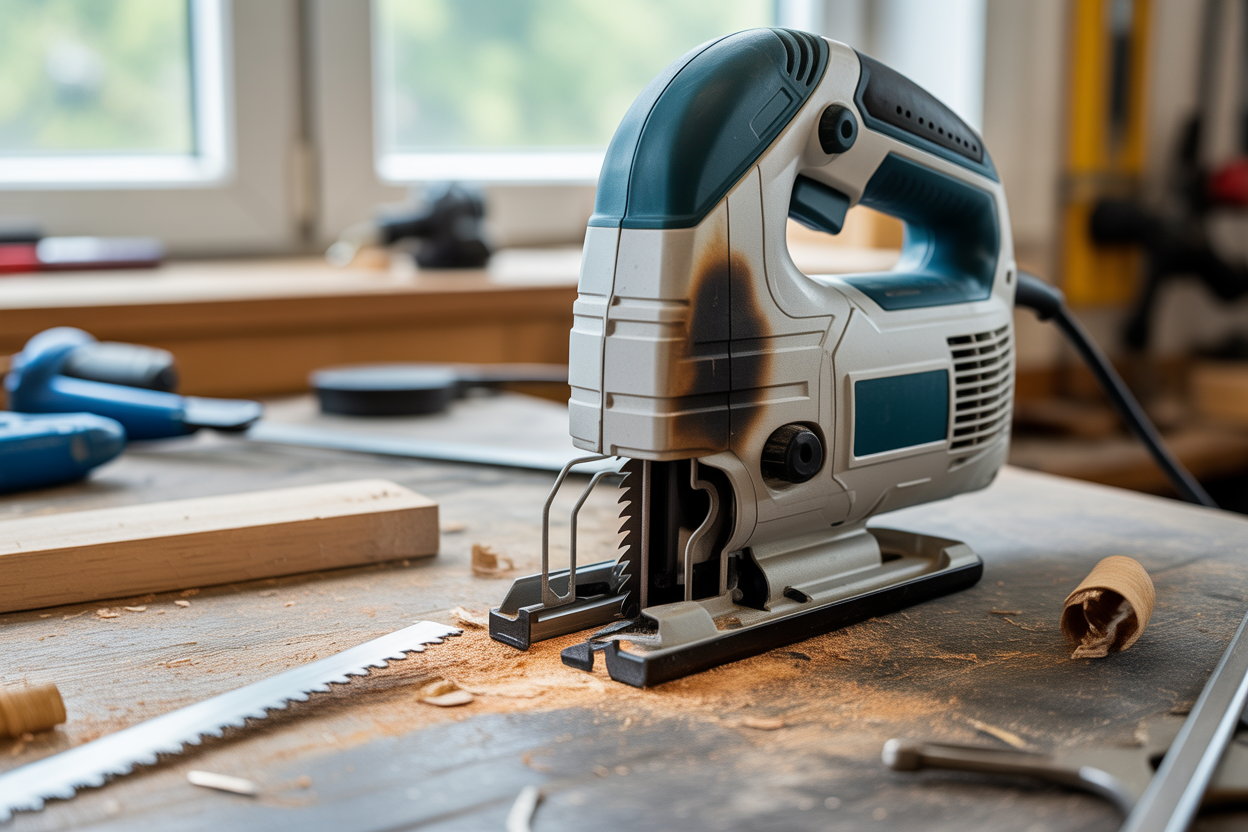
I learned this lesson many years ago when a distributor from Italy sent me a jig saw with a burned motor. He tried to cut thick steel pipe. The blade turned blue. The motor melted. That case helped me understand how common this mistake is. This article explains the two materials you must avoid and what to use instead.
Why a Jig Saw Has Cutting Limitations?
Many users expect a jig saw to work like a universal cutter. I know this happens often when buyers try to reduce tools in their kit. But every cutting tool has a limit because of blade design2, stroke pattern, and motor load3.
A jig saw has limits because the up and down stroke creates heat, vibration, and side pressure that thin blades cannot handle on very hard materials.
Blade Stroke Design
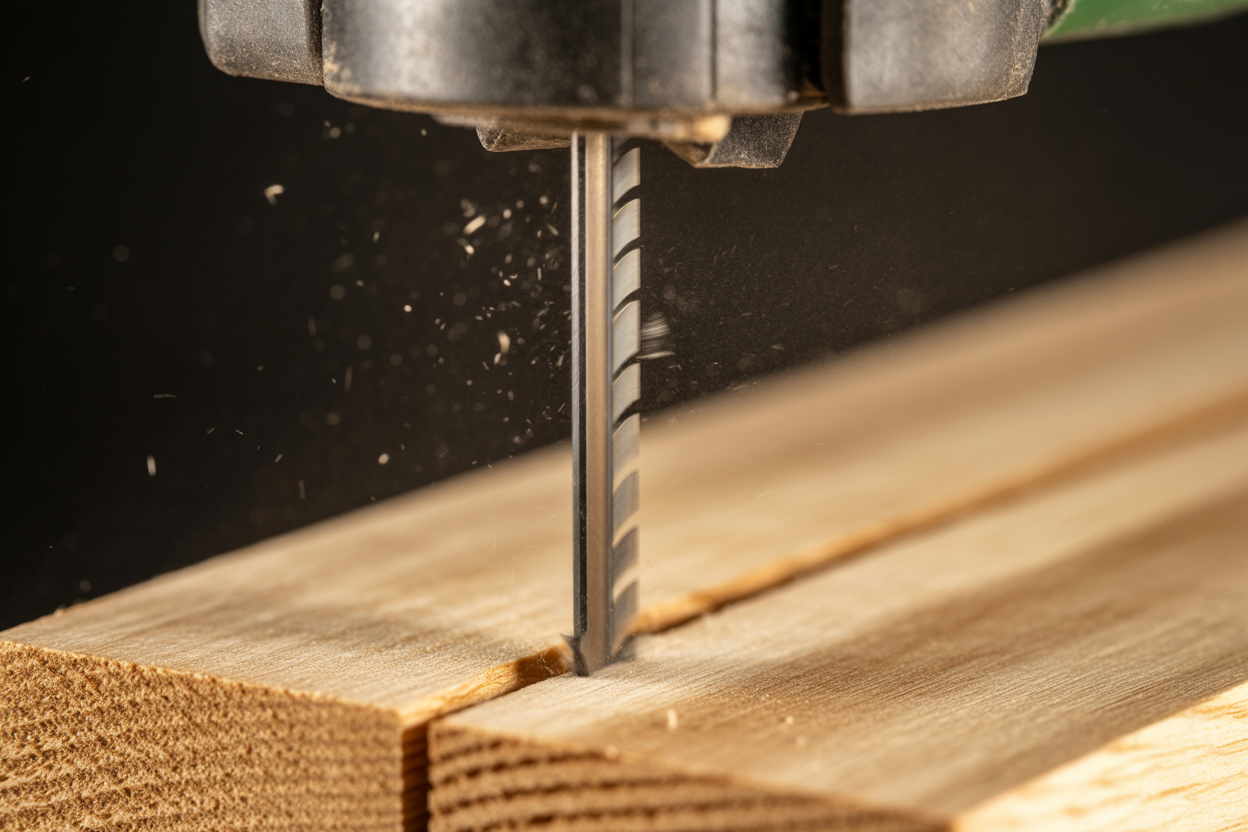
A jig saw uses a vertical stroke. The blade is thin. The cut depends on speed, pressure, and material softness. When the material is too hard, the blade flexes. This increases heat. Heat damages teeth and bends the blade. Many first-time buyers tell me they feel strong vibration. This is the first sign that the tool is over-loaded.
Motor Load and Overheating
The motor in a jig saw is built for wood, soft metal, or plastic. When the load rises fast, current also rises. This causes the motor to heat up. In my factory, I often see burned windings from buyers who cut steel or tile.
Material Compatibility Table
| Material | Can a Jig Saw Cut It | Notes |
|---|---|---|
| Wood | Yes | Use T-shank wood blades |
| Soft metal (aluminum) | Yes | Slow speed, fine-tooth blade |
| PVC | Yes | Low vibration |
| Hardened steel | No | Too hard for stroke pattern |
| Thick steel | No | Overloads motor |
| Ceramic tile | No | Surface cracks instantly |
| Concrete | No | Needs rotary action |
| Masonry | No | Needs diamond disc |
Thing #1 You Should Never Cut: Hardened or Thick Metal?
Many European buyers think a jig saw can cut any steel if they use a “high-end blade”. I know this comes from online videos. But hardened steel and thick metal behave very different under a vertical stroke.
A jig saw should never cut hardened or thick steel because the blade teeth cannot bite, the stroke creates too much heat, and the motor will overload fast.
Why Hardened Steel and Thick Metal Are Dangerous for a Jig Saw
Hardened steel has very high density. The blade cannot grab the surface. It only slides, which makes friction. Friction makes heat. Heat destroys the blade tip. When the blade overheats, the motor must work harder. Then the armature burns. I remember a case from a German importer who cut stainless steel plate during sample testing. The blade melted in less than ten seconds. The gear system cracked soon after. A jig saw is not designed for this load.
What Happens Inside the Tool
The speed drops. The current spikes. The internal heat rises. Bearings and gear grease dry out. A single heavy cut can reduce motor life by 50 percent. My engineering team sees this often when doing warranty checks.
What to Use Instead
| Material | Recommended Tool | Reason |
|---|---|---|
| Hardened steel | Angle grinder | Uses rotation and high speed |
| Thick steel tubes | Reciprocating saw | Stronger stroke design |
| Stainless flat plate | Circular saw with metal blade | Stable cut path |
| Bolts and rods | Angle grinder / cut-off saw | Clean cut and safe |
If a buyer wants a cordless solution, I always suggest a brushless angle grinder4. It works well with metal and lasts longer than a jig saw under heavy load.
Thing #2 You Should Never Cut: Ceramic Tile, Concrete, Masonry?
Some buyers from Spain and Italy ask me if a jig saw can handle small ceramic tile5s. I always give the same answer. The tool is not designed for brittle material. Even the best blade will not solve this.
Ceramic tile, concrete, and masonry will crack, chip, and overload the jig saw because these materials need rotation and diamond abrasives, not a vertical stroke.
Why Ceramic and Masonry Will Destroy the Tool
Ceramic tile is brittle. When the blade pushes down, the surface cracks. Once it cracks, vibration jumps. The tool shakes. The blade breaks. Concrete and masonry are even harder. The jig saw cannot cut them because the teeth cannot grind the surface. Instead, the motor works harder until it burns.
I have tested this during OEM development for a client in France. Even a carbide blade only scratched the tile surface. The stroke system made the tile break in pieces. This is why tile cutters or angle grinders are always better.
What to Use Instead
| Material | Recommended Tool | Reason |
|---|---|---|
| Ceramic tile | Angle grinder + diamond blade | Clean edge |
| Porcelain | Tile cutter | Straight control |
| Concrete | Rotary hammer or angle grinder | High impact or rotation |
| Masonry | Angle grinder | Diamond blade works well |
For any client who sells to construction users, I always advise stocking at least one cordless angle grinder model and a rotary hammer model. These two tools handle all the materials a jig saw cannot manage.
Other Materials You Should Also Avoid (Bonus Section)?
Some buyers test a jig saw on strange materials during sample approval. I have seen this many times when clients want to check tool strength. But a jig saw should avoid several more materials.
A jig saw should also avoid glass, stone, thick composite, and any material that can melt or crack under heat.

Common Problem Materials
Glass cracks when you apply vertical pressure. Stone behaves like masonry. Thick composite melts and sticks to the blade. I once watched a test in a Turkish distributor’s warehouse. The blade got stuck inside a thick fiberglass board. They had to break the board to remove the tool.
Material Behavior Table
| Material Type | Issue | Why It Fails |
|---|---|---|
| Glass | Cracks | Pressure and vibration |
| Stone | Chips | Too hard for teeth |
| Fiberglass | Melts | Heat buildup |
| Acrylic | Melts | Blade friction |
| Thick laminate | Burns | High temperature |
When buyers know these limits, they choose better tools and avoid returns. This also reduces warranty claims for OEM clients who sell in Europe.
Safety Tips When Using a Jig Saw?
I meet many users who hold the jig saw in the wrong way or use the wrong blade. Safety is simple but very important.
You can reduce risk by using the correct blade, slow speed for hard material, strong support for the workpiece, and proper protective gear.
Choose the Right Blade
A wood blade should not cut metal. A metal blade should not cut thick boards. Blade choice decides the result. For OEM clients in Europe, I often add mixed blade sets in the package to reduce misuse.
Secure the Workpiece
A moving board causes vibration. Vibration bends the blade. This makes the cut less stable. A simple clamp can solve this.
Use the Correct Speed
Harder materials need slow speed. This lowers heat. I see many beginners run at full speed all the time. This cuts the life of the tool.
Wear Basic Protection
Safety glasses and gloves prevent small chips from hurting your hands. Dust can also enter your eyes easily.
Conclusion
A jig saw is a flexible tool, but it has clear limits. When you avoid hard metal, ceramic, and masonry, the tool stays safe and lasts longer. Many buyers save money and reduce claims when they follow these rules.
-
Understanding the jig saw's functionality can help you use it effectively and avoid common mistakes. ↩
-
Explore how blade design impacts cutting efficiency and tool longevity. ↩
-
Understanding motor load can help you choose the right tool for your cutting needs and avoid damage. ↩
-
Discover the versatility of angle grinders and why they are better for cutting hard materials. ↩
-
Discover why ceramic tile is not compatible with jig saws and what tools are better suited for the job. ↩