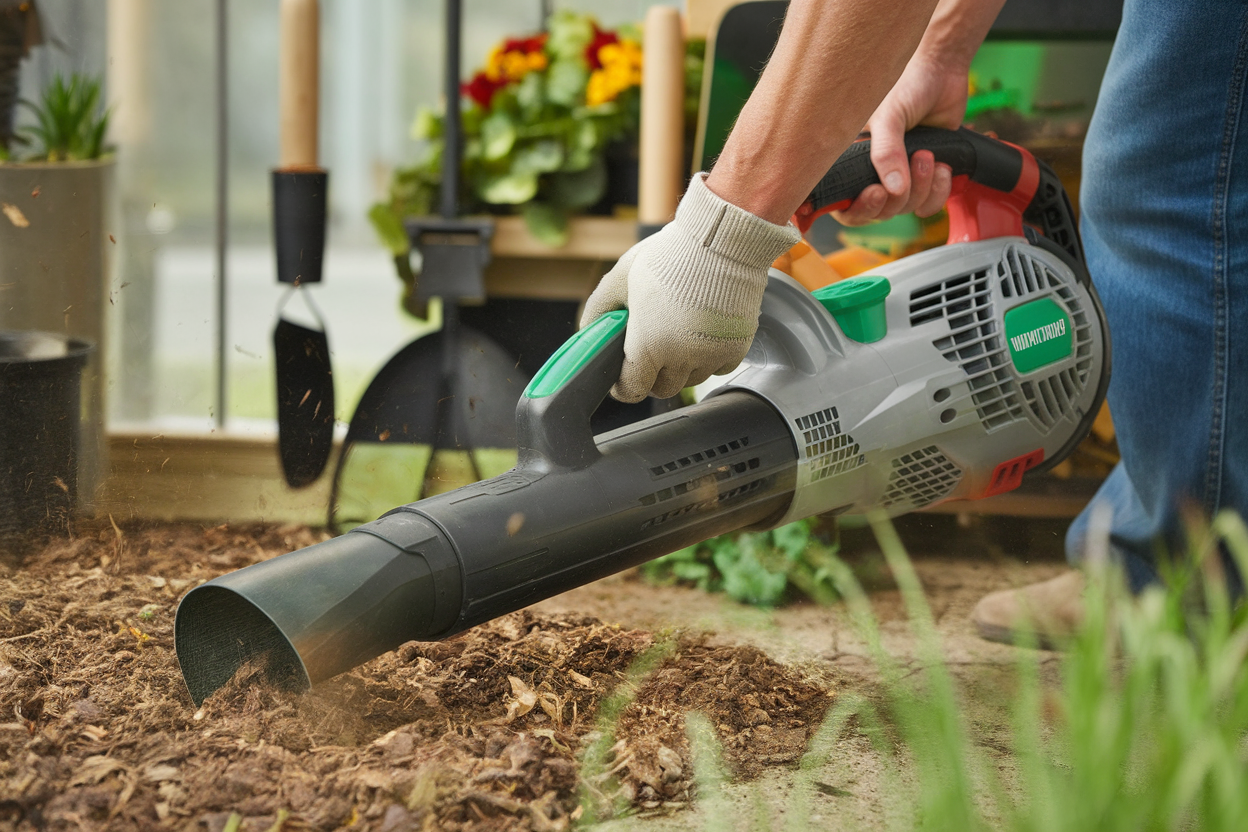
Do leaf blowers have suction? Yes, some do—but not all. The first time I saw a blower suddenly “eat” a pile of leaves, I was as shocked as anyone. Suction is a built-in feature on certain models, but it depends on how the tool is designed.
Some leaf blowers come with a suction function, but not all. This feature appears mainly on 2-in-1 or 3-in-1 models that can switch between blowing, vacuuming, and mulching. Standard single-function blowers only push air out and cannot pull debris in.
When I started working with tools years ago, I thought every blower could vacuum. A customer once asked me to test his “vacuum mode,” and I stood there flipping switches that didn’t exist. That moment taught me—never assume anything in this industry.
Can any leaf blower be a vacuum?
If you’ve ever held a blower and wondered, “Can this thing actually suck leaves too?”—trust me, you’re not alone. I’ve had buyers ask me this at tradeshows at least a hundred times.
Not every leaf blower can act as a vacuum. Only models designed as blower-vacuums include a suction fan, a debris bag, and a switch mechanism. Regular blowers lack internal components for suction and cannot be converted.
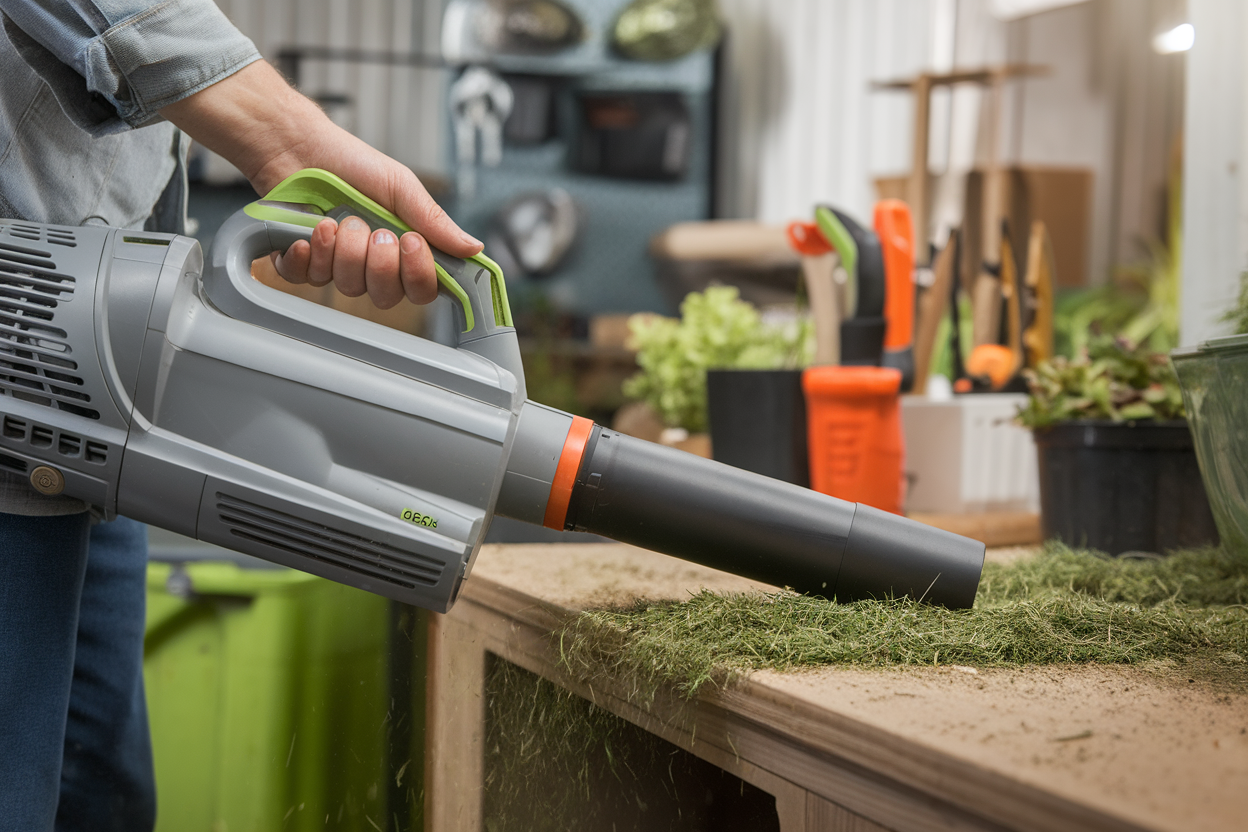
What makes a blower capable of vacuuming?
Blower-vacuums are built differently. They have:
- A two-direction airflow system
- A shredding/mulching fan
- An output bag to collect debris
Below is a simple comparison:
| Feature | Blower Only | Blower-Vac |
|---|---|---|
| Blow function | Yes | Yes |
| Suction | No | Yes |
| Mulching | No | Often Yes |
| Debris bag | No | Yes |
I still remember the first blower-vac I ever tested. I switched it to vacuum mode, and the machine inhaled a whole pile of dry leaves so fast it startled me. It felt like watching a magician pulling a silk scarf into thin air.
In practice, a blower-vac works through a reverse airflow system1.
When you activate vacuum mode, the direction of the airflow flips. Air is pulled inward through the nozzle, carrying leaves with it. Inside the housing, a mulching impeller2 chops the leaves into small pieces. Then everything lands inside a collection bag that you empty when you’re done.
It’s simple once you understand it—but easy to misunderstand if you only used blower-only tools before. If your work involves removing light debris, dry leaves, or dust, a blower-vac may save you time. For heavier garden waste, though, suction isn’t always strong enough. That’s why landscapers usually carry both: a powerful blower to move piles, and a vacuum for the small stuff.
If you’re sourcing blower-vac models from suppliers, remember to check:
- Impeller material (plastic vs. metal)
- Mulching ratio
- CFM & MPH in both modes
- Bag durability
- Switching mechanism
These small details matter, especially when your customers ask for performance data.
What is the difference between suction and blower?
When buyers tell me “this blower feels weak,” half the time they’re actually confusing the two functions. Suction and blowing behave differently—and understanding that helps you choose the right tool.
Blowing pushes air outward to move debris away. Suction pulls air inward to collect debris inside a bag. Blowers create outward airflow and high speed, while suction systems rely on inward airflow and debris-collection components.
Blower vs. Suction: How they actually work
Imagine blowing dust off a table versus using a vacuum cleaner. The motions are opposite—and leaf tools follow the same principle.
| Function | Action | Purpose |
|---|---|---|
| Blowing | Pushes air out | Moves leaves into piles |
| Suction | Pulls air in | Collects leaves in a bag |
I once explained this difference to a European buyer who asked me, “If it can blow, why can’t it suck too?” I laughed—not at him, but at how many times I’ve heard that exact question.
Here’s why:
A blower is built like a fan. It pushes air forward.
A vacuum is built like a reversed fan plus a collection path for debris.
The physics is simple. Blowers need high air speed3 (MPH) to move leaves over distance. Vacuums need high air volume4 (CFM) to lift leaves upward. You can’t achieve both at full strength in a single machine unless it's engineered for the dual function.
So even with 2-in-1 models5:
- Blower mode tends to be stronger
- Vacuum mode is helpful but less aggressive
That’s why professionals often treat suction as a “finishing tool,” not the main cleaning tool.
For anyone sourcing products in China, always request separate airflow specs for blowing and vacuuming—and demand real test videos. It avoids misunderstandings later, especially when selling under your own brand.
Is it better to get a leaf blower or vacuum?
This is the big question buyers ask me whenever they’re trying to expand their product line. The truth? Both tools have their moment. But the right one depends on how your customers actually use it.
A blower is better for moving large piles of leaves quickly. A vacuum is better for collecting small debris in one step. Blower-vac combos work for light tasks but are not as strong as dedicated blowers or dedicated vacuums.
When should you choose each tool?
Use a blower when:
- You need speed
- You have large areas
- Leaves are wet or heavy
Use a vacuum when:
- You want to collect debris directly
- The area is small
- Debris is dry and lightweight
A few years ago, one of my European clients told me, “My customers buy blowers because they want power, not because they enjoy cleaning.” That line stuck with me—because it’s true. Most homeowners want the fastest solution, not the most precise one.
Dedicated blowers give you raw strength. They clear pathways, gardens, parking lots—you name it. Suction, on the other hand, is more controlled. It’s perfect for tight corners, patios, or cleaning around flower beds without kicking dirt everywhere.
If you’re sourcing for resale, ask yourself:
- What do your customers value more: speed or tidiness?
- Do they want multi-function tools or stronger single-function tools?
- Are they price-sensitive or performance-oriented?
Many European distributors prefer offering both:
A strong 21V or 40V blower as the main product, plus a 2-in-1 blower-vac as an affordable add-on. This lets them target different customers without complicating inventory.
And remember—always verify suction mode specs, mulching ratio6s, and bag quality when sourcing in China. A weak vacuum mode is the number one complaint from end-users.
Conclusion
Some blowers have suction, but not all—and whether you need it depends on how you or your customers use the tool. Choose based on task size, performance needs, and what matters most: speed or collection.
-
Learn about the reverse airflow system to understand how it enhances vacuuming capabilities. ↩
-
Discover how a mulching impeller improves leaf processing and collection efficiency. ↩
-
Understanding the importance of high air speed can help you select a more effective blower. ↩
-
Learn why high air volume is essential for effective leaf vacuuming. ↩
-
Explore the benefits of 2-in-1 models to see if they meet your gardening needs. ↩
-
Learn how mulching ratio affects the efficiency of leaf collection and processing. ↩